

Walk into any dive shop and you'll hear it constantly: someone asks for "snorkel goggles," and the staff hands them a snorkel mask. Are they the same thing? Not exactly. The difference matters more than you'd think—especially when you're floating face-down over a coral reef and water starts leaking in. Here's what each piece of gear actually does, and which one you need.

What Are Snorkel Goggles, Exactly?
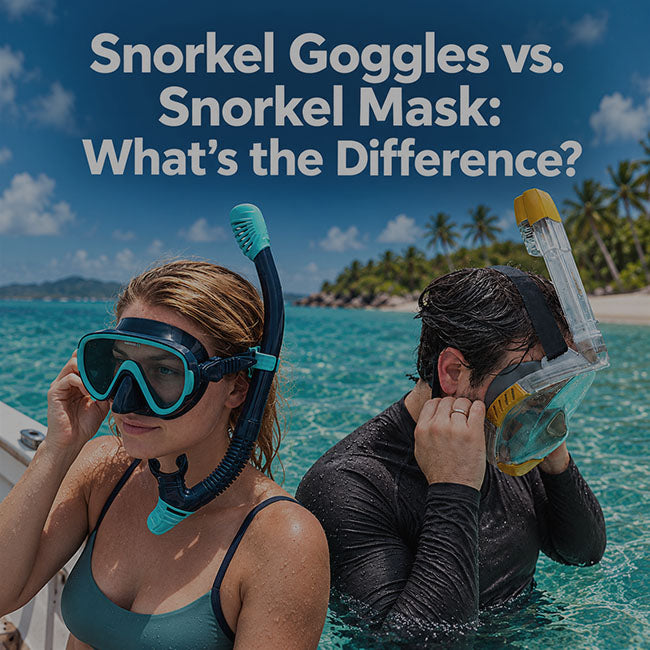
Snorkel goggles are essentially swimming goggles—they seal around each eye individually and don't cover the nose. They're the same gear you'd use in a pool lap lane. Most have polycarbonate lenses, a silicone seal, and an elastic strap. They keep water out of your eyes, but that's it. There's no nose coverage, no snorkel attachment point, and no way to create a watertight seal over your whole face.
You can find snorkel goggles at any sporting goods store for $8–$40. They're compact, lightweight, and dead simple to use. The tradeoff: they only work as standalone eye protection. If you want to breathe underwater using a snorkel, goggles alone won't cut it.
What Is a Snorkel Mask and How Is It Different?
A snorkel mask (also called a diving mask) covers both your eyes and your nose in one sealed unit. The silicone skirt presses against your face, nose pocket and all, creating an air space that keeps water away from both your eyes and nasal passages. A snorkel tube clips to the side of the mask strap and lets you breathe surface air while your face is submerged.
This nose-covering design is the critical difference. Because your nose is inside the mask, you can equalize pressure when you dive down by gently exhaling through your nose. With swim goggles, your nose is exposed—there's no equalization, which makes it uncomfortable to dive even a few feet. Masks also create a larger air pocket that lets your eyes focus naturally underwater without the distortion swim goggles sometimes produce.
Quality counts here. Higher-end masks use skirts with more silicone content—closer to 100% pure silicone—which are noticeably softer and more pliable than budget options. That pliability is what creates a reliable seal on more face shapes.
Can You Snorkel With Regular Swim Goggles?
Technically, yes. Nothing stops you from wearing swim goggles and using a snorkel—you'd just hold the mouthpiece with your teeth while your nose stays exposed to water. Some beginners do this. It works in calm, shallow water where you're staying near the surface. But it has three real problems.
First, water hits your nose. That's uncomfortable and causes many people to instinctively lift their head, which breaks the whole point of snorkeling. Second, you can't dive down: the pressure difference would make your eyes feel like they're being sucked out, and there's no way to equalize. Third, most swim goggles aren't designed to attach a snorkel—you'd be hand-holding the tube the entire time, which is exhausting.
For casual surface-level peering—calm lagoon, shallow reef, just watching fish from above—swim goggles can work in a pinch. For anything more than that, use a proper mask.
When Should You Choose Each?
Choose swim goggles when you're lap swimming, competing, or doing water workouts where you need maximum hydrodynamics and the smallest possible footprint. Choose a snorkel mask for any activity where your face will be in the water for extended periods, you want to breathe through a snorkel, or you plan to dive below the surface even briefly.
The decision gets more nuanced if you wear prescription lenses. Snorkel masks can be fitted with corrective lenses—either pre-made corrections glued to the inside of the lens, or custom prescription glass ordered from a dive shop. Swim goggles also come in corrective strengths, typically in -1.5 to -8.0 diopter increments. If your prescription is unusual or you have astigmatism, a mask with custom prescription glass is the better long-term investment.
What About Full-Face Snorkel Masks?
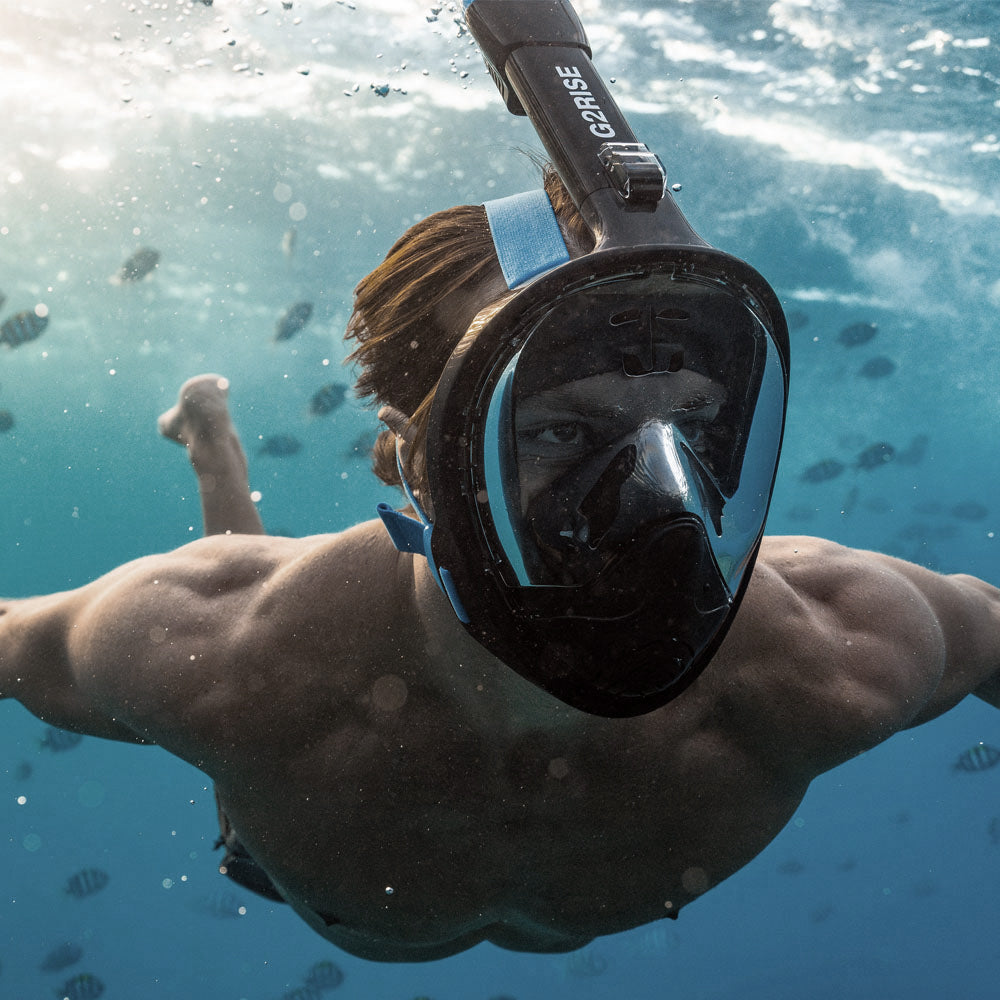
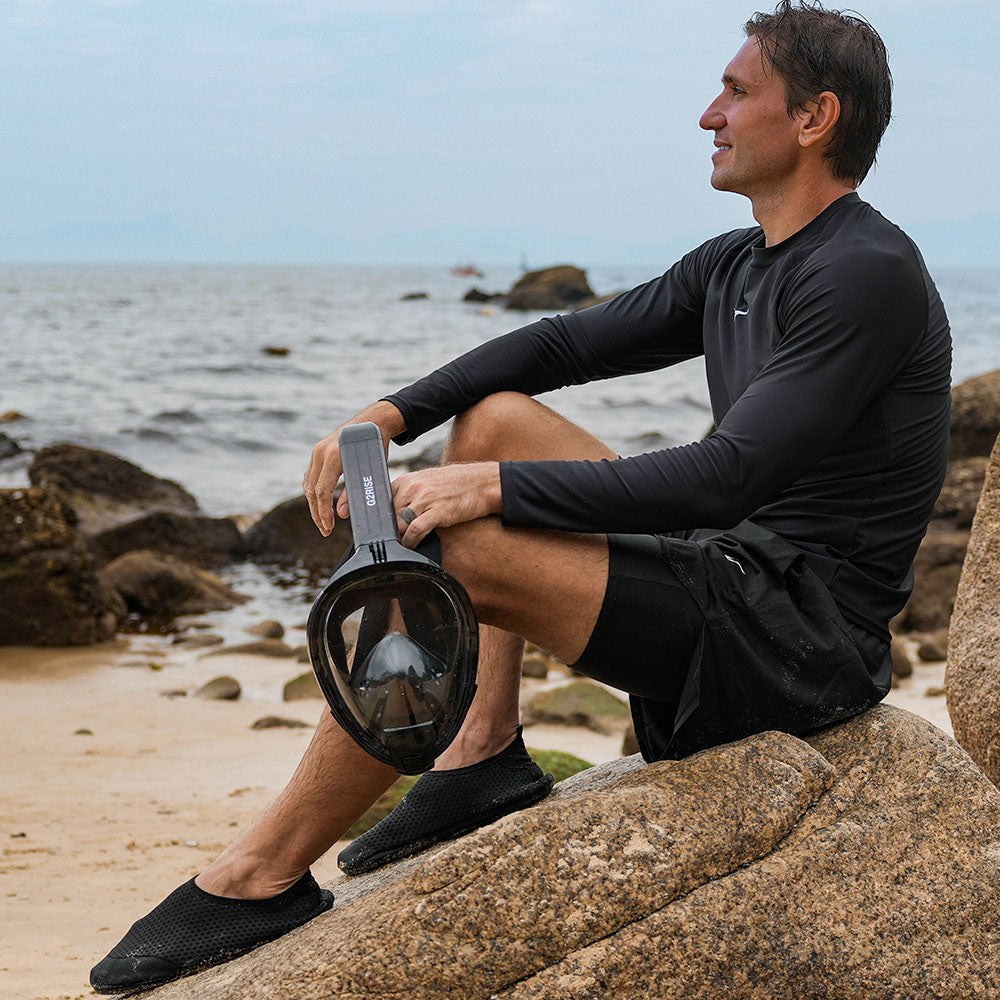
Full-face masks cover your entire face—eyes, nose, and mouth—and have a built-in snorkel. They look intuitive, and some beginners love them because you breathe normally through both your mouth and nose. But there's a real safety issue worth knowing.
Poorly designed full-face masks can trap carbon dioxide in the breathing space. CO2 buildup makes you dizzy, then nauseous, then in serious cases unconscious—none of which you want to experience while floating in open water. Incidents involving these masks have been documented in Hawaii and elsewhere. The Oceanic Society, whose guides spend hundreds of hours in the water on expeditions, outright advises against full-face masks: they're harder to remove quickly in an emergency, more prone to fogging, and banned by some dive operators and destinations.
Reputable branded full-face masks are safer than knockoffs, but our recommendation—and that of most professional guides—is to use a traditional mask and separate snorkel. The traditional setup is faster to doff in an emergency, easier to clear if it floods, and proven over decades of use.

How Do You Find a Snorkel Mask That Actually Fits?
Fit matters more than price. A $30 mask that seals perfectly on your face beats a $90 mask with a constant leak. Here's the test every diver knows: place the mask on your face without the strap, breathe in gently through your nose, and let go. If it stays sealed, the fit is good. If it falls off or you feel air rushing in at the edges, try a different shape.
A few things to watch for. If you have a wide face with eyes set far apart, single-lens masks often fit better because there's no center divider competing for real estate. If your nose bridge is narrow, two-lens masks with a smaller nose pocket tend to work better. For small faces—kids included—look for masks specifically labeled "small fit" or "mini," not just a standard adult mask with the strap tightened down. That never ends well.
Skirt color is a surprisingly practical choice too. Clear silicone skirts let in more peripheral light and feel less claustrophobic, but bright sun can cause eye strain. Black skirts reduce glare and make it easier to use an underwater camera. Colored skirts look fun but can tinge your vision slightly—something to know before you buy.
Anti-Fog: The Problem Nobody Tells You About
New masks almost always fog. It's caused by a residue from the manufacturing process on the inside of the lens. The classic fix: scrub the inside of the lens with a non-gel white toothpaste, let it sit, rinse. Do it twice before your first use. Once that layer is gone, a few drops of mask defogger (or yes, saliva) before each dive keeps it clear.
If you chronically fog even after treatment, some masks now come with permanent anti-fog film applied to the lens—it's user-replaceable and can last 1–3 years of regular use. These are worth considering if you snorkel frequently or have tried every other fix without success.
What Snorkel Should You Pair With Your Mask?
Keep it simple. The best snorkels are the least complicated ones. A basic J-shaped tube—literally a curved plastic tube with a soft mouthpiece—is what most serious snorkelers and diving guides use. Dry-top snorkels add a valve at the top that closes when the snorkel submerges, preventing water entry. They're genuinely useful for beginners and surface swimmers. Semi-dry tops are a middle ground.
Avoid snorkels with excessive features: complex purge valves, multiple flex joints, or elaborate splash guards. They're more to break and less to trust. The simpler the tube, the longer it'll last and the easier it is to clear if water does get in.
Why Face Fit Matters More Than Brand
One counterintuitive truth about snorkel masks: sometimes a cheap mask fits you perfectly and an expensive one leaks. Face shapes vary enormously. The best approach is to try several masks if you can get to a dive shop—or if shopping online, buy two or three, test them in the bathtub, and return what doesn't work.
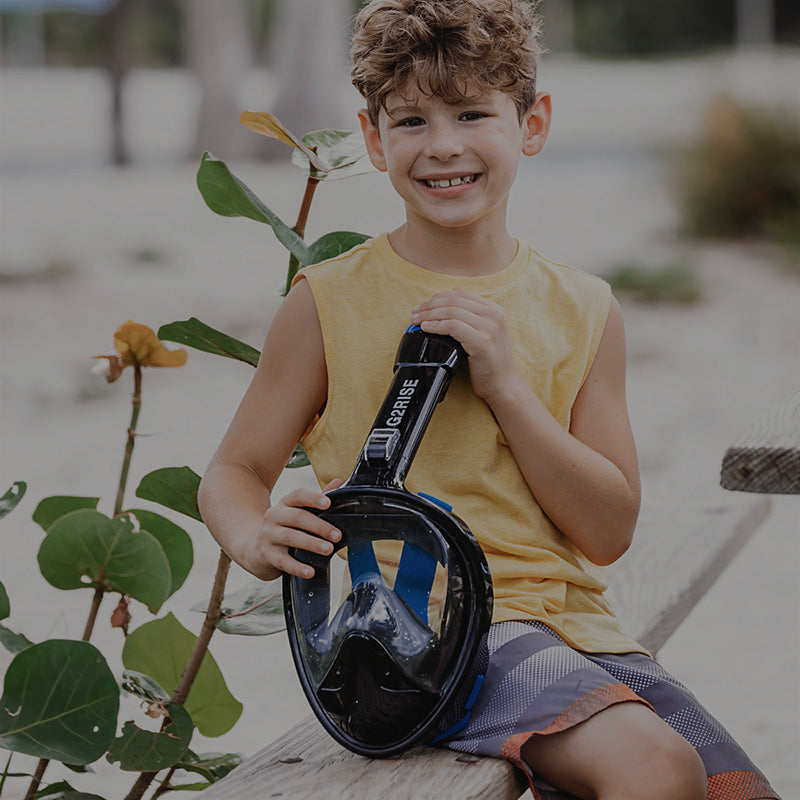
If you're buying for the whole family, resist the urge to buy a "set" where everyone gets the same mask in different colors. Face shapes vary within families just as much as between strangers. Each person needs a mask that fits their specific face. A mask that seals well on an adult's wide face won't seal on a child's narrower one.
G2RISE's snorkel masks are built for this reality—with skirt designs tested across different face geometries and silicone quality that holds up over multiple seasons of salt water. If you're not sure where to start, the SN01 line offers a practical balance of fit range and durability at a price point that makes it reasonable to buy two and test both.

The Short Answer
Snorkel goggles = swim goggles. Fine for pools, limited in open water, can't easily attach a snorkel. A snorkel mask = what you actually want for snorkeling: seals over nose and eyes, lets you equalize, pairs with a snorkel tube to breathe at the surface. If you're going snorkeling anywhere more serious than the hotel pool, skip the goggles and get the mask.

Leave a comment
This site is protected by hCaptcha and the hCaptcha Privacy Policy and Terms of Service apply.