
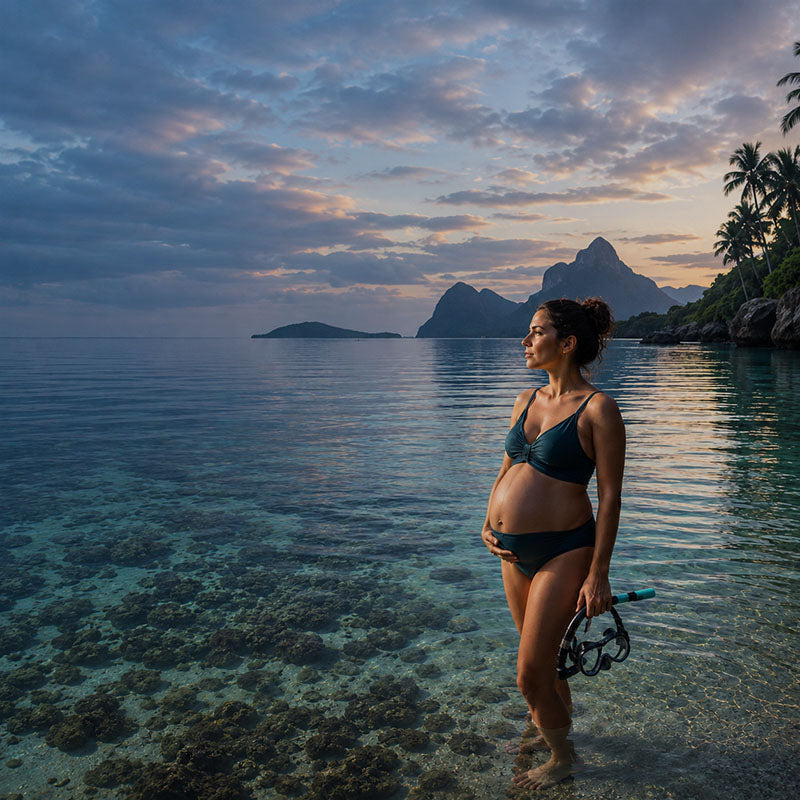
Most doctors give snorkeling a cautious green light during uncomplicated pregnancies — it stays at the surface, requires no compressed gas, and can be genuinely relaxing. But the honest answer is more specific than a simple yes. Snorkeling is a breathing-and-exertion activity that happens in an unpredictable environment, and pregnancy changes both of those variables in ways that demand a conservative plan.

Is Snorkeling Safe During Pregnancy?
Snorkeling during pregnancy is generally considered safe for women with uncomplicated pregnancies, provided conditions are calm, exertion stays low, and there's an easy exit available. The activity stays at the surface, involves no compressed air, and places far less physical demand on the body than open-water swimming or surfing. Your OB-GYN should clear you before any ocean activity — not as a formality, but because some pregnancy complications (placenta previa, elevated blood pressure, preterm risk) change the calculus completely.
What most pregnancy snorkeling advice skips over is the breathing dimension. Pregnancy alters respiratory function: the diaphragm rises as the uterus expands, tidal volume shifts, and many women notice breathing becomes more effortful by the third trimester. Snorkeling adds resistance to every breath — you're pulling air through a tube against slight water pressure. Under normal conditions, that resistance is barely noticeable. When pregnancy has already shifted your breathing baseline, it matters more than you'd expect.
What Trimester Is Best for Snorkeling While Pregnant?
The second trimester is the most practical window. Most women feel significantly better — nausea is typically resolved, energy returns, and the physical changes haven't yet reached the point of serious discomfort in the water. The first trimester involves fatigue and possible nausea that make snorkeling unappealing even when medically safe. The third trimester brings enough physical change — a shifted center of gravity, reduced lung capacity, greater overall fatigue — that most guides and medical sources recommend scaling back significantly.
"Second trimester" isn't a blanket permission slip, though. A 20-week, low-risk pregnancy is meaningfully different from a 26-week pregnancy with any history of preterm labor. What matters is your specific health picture, not the trimester number alone. If your doctor has already told you to limit physical exertion, that guidance applies in the water too.
What Are the Real Risks of Snorkeling While Pregnant?
Water pressure isn't the main concern — snorkeling stays at the surface, so pressure exposure is minimal and not comparable to scuba diving. The real risks are overheating, unexpected exertion, and something many people haven't heard of: Snorkel Induced Rapid Onset Pulmonary Edema, known in Hawaii safety research as SI-ROPE.
SI-ROPE has been identified by Hawaii snorkeling safety researchers as a factor in multiple near-drowning and drowning incidents. It develops quickly — sudden shortness of breath, a wave of fatigue, feeling of panic — and can progress rapidly. One finding from this research stands out: lack of swimming or snorkeling experience was almost never a factor in these incidents. Experienced, capable swimmers encounter it too. The risk factors include increased breathing resistance through the snorkel, pre-existing health conditions, and elevated exertion. Pregnancy intersects with all three: changing respiratory function, a body under ongoing physiological stress, and a surface swim that can quietly turn into a workout as currents and drift accumulate.
Overheating is the other underrated risk. Snorkeling in tropical conditions means continuous sun exposure on your back and legs while you're looking down into the water. Core temperature elevation has documented associations with fetal risk, particularly in the first trimester. Snorkel in the morning or late afternoon, not midday, and exit the water if you start to feel warm.

Should Pregnant Women Use Full-Face Snorkel Masks?
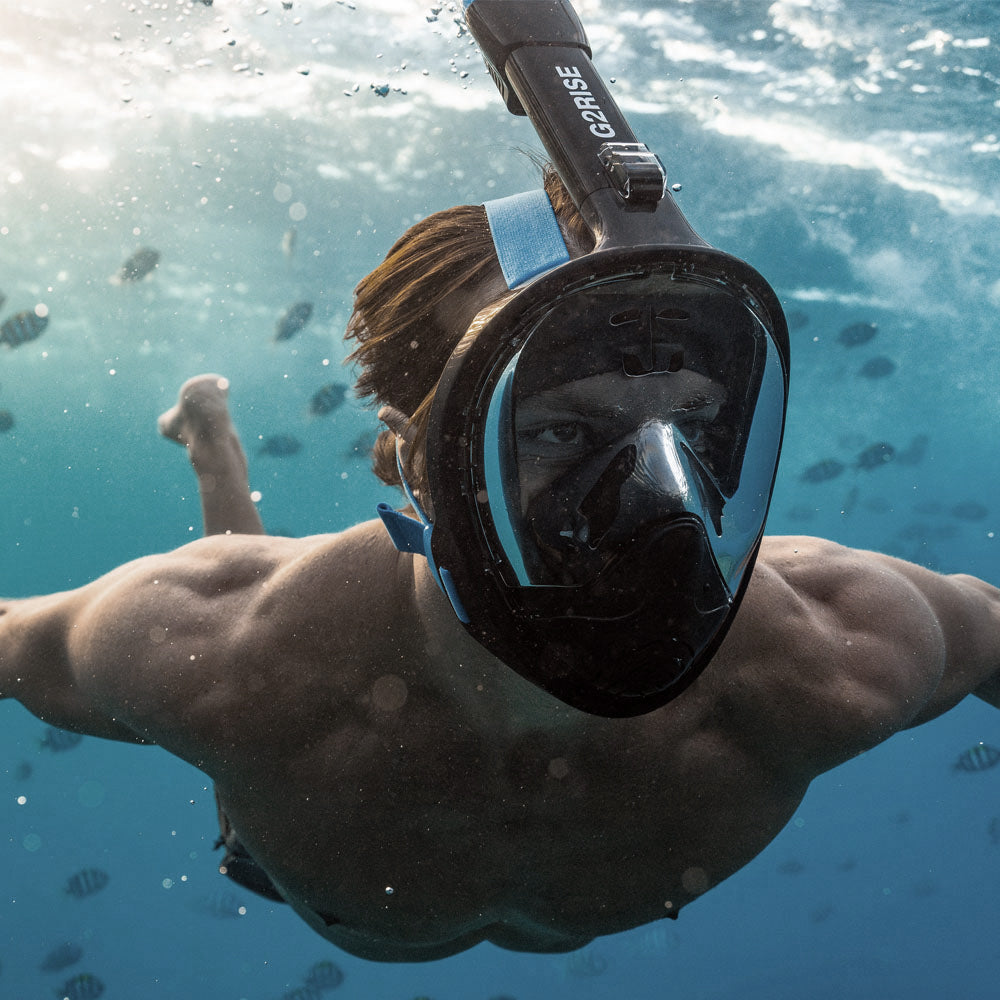
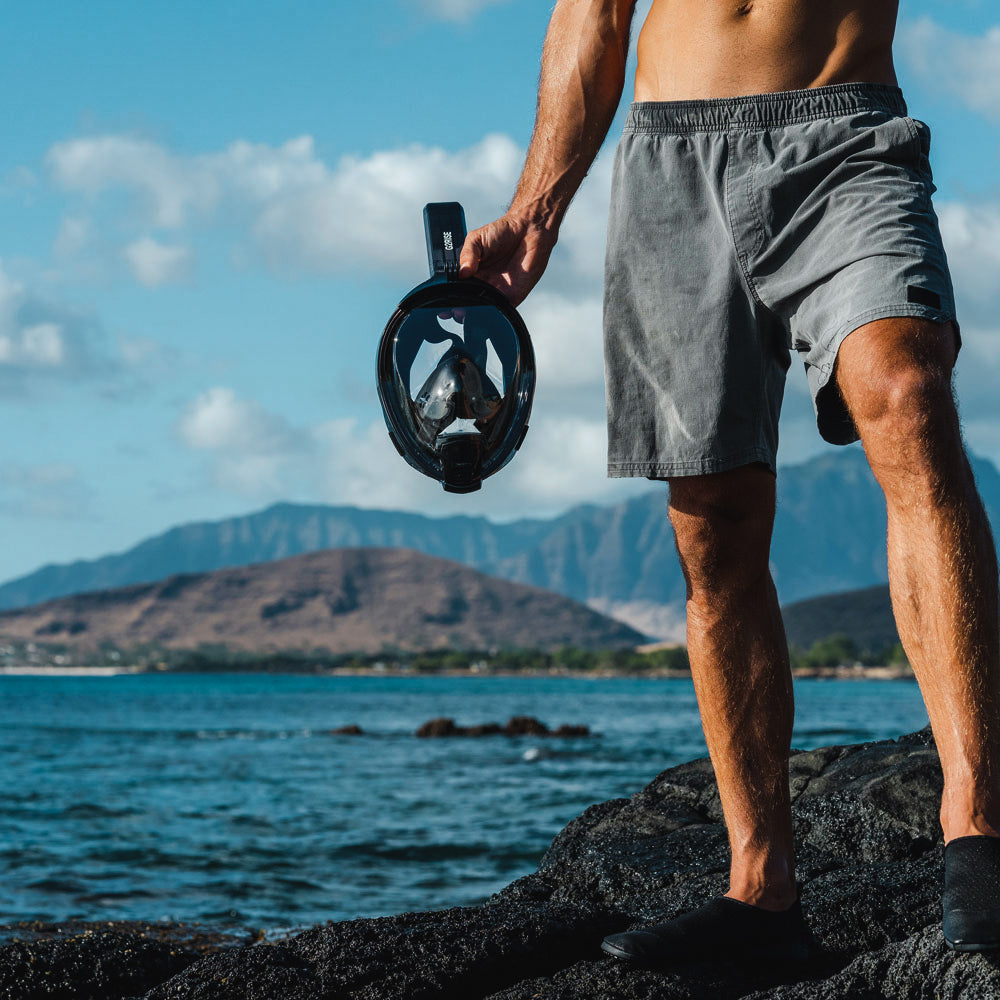
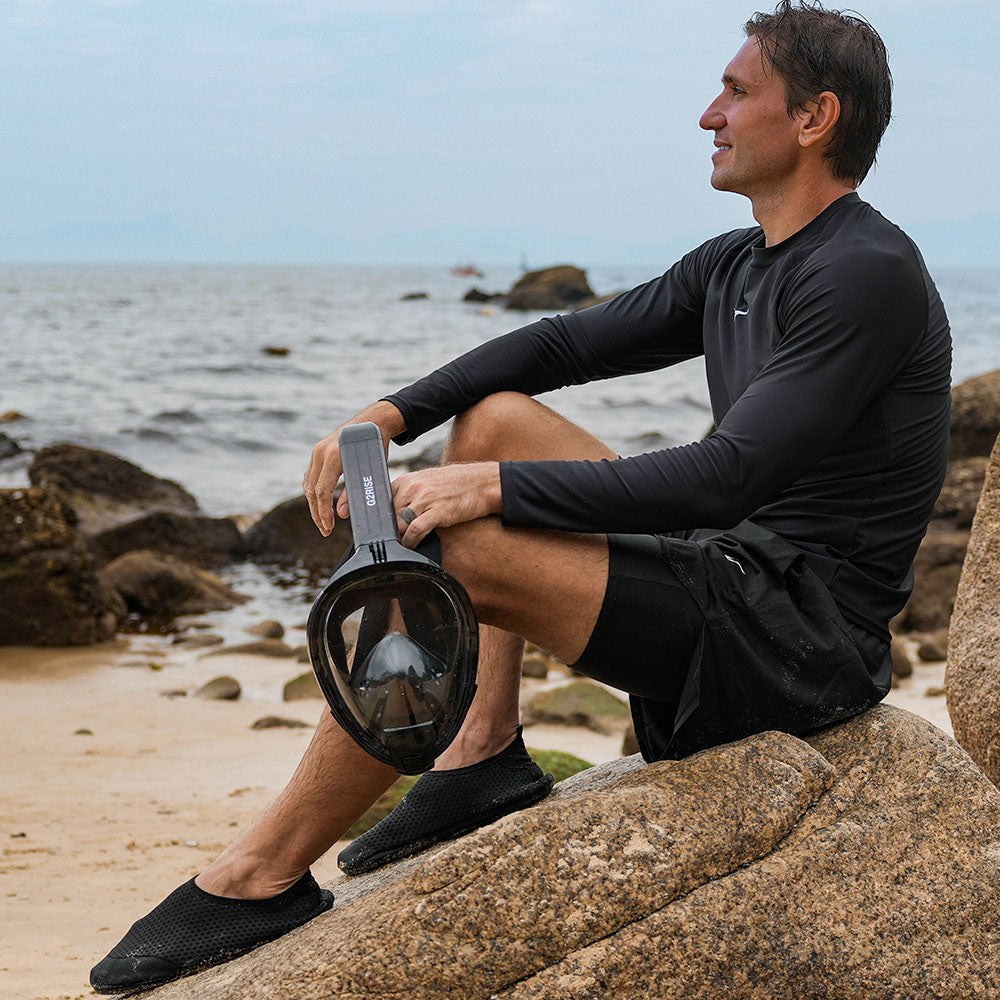
No. Hawaii snorkeling safety surveys found that 38% of snorkeling incident participants had used a full-face mask — and 90% of those users identified the full-face mask as a contributing factor to their difficulty. Full-face masks cover the nose and mouth, meaning you breathe within a larger enclosed air space with some CO2 recycling on each breath. Design quality determines how significant this is, but during pregnancy, when respiratory efficiency is already modified, the margin for breathing difficulty is smaller than usual.
Stick with a traditional separate mask and snorkel: it's faster to remove in an emergency, lets you breathe naturally through your nose when you surface, and carries decades of proven use behind it. If you're worried about clearing the snorkel — blowing sharply to expel water — a dry-top design with a float valve prevents water entry in the first place, so clearing is rarely needed.
What's the Safest Way to Snorkel While Pregnant?
Conservative planning is the operative phrase. Hawaii snorkeling safety guidance makes one point clearly: almost all near-drowning incidents occurred where the snorkeler could not touch the bottom. This suggests a practical rule: snorkel where you can stand up. You don't have to stand the whole time, but the ability to stop and stand gives you an immediate exit from any problem before it escalates.
A practical checklist for pregnancy snorkeling:
- Get OB-GYN clearance before you go. Ask specifically about ocean activity, surface snorkeling, and approximate duration. General "light swimming is fine" doesn't cover all situations.
- Choose calm, protected water. Calm lagoons, sheltered bays, and shallow reefs with no current. Avoid open ocean, boat-tour jumps off the stern, and any conditions with visible surface chop or swells.
- Keep sessions short. 20–30 minutes is a reasonable ceiling. End the session before you feel tired — not when fatigue appears.
- Bring a real buddy. Not someone on a tour boat 50 meters away — someone in the water beside you, close enough to help immediately.
- Snorkel in the morning. Conditions are typically calmer, temperatures are lower, and sun angle reduces overheating risk.
- Know when to stop. If you feel unexpectedly short of breath, stop immediately, remove the snorkel, roll onto your back, and breathe slowly. Signal your buddy. Don't try to swim back to shore while still breathing through the tube.
What Gear Works Best for Snorkeling While Pregnant?
The most important gear choice is a well-fitting mask with low breathing resistance. A mask that seals poorly forces you to work harder — you're partially holding your breath to prevent leaks, lifting your head more often, and generally expending more energy than you realize. A mask that fits your face properly seals immediately and lets you breathe without thinking about the equipment.
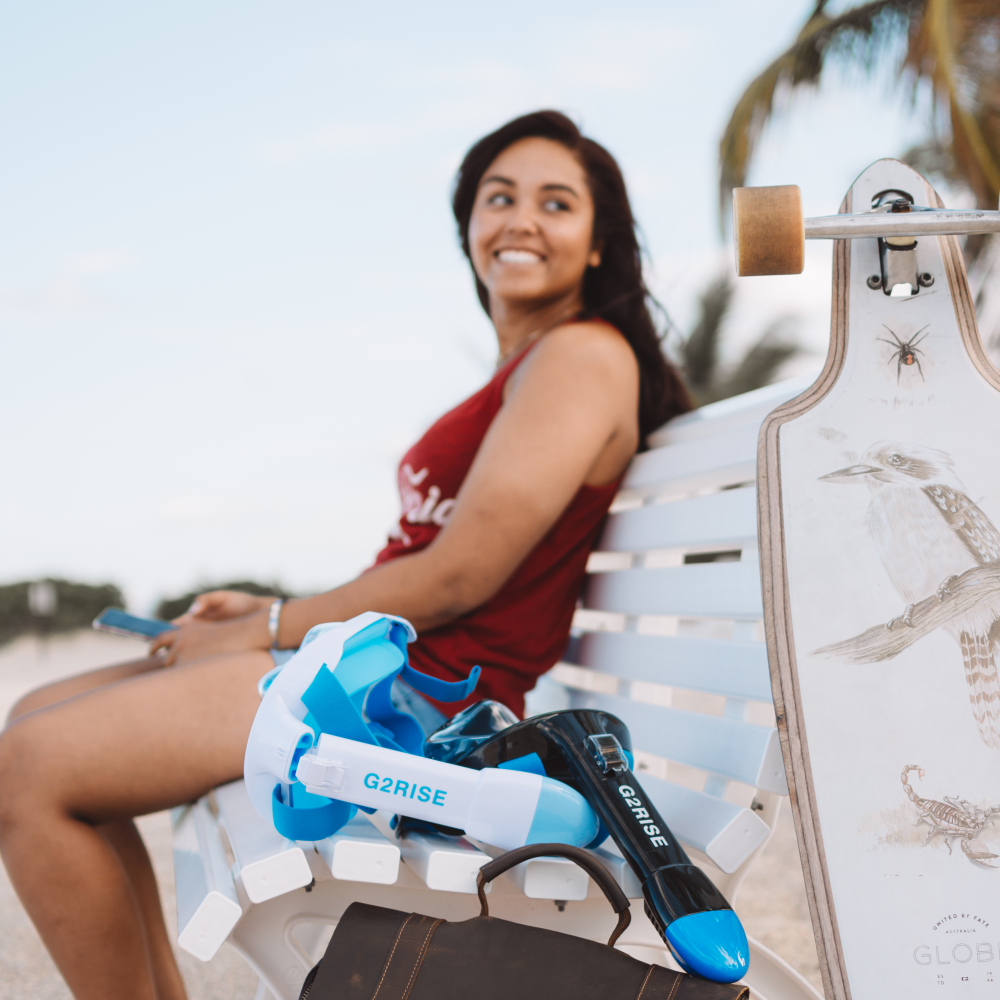
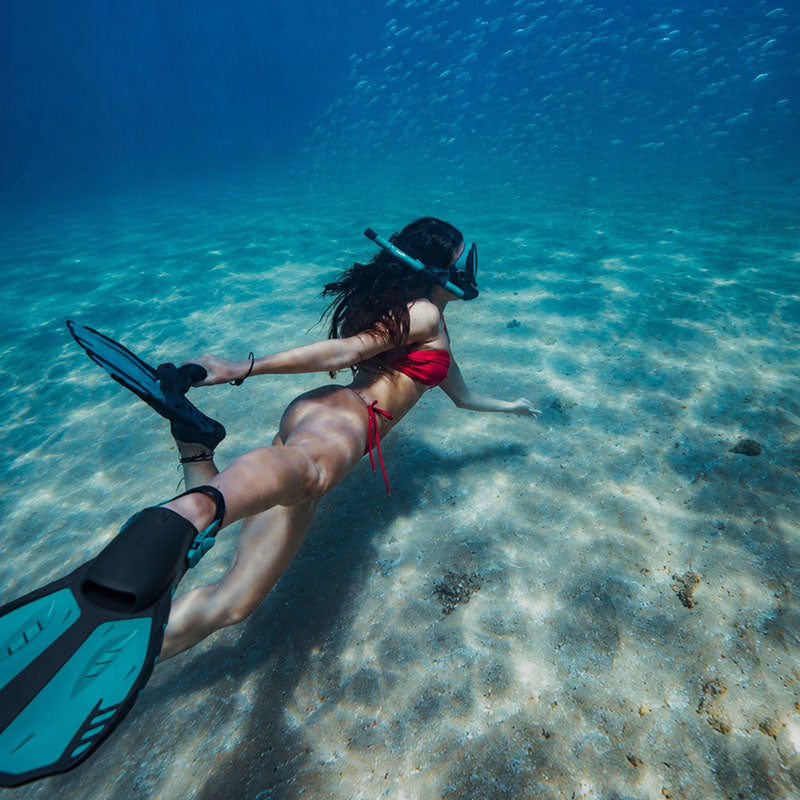
For the snorkel, a dry-top design is worth the slight bulk for pregnancy specifically. A float valve prevents water from entering if a wave washes over the tube, eliminating the need to "clear" the snorkel by blowing sharply — which takes effort and briefly interrupts breathing rhythm. A flotation vest or snorkel belt is also worth considering, particularly in the second and third trimesters: it keeps you effortlessly at the surface, removes the need to kick continuously, and allows a faster exit if needed.

What Should I Ask My Doctor Before Snorkeling While Pregnant?
Specific questions yield more useful answers than general ones. Rather than asking "can I snorkel," try these:
- Is my pregnancy currently low-risk for sustained physical activity in open water?
- Do I have any cardiovascular or respiratory factors that change this?
- Are there specific warning signs I should watch for before or during the activity?
- At what gestational age would you recommend stopping this kind of activity?
One additional note: if you've just arrived from a long-haul flight, build in a recovery buffer before snorkeling. Hawaii safety messaging notes that fatigue from extended air travel appears associated with higher incident rates in the first few days after arrival. Two or three days of acclimatization first is worth it.
The Bottom Line on Snorkeling While Pregnant
Snorkeling during pregnancy can be a peaceful, memorable experience when the conditions are right: OB clearance, low-risk pregnancy, calm shallow water, a real buddy, short sessions, and the discipline to end it at the first sign of breathing difficulty or fatigue. The underwater world doesn't change because you're pregnant — the challenge is building enough margin around the session to enjoy it safely rather than pushing until your body signals a problem.
Prioritize mask fit above all else. G2RISE's SN01 uses dual-layer silicone skirts with a wide seal range, designed to create a low-resistance fit with minimal strap pressure — which matters when breathing comfort is non-negotiable. Paired with a dry-top snorkel and a flotation vest, it covers the equipment side of a conservative pregnancy snorkel setup without unnecessary complexity.

Leave a comment
This site is protected by hCaptcha and the hCaptcha Privacy Policy and Terms of Service apply.