
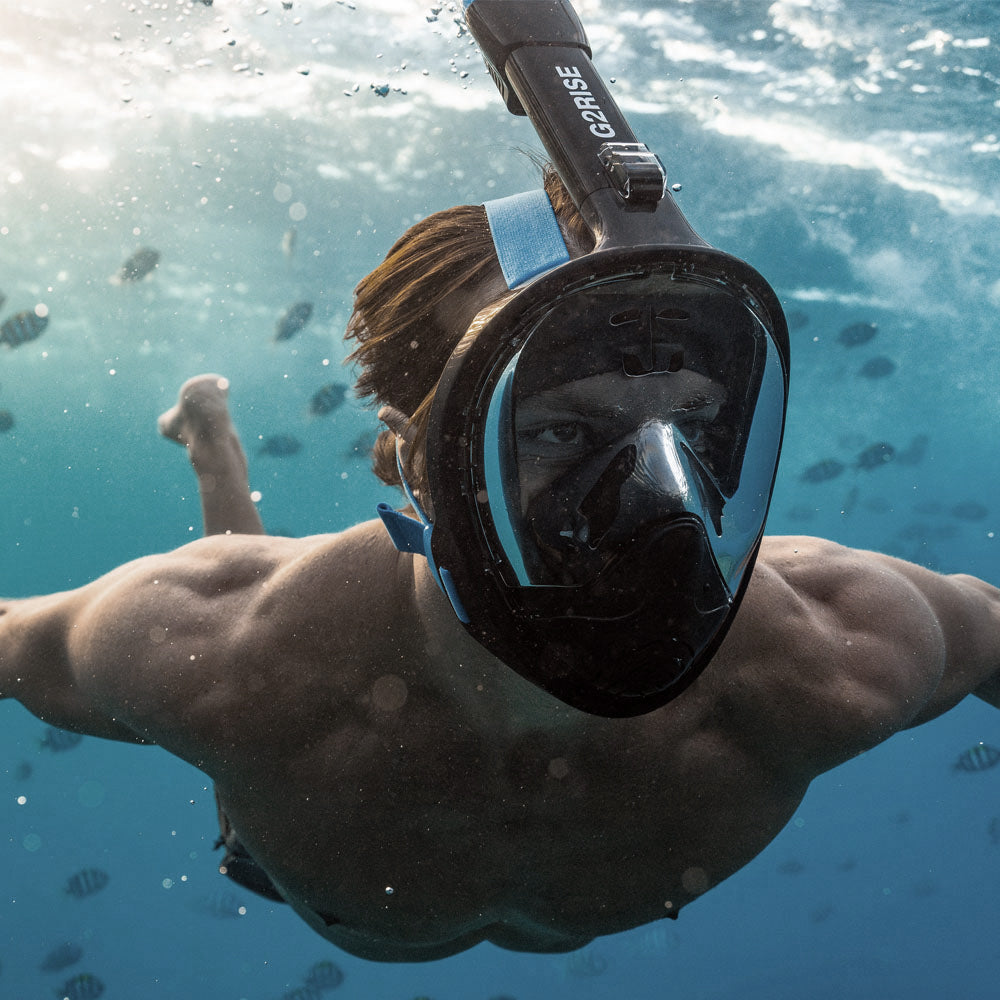
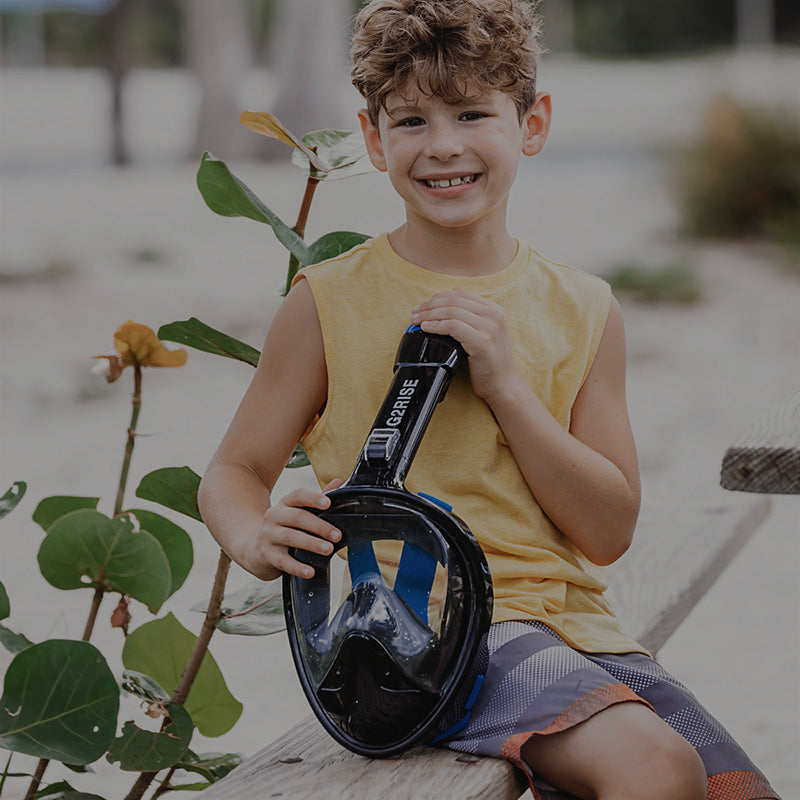
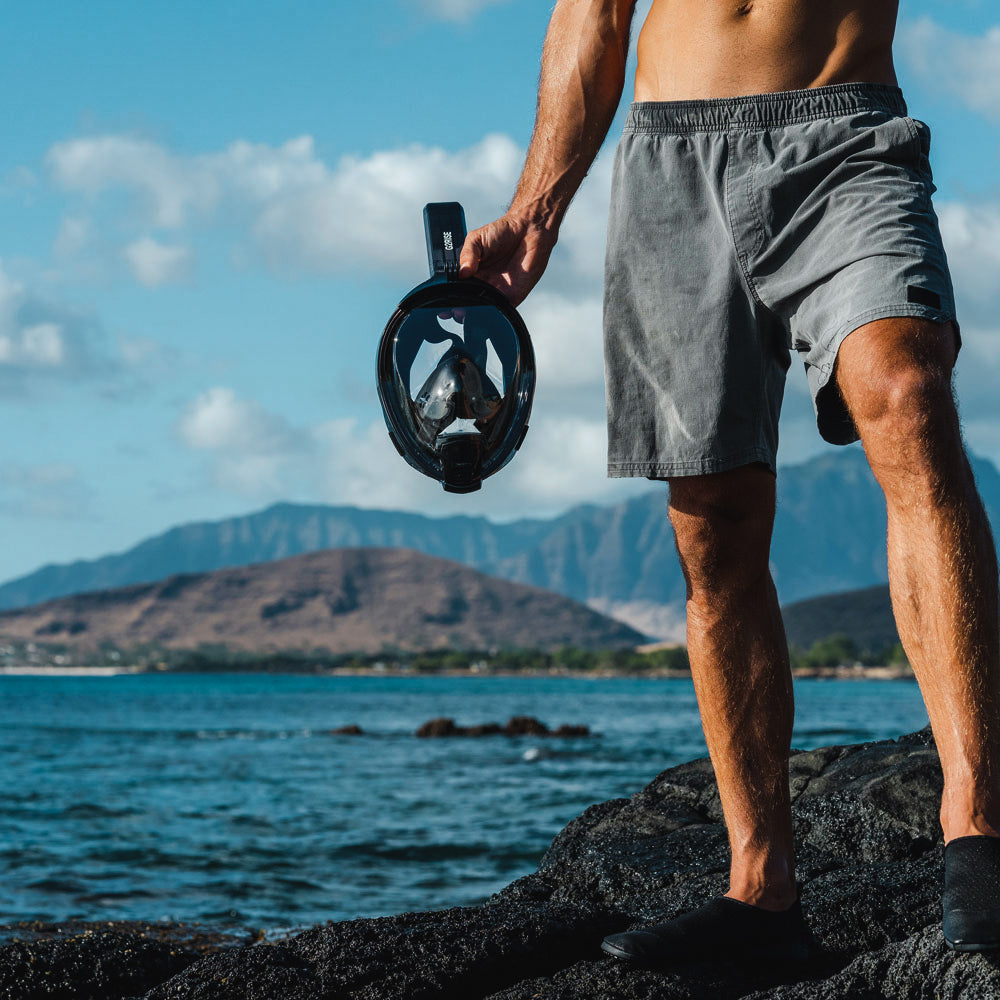
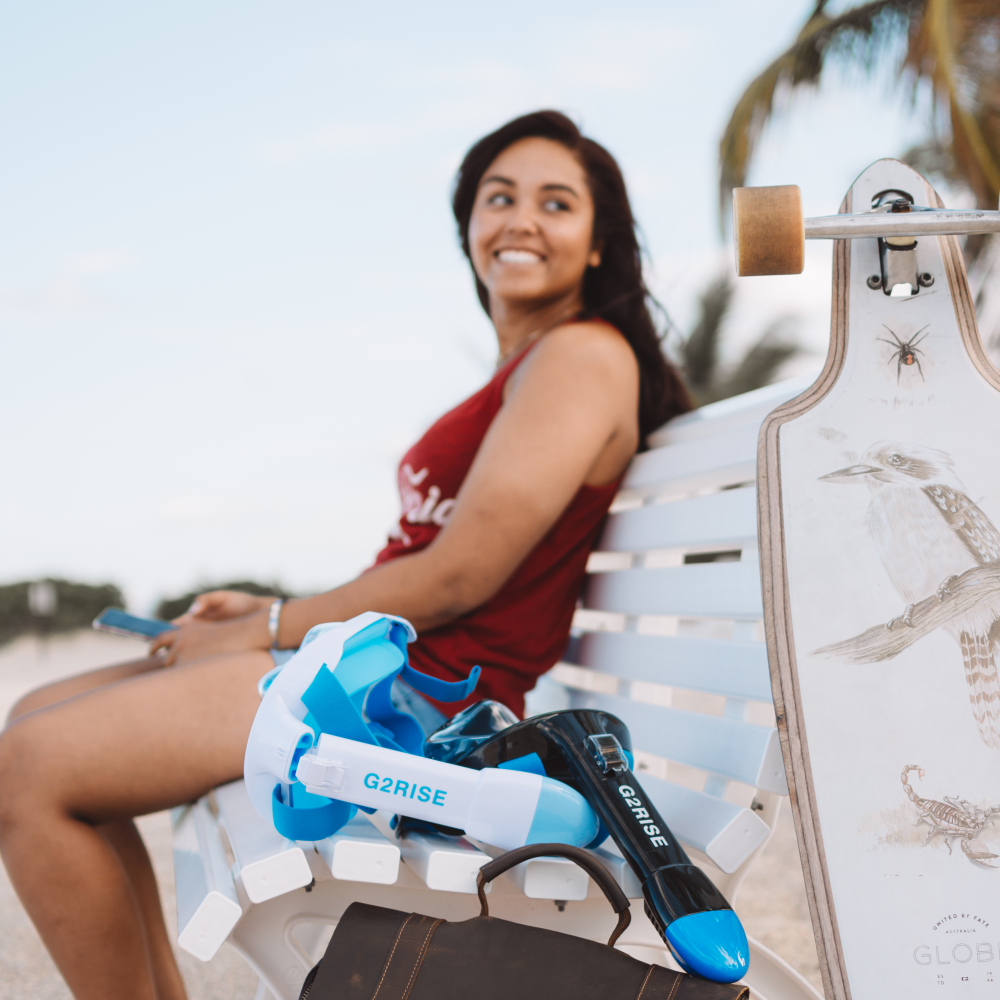
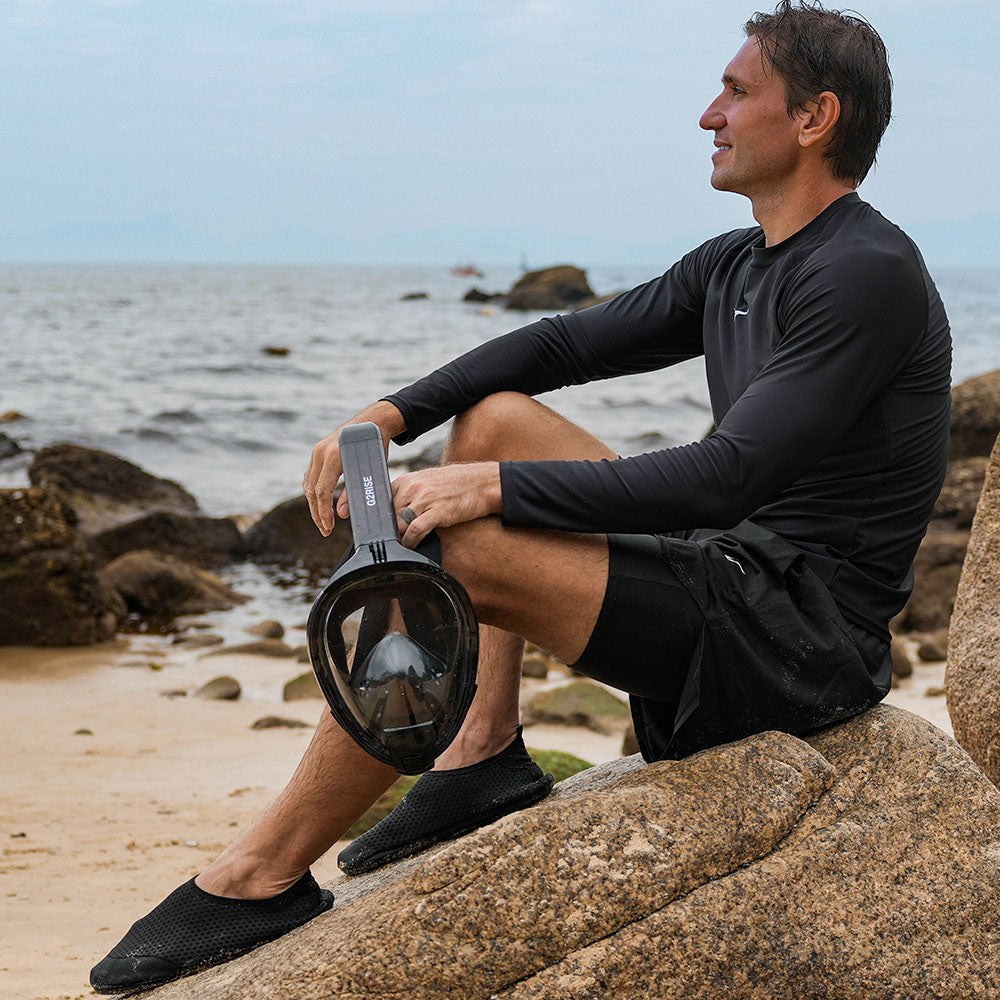


Full face snorkel mask diving sounds tempting because the mask feels so natural at the surface: your whole face is dry, you can breathe through your nose or mouth, and the wide lens makes shallow reefs feel close. But a full face snorkel mask is not a scuba diving mask. It is built for relaxed surface snorkeling, not repeated duck dives, freediving depth, or any situation where you need to equalize pressure quickly.
The short answer: you can dip below the surface briefly if you are calm and shallow, but you should not treat a full face snorkel mask as diving gear. For most beginners, the safer use case is floating, looking down, and keeping the snorkel tube above water. That is exactly where a well-fitted mask like the G2RISE SN01 makes sense.

Can You Dive With a Full Face Snorkel Mask?
You should not use a full face snorkel mask for true diving. These masks cover the eyes, nose, and mouth in one chamber system, which is comfortable at the surface but awkward underwater. Once you descend, water pressure increases, the air space inside the mask compresses, and your ears need equalizing. Traditional dive masks let you pinch your nose easily. Many full face snorkel masks do not.
A quick shallow duck under is different from diving. If you accidentally go under a few inches, a dry-top snorkel may block water entry and the mask may stay sealed. But once the snorkel tube submerges, you cannot breathe until you return to the surface. That sounds obvious, yet many first-time snorkelers misunderstand the word "full face" and assume the mask helps them breathe underwater. It does not.
Why Full Face Snorkel Masks Are Built for Surface Snorkeling
Full face snorkel masks solve surface-level problems: jaw fatigue from biting a mouthpiece, mouth-only breathing, a narrow field of view, and water splashing into the tube. The best designs separate inhaled and exhaled air paths, use a dry-top snorkel, and include drain valves so minor water entry is easier to clear.
Those benefits are real for calm-water snorkeling. They are also why full face masks became popular with families and beginners. A nervous swimmer can keep their face in the water longer when breathing feels less technical. The tradeoff is that the mask is larger and has more air volume than a traditional low-volume dive mask. Larger volume is comfortable at the surface but less friendly when pressure starts to build below it.
What Happens When You Go Underwater?
Underwater, three things change fast: breathing, pressure, and clearing. First, the snorkel is no longer in air, so you cannot inhale. Second, pressure pushes the mask tighter against your face. Third, if water enters, clearing a full face mask while submerged is much harder than clearing a simple dive mask and snorkel.
Divers Alert Network has studied full face snorkel mask breathing characteristics and emphasizes that design, fit, and ventilation matter. The Consumer Product Safety Commission has also looked at snorkel-related incidents and the need for better safety awareness around these products. The practical takeaway for everyday snorkelers is simple: buy a well-ventilated mask, test it in easy water, and use it for surface viewing instead of depth games.

Depth, Pressure, and Equalizing: What Beginners Miss
Every few feet of depth adds pressure. Your ears feel it first, which is why freedivers and scuba divers learn to equalize. With a standard dive mask, you can pinch your nose and add a little air into the mask space. With many full face snorkel masks, that move is not available or not easy enough for a beginner.
This is the main reason we do not recommend full face snorkel masks for diving. It is not because the mask is weak or useless. It is because the use case is different. A full face snorkel mask is like a comfortable viewing window for the surface. A dive mask is a pressure-management tool for underwater movement.
Full Face Snorkel Mask vs Diving Mask: Which Is Safer?
Safety depends on what you are doing. For calm surface snorkeling, many beginners feel safer with a full face mask because breathing is more relaxed and the view is wider. For repeated dives, a traditional dive mask and separate snorkel are safer because they are easier to equalize, lower in volume, and easier to clear.
If your plan is to float over a reef, watch fish, and avoid mouthpiece fatigue, a full face mask can be a good match. If your plan is to chase shells, dive down for photos, or practice freediving, choose conventional gear and get proper instruction. The best gear is the gear that matches the behavior you will actually do in the water.
When a Full Face Mask Works Well for Snorkeling
A full face snorkel mask works best in calm, shallow, supervised conditions. Think resort lagoons, beginner reef tours, quiet bays, and family beach days where the goal is to look, breathe comfortably, and stay relaxed. It is not ideal for surf, strong current, deep water, or solo use far from shore.
Before entering the water, fit-check the skirt around your face, test the seal without tightening the straps too hard, and breathe through the mask for a few minutes on land. In shallow water, keep the session short at first. If breathing feels restricted, if the mask fogs badly, or if you feel lightheaded, stop and switch gear.

FAQ: Full Face Snorkel Mask Diving Questions
Can you breathe underwater with a full face snorkel mask? No. You can breathe only when the snorkel tube is above the surface and receiving air.
Can you duck dive with one? A tiny accidental dip is usually manageable, but regular duck diving is not the right use case.
Is G2RISE SN01 for scuba diving? No. G2RISE SN01 is designed for recreational surface snorkeling. Its value is comfort, view, and easier breathing at the surface.
If you are looking for a mask for relaxed snorkeling, not deep diving, the G2RISE SN01 is built around that exact use case: a wide view, comfortable full-face fit, and a separated breathing design for calm surface exploration.
Common Mistakes Beginners Make With Full Face Snorkel Mask Diving
The first mistake is using the word "diving" too loosely. Many shoppers mean "putting my face in the water," while divers mean descending below the surface and managing pressure. A full face snorkel mask is good for the first meaning and poor for the second. That language gap creates a lot of bad expectations.
The second mistake is assuming a dry-top snorkel turns the mask into breathing equipment underwater. It does not. A dry top helps reduce splash entry when the tube is at the surface. Once the tube is submerged, airflow stops. If a beginner understands only one rule before using the mask, make it this one: keep the tube in air when you need to breathe.
The third mistake is over-tightening the straps. A painful strap setting can bend the silicone skirt and create leaks. The correct seal should come from size and face shape, not force. If water keeps entering near the chin, the answer is often a different size or a cleaner seal area, not another half-inch of strap tension.
A Simple Pre-Water Safety Checklist
Before you snorkel, do a dry fit. Put the mask on, adjust the straps until it feels even, and breathe normally for one minute. You should not feel strong resistance or pressure points. Then practice removing the mask with both hands. This sounds basic, but it matters if a wave surprises you or you decide you are done.
At the beach, start in water shallow enough to stand. Float face-down for thirty seconds, stand up, and check how you feel. Repeat this a few times before swimming away from shore. If you feel lightheaded, anxious, or unusually short of breath, stop using the mask. No view is worth pushing through a bad breathing signal.

Who Should Choose Traditional Gear Instead?
Choose a traditional mask and snorkel if you already know you like diving down, practicing breath-holds, or swimming in deeper current. Traditional gear is less bulky, easier to clear, and better suited to equalizing. It also gives experienced swimmers more control when conditions change.
Choose a full face mask if your plan is calmer: surface viewing, easy breathing, and a low-friction first experience. That is why the G2RISE SN01 should be positioned as vacation snorkeling gear, not technical diving equipment. It is strongest when it helps a beginner relax at the surface and enjoy the reef without fighting a mouthpiece.
Final Takeaway Before You Try It
Use the mask in the environment it was designed for: calm surface snorkeling. Keep the snorkel tube above water, stay close enough to stand or receive help, and do not turn a comfortable viewing mask into depth equipment. That simple boundary keeps the experience fun and predictable.
If your goal changes from looking down at a reef to diving below it, change gear too. That is not a failure of full face snorkeling. It is good water judgment.
Sources consulted: Divers Alert Network full-face snorkel mask safety study, U.S. CPSC snorkel-mask safety materials, SDI/TDI educational guidance, Tropical Snorkeling gear guides, and current SERP competitor pages.


Leave a comment
This site is protected by hCaptcha and the hCaptcha Privacy Policy and Terms of Service apply.