

A snorkel mask should seal with light, even pressure. It shouldn’t need a painfully tight strap, leave sharp pressure points, touch your eyelashes, or flood when you relax your face. If it does, the mask may be the wrong size or—just as often—the wrong shape.
Fit is personal. Two masks labeled “adult medium” can sit very differently around the nose, temples, upper lip, and cheekbones. The goal isn’t to make one mask obey. It’s to find the skirt geometry that matches your face, then confirm it in shallow water.

How Should a Snorkel Mask Fit?
A properly fitted snorkel mask sits evenly on clean skin, encloses the intended sealing area, and stays comfortable with minimal strap tension. The skirt shouldn’t cross hair, fold near the temples, press hard on the nose bridge, or sit so close to the eyes that blinking moves the seal.
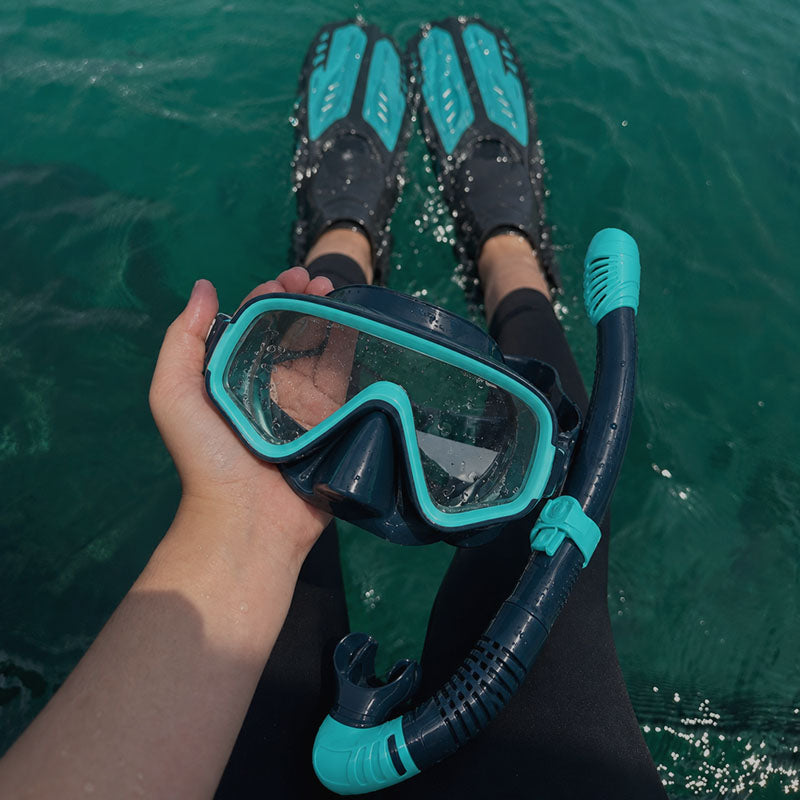
For a traditional mask, the silicone skirt seals around the eyes and nose. The nose pocket needs room for your nose without the hard frame pressing the bridge or underside. You should also be able to pinch your nose through the pocket if you plan to duck-dive and equalize.
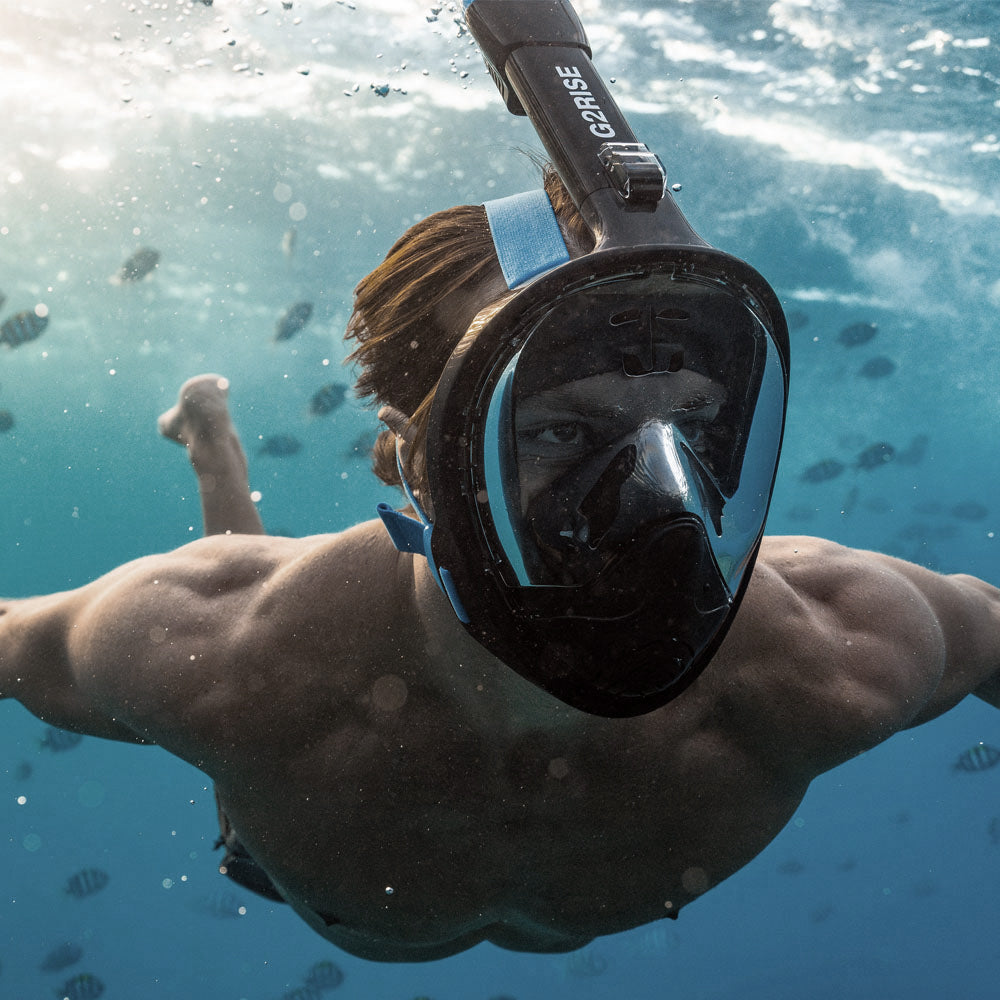
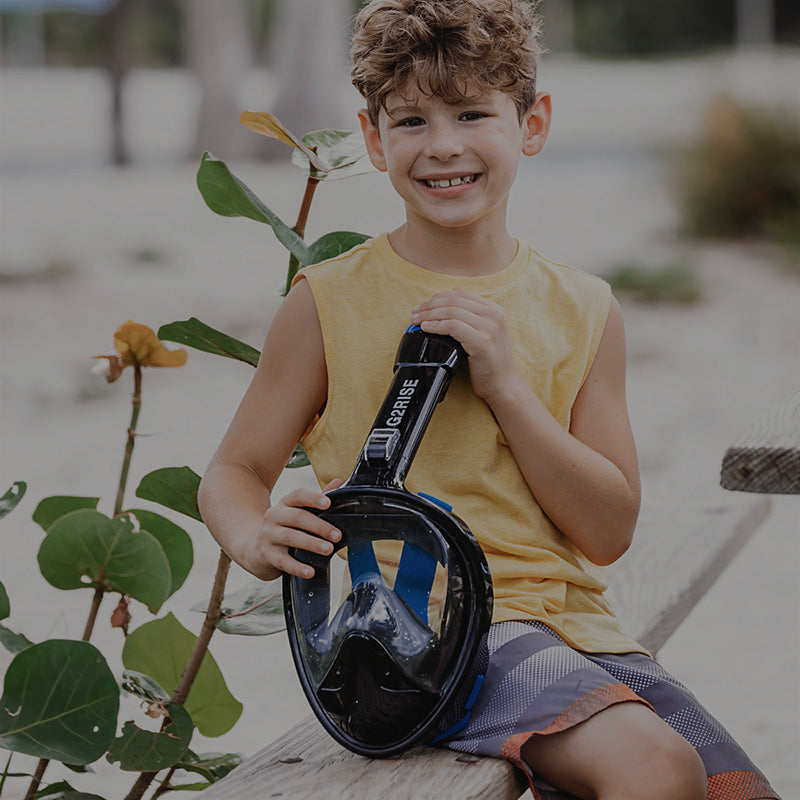
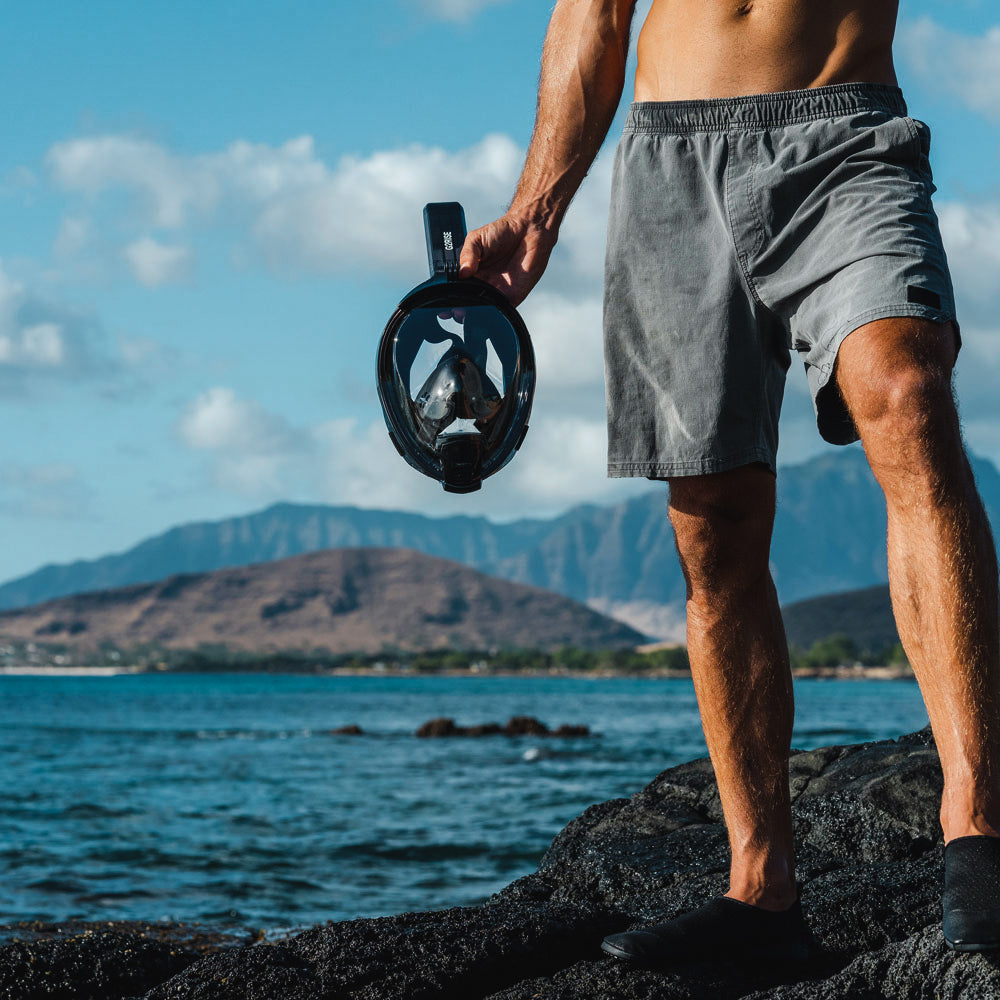
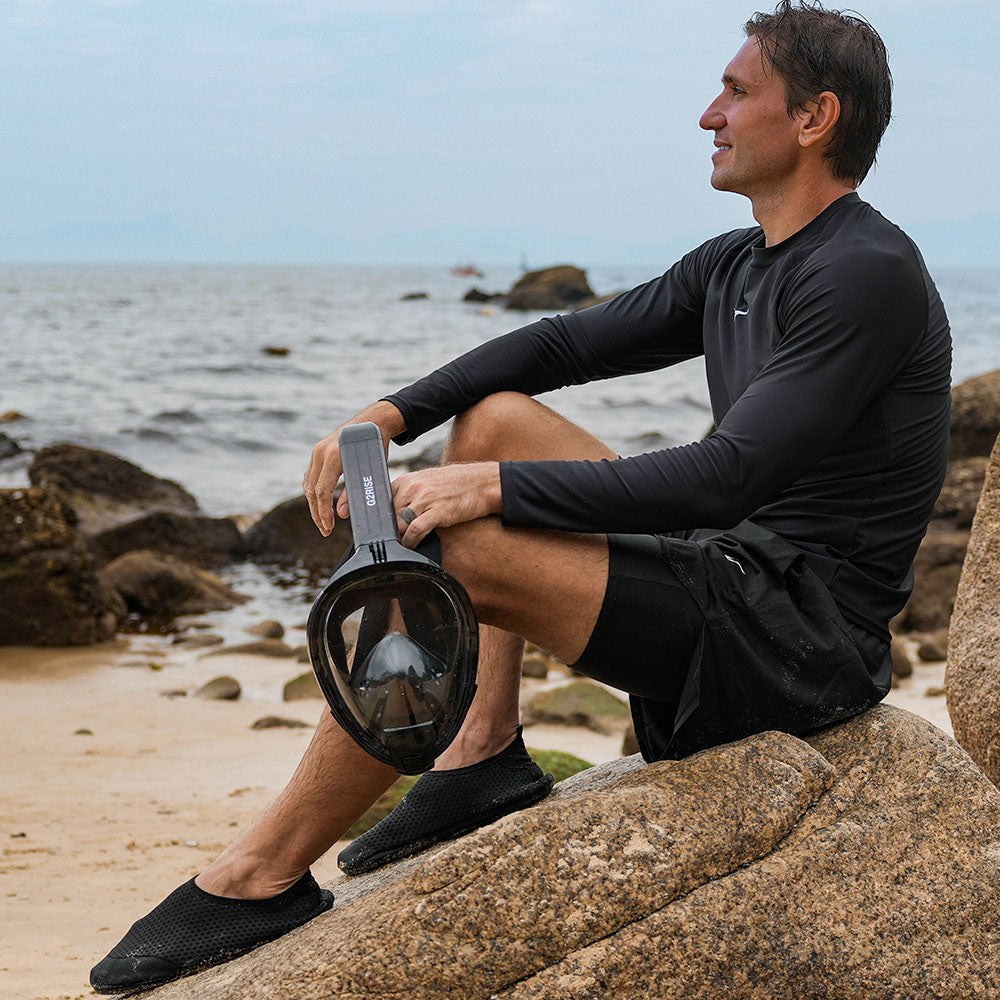
A full-face snorkel mask seals around a larger perimeter—from forehead, down the sides of the face, and under the chin area according to its design. Because the seal is bigger, sizing instructions are model-specific. Use that manufacturer’s face-length method and size chart. Don’t carry a size from one brand to another as if “S/M” were universal.
Comfort counts before suction. Press the mask gently into position and check for hard contact at the brow, nose bridge, cheekbones, and upper lip. Water pressure may push a traditional mask closer to your face, so a dry-land pressure point is unlikely to improve in the water.
How Do You Run a Dry Seal Test?
For a traditional mask, place it on your face without the strap, inhale very gently through your nose, stop inhaling, and release your hands. A compatible mask should remain briefly in place. The test checks skirt contact; it doesn’t prove the mask will never leak while swimming.
- Move hair away and wipe sunscreen or moisturizer from the sealing area.
- Fold the strap forward so it can’t help hold the mask.
- Set the skirt on your face without pushing hard.
- Inhale a small amount through your nose, then stop.
- Release your hands and notice whether the seal holds evenly.
- Relax your face and turn your head slowly.
Don’t inhale hard enough to create discomfort. Strong suction can make a marginal mask cling and hide a shape mismatch. It can also produce pressure around the eyes. You’re looking for an easy, even seal—not the longest time you can make the mask stick.
For a full-face mask, follow the maker’s dry fitting procedure rather than applying a traditional nose-inhalation test. Check the full perimeter for folded silicone, confirm chin and forehead placement, and verify the size exactly as instructed. Don’t block air channels or valves to manufacture suction.
A useful expectation comes from Tropical Snorkeling’s fitting guide: some people may try about a dozen masks before finding the right one. That number isn’t a requirement. It’s a reminder that rejecting a poor fit is normal, not evidence that your face is the problem.
Where Should the Skirt Sit on Your Face?
The skirt should rest on smooth skin, not hair, deep folds, or the edge of your lip. It must lie flat all the way around without rolling inward or outward. Check especially beside the eyes, under the nose, at the temples, and anywhere the face changes angle sharply.
Use a mirror. A skirt that looks centered from the front may be caught near one temple or riding against the hairline. Run a clean fingertip around the outside without lifting the seal. You’re checking for visible folds and misplaced hair, not pressing the skirt into submission.
The mask shouldn’t crowd your eyes. If the skirt sits against an eyelid or the frame touches your brow, facial movement can open a leak. At the nose, the soft pocket should surround rather than crush. At the upper lip, a traditional mask needs enough room for the skirt to stay flat when you insert the snorkel mouthpiece.
That last point is easy to miss. A mask can pass a quiet dry test, then leak when the mouthpiece changes the shape of your cheeks and upper lip. Clip on the snorkel, hold the mouthpiece lightly, and repeat the movement test. If the seal breaks every time, adjust clip height or try a different mask shape.

How Tight Should the Strap Be?
The strap should be only tight enough to keep the mask positioned while the skirt creates the seal. Tightening harder doesn’t fix incompatible geometry. It can flatten or warp the silicone skirt, create red marks, increase pressure on the nose, and turn a small leak into a stubborn one.
For a traditional mask, position the strap high on the back of your head, above the ears, with both sides adjusted evenly. Tighten in small steps. You should be able to move your head without the mask shifting, yet you shouldn’t feel the frame digging in or the skirt compressed into a narrow ridge.
Full-face masks use different strap layouts. Tighten opposing straps evenly according to the manual so the face seal isn’t pulled diagonally. If one side is much tighter, the frame can twist. If you reach the end of the adjustment range and still need more force, stop: you probably need another size or shape.
| Signal | What it often means | Better response |
|---|---|---|
| Deep marks after a brief try-on | Too much strap pressure | Loosen and repeat the seal test |
| Leak worsens as you tighten | Skirt is deforming | Reset the mask or try another shape |
| Strap rests on ears | Strap sits too low | Move it higher on the head |
| Mask slides when you turn | Position or strap balance is wrong | Center and adjust both sides evenly |
| Hard frame touches nose or brow | Shape or size mismatch | Choose a different mask |
How Do Hair, Facial Hair, and Sunscreen Affect the Seal?
Hair, stubble, facial hair, and slippery skincare products can create tiny channels under the skirt. Move loose hair away, fit the mask before applying oily products near the seal, and check that moustache or beard hair isn’t crossing the lower edge. Never use unsafe chemicals to force a seal.
Long hair doesn’t have to be trapped or pulled. Tie it back low enough that the strap can sit in the correct position. A fabric strap cover may reduce tangles, but it shouldn’t cause the strap to slide. Before entering the water, check both temples for single strands caught under silicone.
Facial hair is more individual. Short stubble may leak more than a longer moustache that can be combed away from part of the seal, but there’s no universal trick. A narrower skirt or different lower-skirt shape sometimes helps. Test in shallow water rather than assuming a dry hold guarantees success.
Use sun protection, of course, but let it absorb and keep excess product off the exact sealing line. Don’t apply petroleum jelly to silicone. It can attract grit, make the mask slide, and may be incompatible with some materials. If a manufacturer approves a specific mask-seal product, follow those directions only.
Which Signs Mean the Size or Shape Is Wrong?
The size or shape is wrong when the skirt crosses hair or lips, the frame contacts bone, the nose pocket pinches, the mask needs extreme tension, or the seal repeatedly breaks in the same spot. A mask that fits only while you hold a rigid expression isn’t a practical fit.
- Too wide: the skirt reaches the hairline or leaves gaps near the temples.
- Too narrow: the skirt crowds the eyes or sits on the sides of the nose.
- Too tall: the frame contacts the brow or the lower skirt overlaps the lip.
- Too short: the nose pocket presses upward or the lower seal won’t sit flat.
- Wrong contour: one area leaks even though every other area looks correct.
Labels can mislead. “Kids,” “women’s,” “low volume,” and “wide fit” describe intended ranges, not your exact geometry. Measure only when the brand provides a matching method, and don’t mix one company’s measurement with another company’s chart.
Color, camera mounts, lens style, and price come after fit. A modest mask that stays comfortable and sealed beats an expensive one that looks excellent in a gear bag. Prescription inserts also require compatible lens geometry, so vision needs may narrow the options—but they don’t cancel the fit test.

How Should You Test the Fit in Shallow Water?
Test a new mask in calm water shallow enough to stand, with a buddy close by. Enter without rushing, breathe normally, and check the seal while still. Then add one movement at a time: look left and right, look down, smile lightly, and swim a few relaxed strokes.
For a traditional mask, attach the snorkel and hold the mouthpiece without biting hard. Notice whether it pulls the mask or changes the lower seal. Practice clearing a small amount of water only after the fit feels calm and stable. For a full-face mask, remain at the surface and follow every use limitation in the manual.
If water appears, note the location before removing the mask. A leak at one temple suggests hair or contour. A leak under the nose may involve the lower skirt, mouthpiece movement, or facial hair. Flooding during every turn points to strap position or movement. Repeated leaks in the same clean area usually mean a shape mismatch.
Stop the test if breathing feels restricted, the mask causes pain, vision changes, or anxiety builds. Stand up, remove the equipment, and breathe normally. No mask is worth “getting used to” when the basic fit is wrong.
If you’re comparing replacements, use a clear size chart, check the return policy, and prioritize a skirt shape that matches your face. You can explore G2RISE snorkeling equipment as part of that comparison. The final choice should pass your own dry and shallow-water checks before it joins a real trip.

Leave a comment
This site is protected by hCaptcha and the hCaptcha Privacy Policy and Terms of Service apply.