

Short answer: yes, absolutely. We get this question constantly from customers - "I wear glasses, can I still snorkel?" And the answer has always been yes. About 42% of Americans are nearsighted (Vision Council of America). If poor vision stopped people from snorkeling, it would wipe out half our customer base. It doesn't.
There are three practical ways to snorkel with myopia. Which one works best depends on how strong your prescription is and how often you get in the water. Let's break them all down.

Can Nearsighted People Snorkel?
Yes - nearsighted people snorkel all over the world without issue. Myopia affects your distance vision in air. Underwater, with the right setup, you can see fish, coral, and sea turtles just as clearly as anyone with 20/20 vision. The key phrase there is "right setup." Just grabbing any mask at a souvenir shop and jumping in? That's where people with poor eyesight run into trouble.
The good news is that the right setup doesn't have to be expensive or complicated. We offer prescription insert lenses for $10.99 that clip right into our SN01 full-face mask. For mild to moderate myopia, that's genuinely all you need.
Why Do Standard Snorkel Masks Blur Your Vision?
Here's the physics, in plain language: when light travels from water through the mask lens into the air space in front of your eyes, it bends. Without corrective lenses to compensate, your eyes can't process it clearly. The result is blurry vision - even for someone who can see fine on land without glasses.
It's the same reason fish look distorted if you open your eyes underwater without a mask. The mask solves the water-in-your-face problem, but it doesn't fix your prescription. For that, you need something between your eye and the lens that actually corrects your vision.
Optical inserts do this. So do contacts. So do custom-ground prescription lenses. Three solutions - here's how they compare.

What Are the 3 Best Ways to Snorkel With Poor Eyesight?
Three options. They range from $10 to $200+. Here's the honest breakdown:
Option 1 - Optical Inserts (Best for Most People)
Small correction panels that clip inside a compatible snorkel mask. They come in standard diopter steps - -1.0, -1.5, -2.0 and so on, usually up to -8.0. Pick the one closest to your prescription, clip it in, and you're done.
Our SN01 insert kit is $10.99. If you're a -3.25, you'd grab the -3.0 or -3.5. Here's something most people don't realize: the water-to-air refraction inside the mask creates a natural slight magnification effect. The gap between your insert power and your real prescription matters less than you'd expect. Most of our customers who try this for the first time are genuinely surprised by how well it works.
Best fit for: mild to moderate myopia (-1.0 to -6.0). If you have strong astigmatism on top of your myopia, option 2 is probably worth the extra cost.
Option 2 - Custom Prescription Lenses (Best for Strong or Complex Prescriptions)
An optician or dive shop can grind lenses to your exact prescription and mount them into a mask frame. The accuracy is excellent - close to what you get from real eyeglasses.
Cost: usually $80 to $200+ depending on complexity. There's a real downside here though - you're committed to that one mask. Lose it or break it, and you're starting from scratch. For a -7.0 with astigmatism who snorkels regularly, this is the right investment. For a first-timer testing the waters (literally), it's probably more than you need.
Option 3 - Daily Disposable Contacts (Most Flexible, Some Risk)
Plenty of experienced snorkelers wear soft daily disposables under a standard mask. If the mask stays sealed - and a properly fitted mask usually does - this works perfectly well.
The risk: ocean water harbors microorganisms, and if any water contacts your lenses, you're exposed to potential infection. Acanthamoeba keratitis is rare but it's not something to be casual about. If you go this route, daily disposables only, never reuse them after ocean exposure, and rinse your eyes with clean fresh water after every session. And bring a backup pair in a waterproof case - losing a lens mid-reef is no fun.
Our recommendation for first-timers: start with inserts. You'll have enough to focus on without adding contact lens management to the mix.
How Do You Choose the Right Prescription Snorkel Mask?
Insert compatibility is the most important factor. Not every mask accepts inserts - the clip system needs to match. Before buying any mask, confirm the manufacturer sells compatible prescription lenses for it. This is actually why a lot of cheap masks aren't worth buying for nearsighted snorkelers - there's no insert ecosystem around them.
Beyond that, here's what we'd prioritize:
- Wide field of view. A panoramic mask means your corrected vision covers more of what's around you. Narrow two-window masks force constant head-turning, and the uncorrected edges can be distracting.
- Reliable seal. Non-negotiable. Test it before you're in the water: press the mask to your face without the strap and breathe in through your nose. If it stays put, the fit is right.
- Anti-fog treatment. A fogged lens is as useless as a blurry one. Use a defog solution or a tiny drop of baby shampoo before each session - rinse lightly after, put the mask on wet. Don't skip this step.
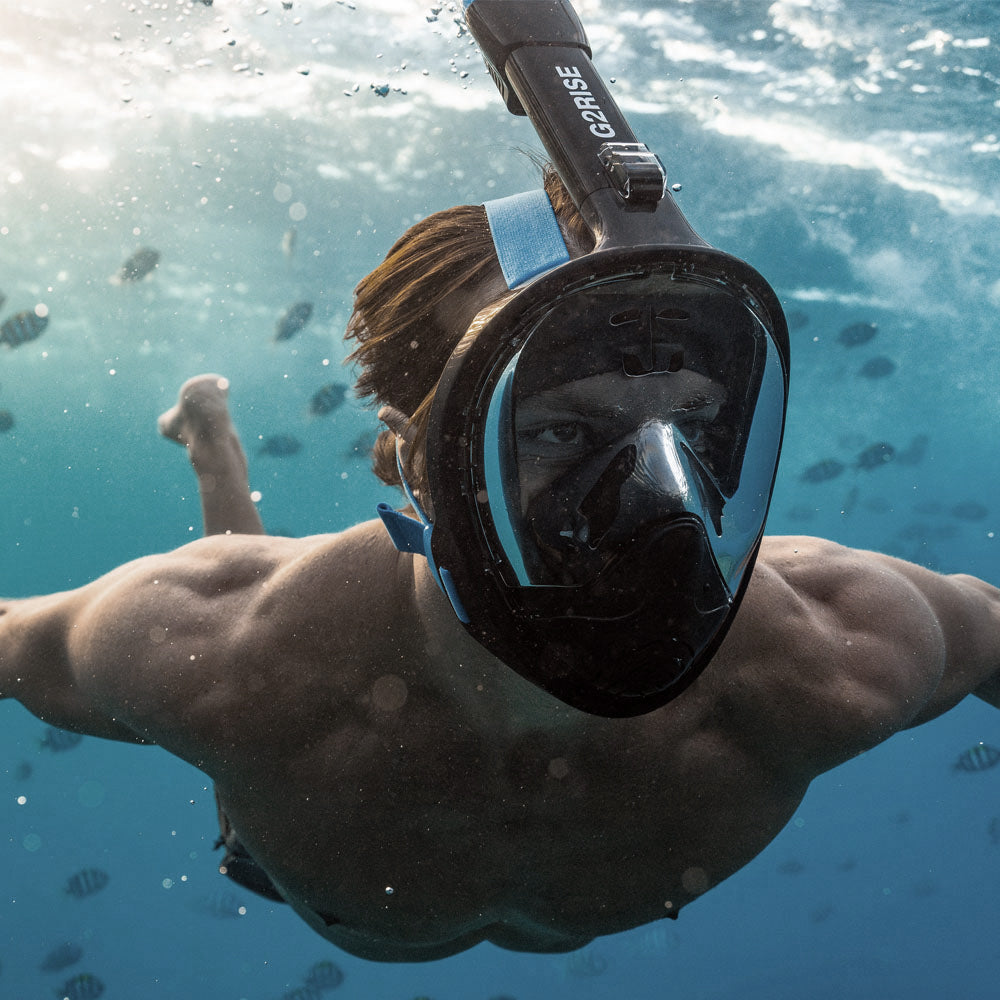
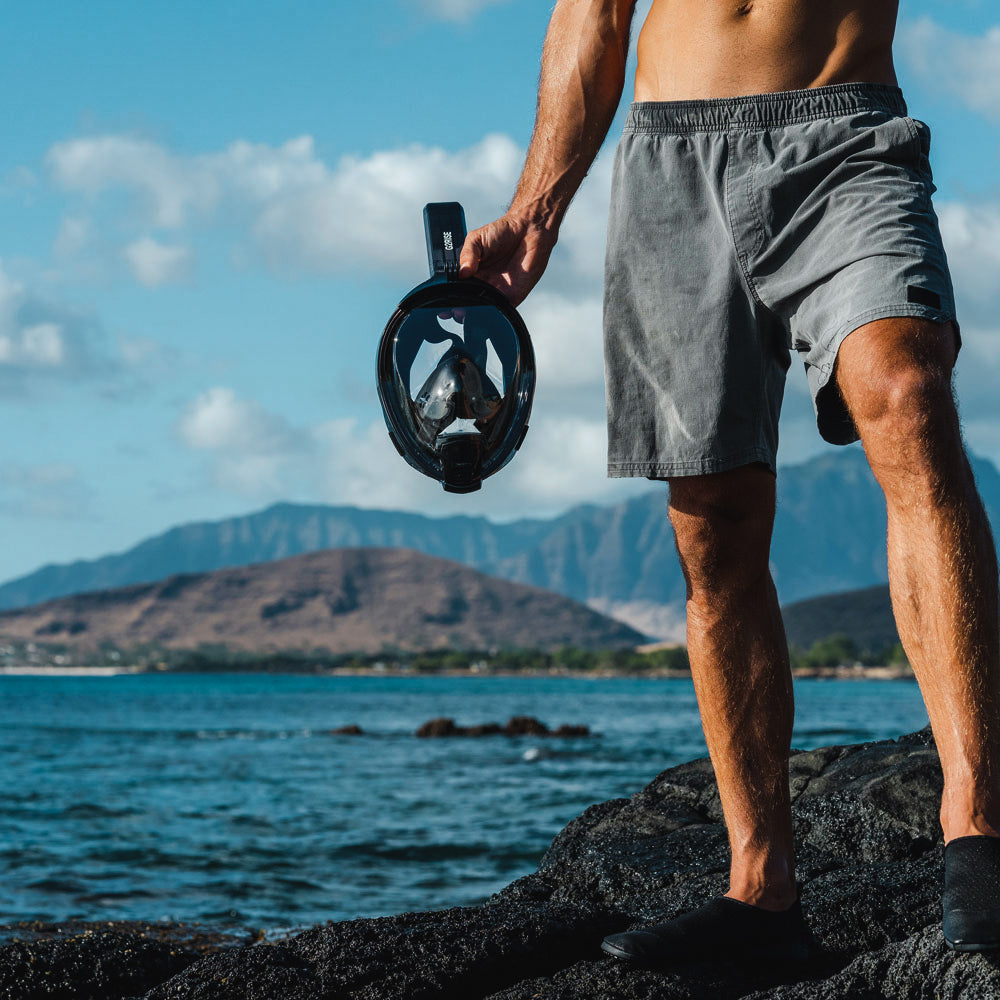
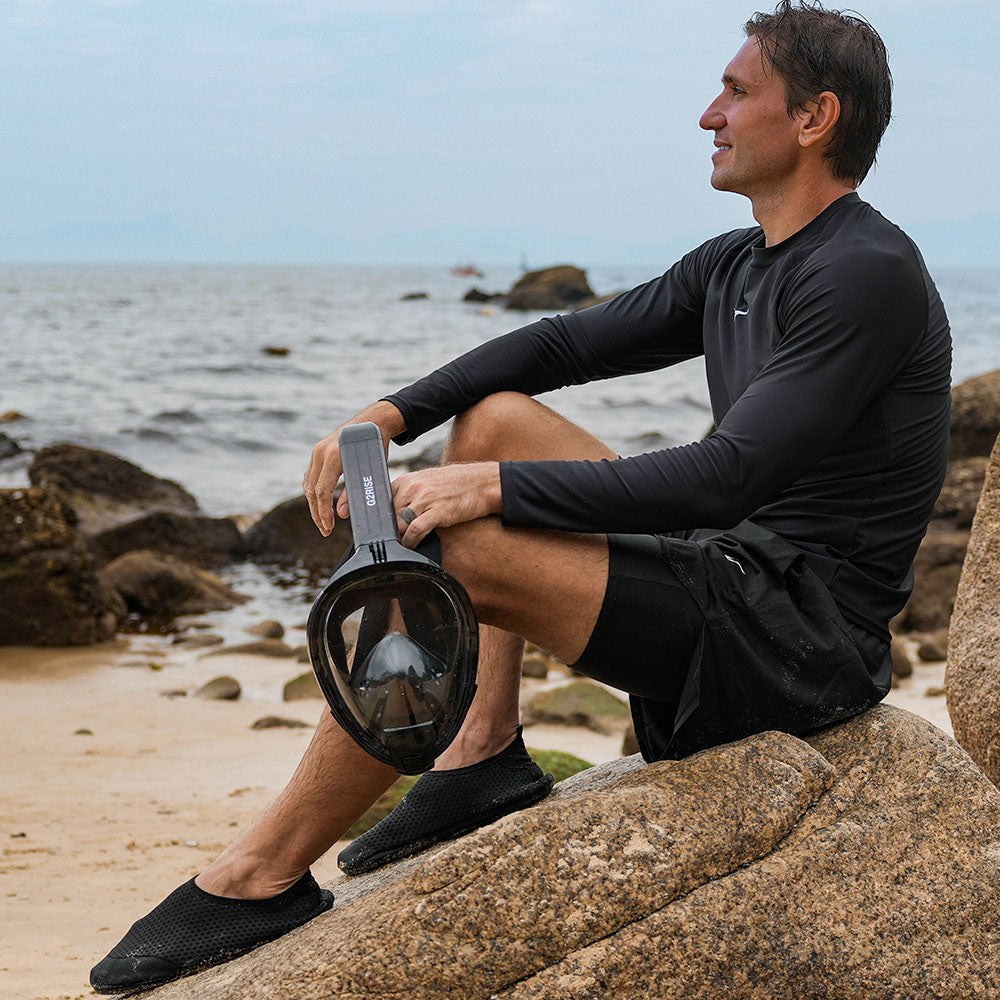
The G2RISE SN01 was designed with this use case in mind: 180� panoramic glass, a solid seal from nose to jaw, and full compatibility with our $10.99 insert kit. If you're deciding between masks specifically for a nearsighted snorkeling setup, it's worth a look.

Is It Safe to Snorkel With Contact Lenses?
It can be - but it's not as simple as just wearing your regular contacts. The infection risk is real, and it's worth understanding before you decide.
Soft contact lenses can trap microorganisms against your cornea if ocean water makes contact with them. Acanthamoeba keratitis, while rare, is a serious corneal infection that can result from this. Daily disposable lenses reduce the risk because you're throwing them away after each use, but they don't eliminate it entirely if water actually gets under the mask.
That said: millions of people snorkel with contacts every year without problems. A properly fitted mask with a good seal is your main protection. If water's not getting in, the risk drops dramatically.
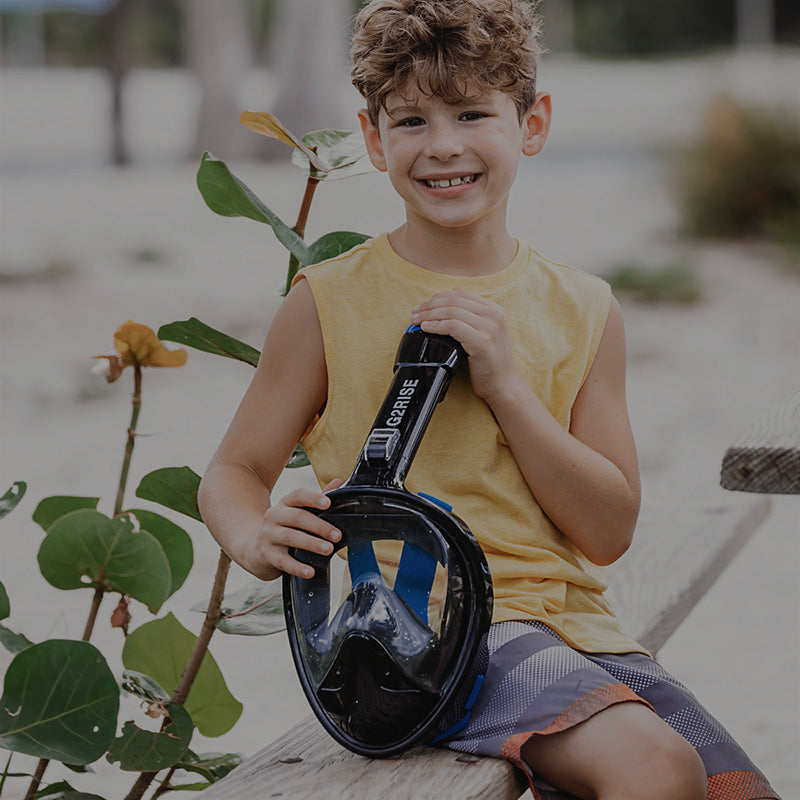
For kids, first-timers, or anyone still getting their mask fit right: inserts are the better call. Fewer variables to manage, no infection risk, and one less thing to worry about when you're still figuring out how to breathe through a snorkel tube.
What Should You Know Before Your First Nearsighted Snorkeling Trip?
A few things we actually tell our customers before their first trip:
Test your mask at home before you travel. Not on the beach. At home, in a bathtub. The number of "my mask is leaking" messages we get from people who are already at a resort is genuinely painful. Test it. The suction test gets the fit - actual water confirms the seal.
The prescription gap closes underwater. If your inserts are -3.0 and your prescription is -3.5, you'll barely notice the difference in clear water. The natural magnification effect inside the mask compensates more than you'd expect. Don't stress about it.
The defog routine is not optional. Rinse. Apply defog (or a drop of baby shampoo). Rinse lightly. Put it on wet. Every single time. Skipping this step on your first dive will cost you the whole experience.
Start in shallow water. 3-4 feet. Get your breathing pattern locked in, get comfortable with the vision correction, then move to the reef. People who skip this and head straight to open water with unfamiliar gear tend to panic, and panicking while snorkeling is not a great experience.

FAQ: Snorkeling With Glasses and Vision Correction
Can you wear glasses snorkeling?
No - regular glasses won't work inside a snorkel mask. The arms block the seal, which causes water to leak in. Optical inserts or contact lenses are the solution.
What is a snorkel mask for glasses wearers?
A mask designed to accept prescription optical inserts - correction lenses that clip inside at your diopter level. You're not wearing glasses inside the mask; the inserts replace the need for glasses underwater.
How do I snorkel if I can't see without glasses?
Start with optical inserts in a compatible full-face mask. It's the easiest entry point - no optician appointment needed, and it costs about $10. If your prescription is complex, talk to a dive shop about custom-ground lenses. If you're comfortable with contacts, daily disposables under a sealed mask also work.
What is the best snorkel mask for nearsighted people?
Wide field of view, reliable seal, and confirmed insert compatibility - those three things matter more than brand or price. Panoramic designs give you the most usable corrected vision area.
Can I snorkel with a -5 prescription?
Yes, easily. Standard insert systems typically go up to -8.0. -5.0 is well within range. Pick the closest increment and you're good.
Does my glasses prescription work the same underwater?
Mostly, but not exactly. The natural magnification effect inside the mask means you may need slightly less correction than on land. Some customers with mild myopia (-1.0 to -2.0) skip the inserts entirely in clear water and find it's fine.
Snorkeling glasses vs snorkeling mask - what's the difference?
Snorkeling glasses (swim goggle style) don't cover the nose. That means you can't equalize pressure when you dive down, and using a snorkel tube is awkward. A proper snorkel mask that covers eyes and nose is always the better choice - especially if you're adding optical correction.
Can I get a prescription snorkel mask for my child?
Yes. Optical inserts are available in youth sizes, and most kids' snorkel masks accept them. Check insert compatibility specs for whichever mask you're looking at before buying.

Leave a comment
This site is protected by hCaptcha and the hCaptcha Privacy Policy and Terms of Service apply.