
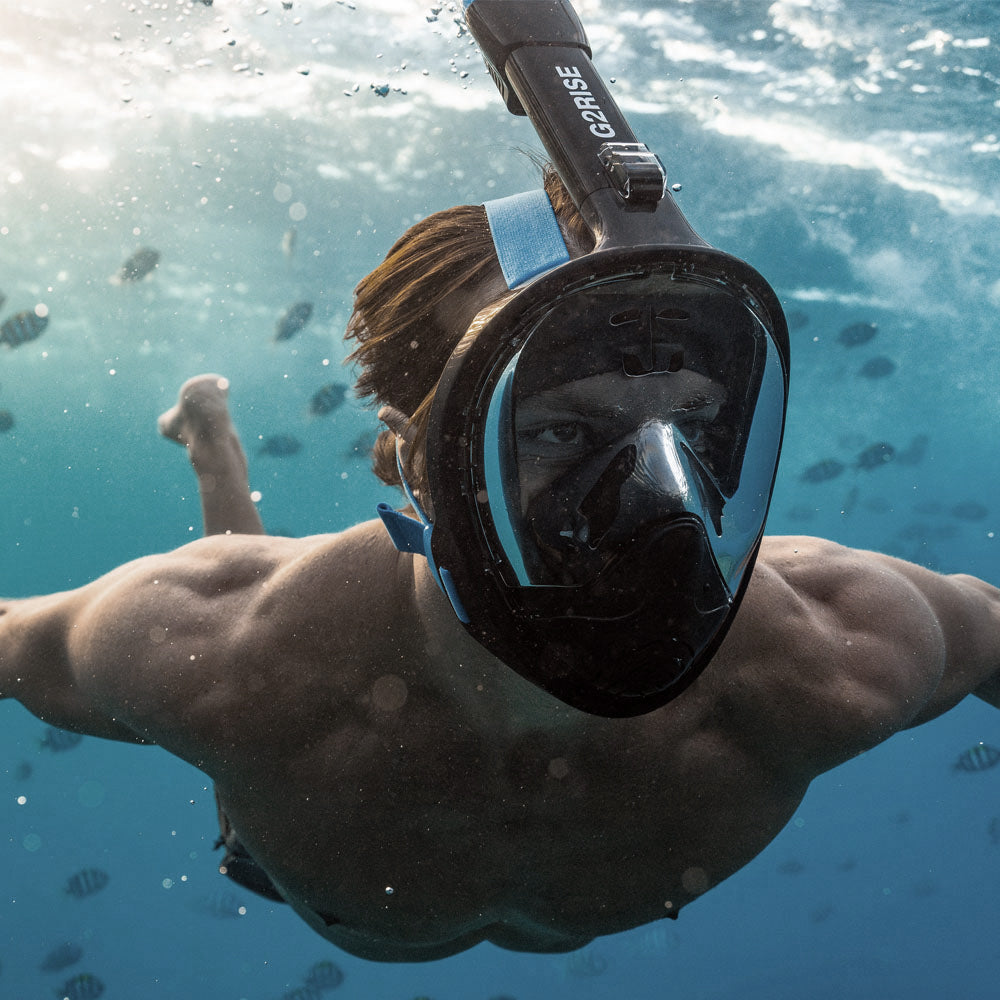
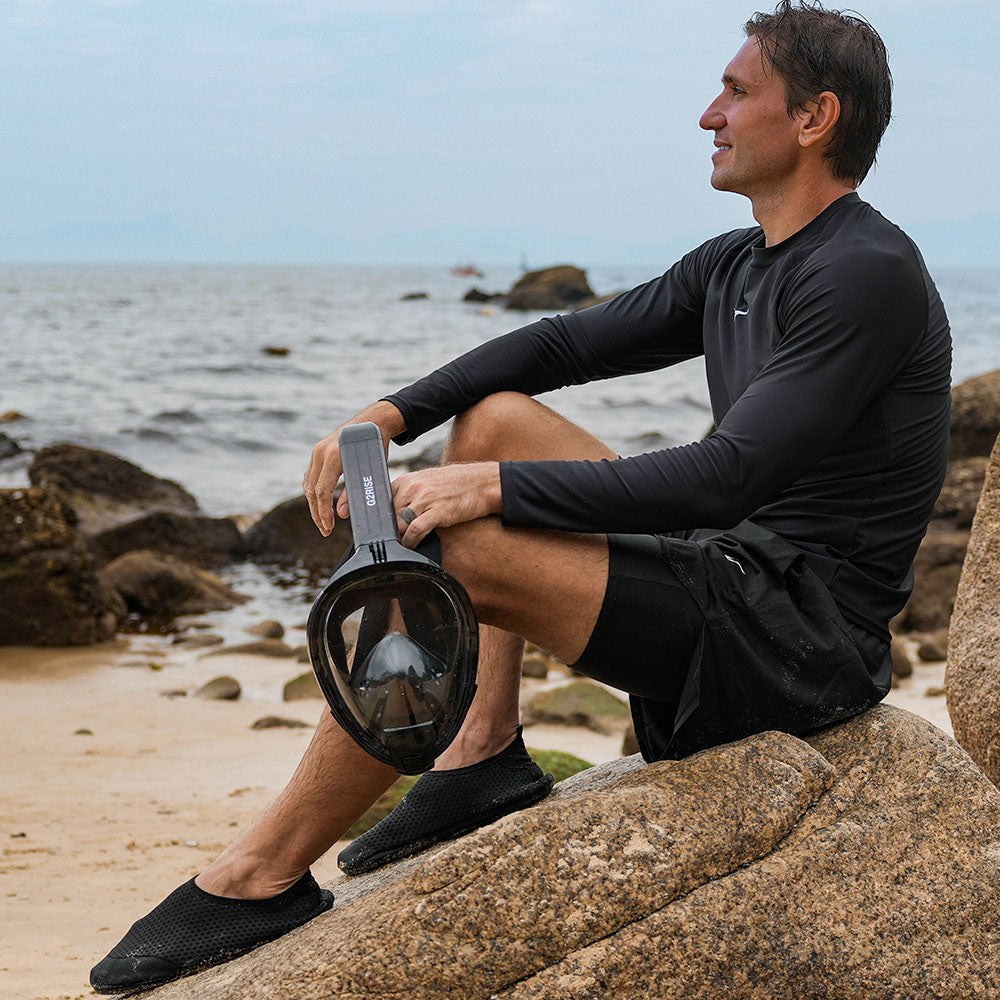

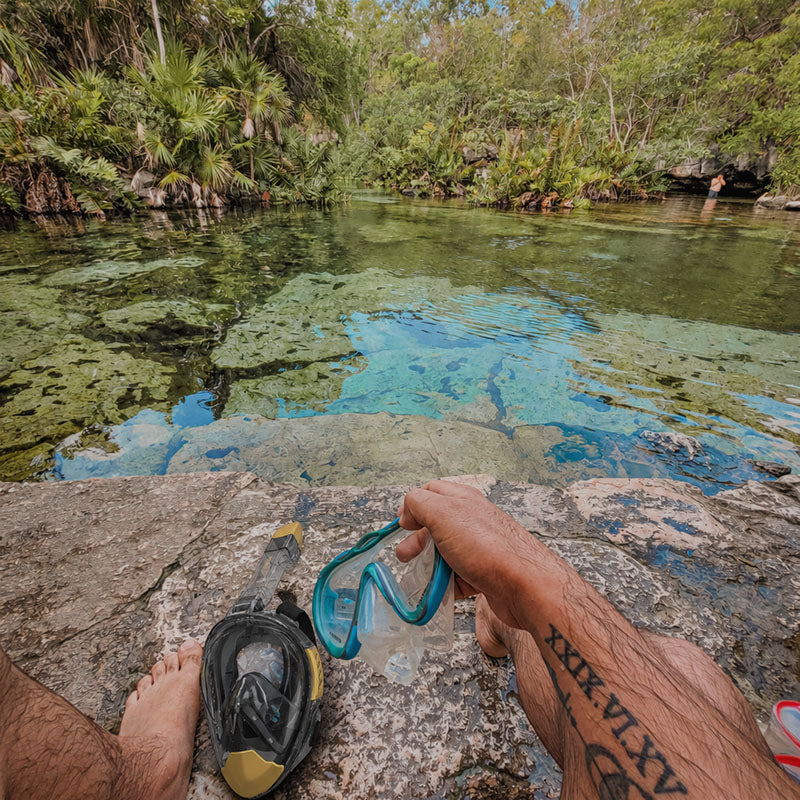
Full face snorkel masks are one of the most searched and most debated pieces of snorkeling gear out there. Type the term into Google and you'll find "dangers" and "banned" right there in the related searches. That's enough to make anyone hesitate.
So here's the honest answer before we go any further: a quality full face mask is perfectly safe for surface snorkeling. A cheap one might not be. And there's one specific situation where you should use a traditional mask regardless of price. Let's work through all of it.

Why Do Full Face Snorkel Masks Get Such Mixed Reviews?
Read enough reviews and forums and you'll find two camps: people who swear by their full face masks, and people who had a bad experience and would never recommend one. Both groups are usually right about their own experience.
The split comes down to two things — mask quality and how you're using it. Cheap masks have a known CO2 problem (more on that below). And full face masks are strictly surface tools: try to dive down with one and it's genuinely uncomfortable. People who bought cheap masks or tried to swim deep with them had bad experiences. People who bought quality masks and used them as intended loved them. That's really the whole story.
What Are the 3 Real Advantages of a Full Face Snorkel Mask?
Three advantages that hold up consistently in real-world use:
You won't fight fog.
With a traditional mask, fogging is a constant annoyance. Temperature difference between your face and the water creates condensation on the inside of the lens. Anti-fog spray helps for a while — then it doesn't. It's one of the most complained-about parts of traditional snorkeling gear, especially for beginners who haven't perfected the spit-and-rinse technique yet.
A good full face mask runs fresh air continuously across the viewing panel. The snorkel has three separate compartments: fresh air comes in through the center channel, circulates in front of your eyes, and your exhaled air exits through side channels on either side. Because there's constant airflow across the glass, condensation doesn't build up. The view stays clear the whole session — not just for the first five minutes.
You breathe through your nose. This matters more than it sounds.
Traditional snorkel setups require mouth-only breathing through a mouthpiece you hold in your teeth. For some people this is fine. For a lot of people — especially beginners — it's tiring and the source of most early anxiety about snorkeling. Jaw fatigue, the feeling of water threatening to come in, the need to consciously manage every breath.
A full face mask lets you breathe exactly the way you breathe in open air: nose and mouth, naturally, no mouthpiece required. First-timers consistently say this makes snorkeling feel immediately more relaxed. You spend the session looking at the reef instead of managing your breathing.
It's less claustrophobic — counterintuitively.
A tight-fitting traditional mask over your eyes and nose plus a snorkel tube gripped in your teeth is a lot of gear on your face. Some people never get comfortable with it. A full face mask, despite covering more of your face, tends to feel less restrictive: the silicone sits further back on your face, your mouth is completely free, and the panoramic viewing lens means you're not peering through a narrow frame. People who've always felt too claustrophobic for traditional snorkeling often find the full face mask is the thing that finally makes it work for them.
Is the CO2 Safety Concern Real?
Yes — and it's specifically a problem with cheap or poorly designed masks, not with full face masks as a category.
Here's exactly what happens. A well-engineered full face mask has completely separate airflow pathways. Fresh air in through one channel. Exhaled air — which is high in CO2 — exits through a completely separate channel. The two never mix. This is what keeps the lens clear and what keeps CO2 levels safe.
A poorly designed mask might route all air through a single tube. Fresh air in and exhaled air out through the same pathway. When that happens, CO2 can accumulate inside the mask cavity. You start re-breathing some of your own exhaled air. Over a long session, that buildup leads to headaches, dizziness, and in serious cases, loss of consciousness in the water.
So when you're looking at any full face mask, the single most important safety question is: does it have separated inhalation and exhalation pathways? This isn't a premium feature — it's the baseline. If a product listing doesn't mention it, assume it doesn't have it.
When Should You NOT Use a Full Face Snorkel Mask?
One situation, and it's clear: if you want to swim down.
Full face masks are designed to be used at the surface. When you try to dive down — even a few feet — two things happen fast. First, you can't equalize pressure in your ears because your nose is sealed inside the mask and you can't pinch it. Second, the water pressure pushes the mask hard against your face. It's not a subtle discomfort. One person who tested this described it as feeling like the mask was trying to crush your face into the back of your head.
For surface snorkeling where you're floating and looking down at the reef, full face masks are excellent. For freediving, getting close to the bottom, or any situation where you need to go under: traditional mask and snorkel.
Full Face vs Traditional Mask — Who Should Use Which?
Here's how we actually break it down for customers:
Full face mask makes sense if: you're new to snorkeling, you've had problems with traditional masks fogging up, you find the mouthpiece uncomfortable, or you're looking for the widest possible field of view. Families, beginners, and anyone who's been put off snorkeling by the gear almost always have a better first experience with full face masks.
Traditional mask makes sense if: you freedive or regularly swim below the surface, you're already comfortable with traditional gear, or you're doing active snorkeling where you need maximum control and flexibility.
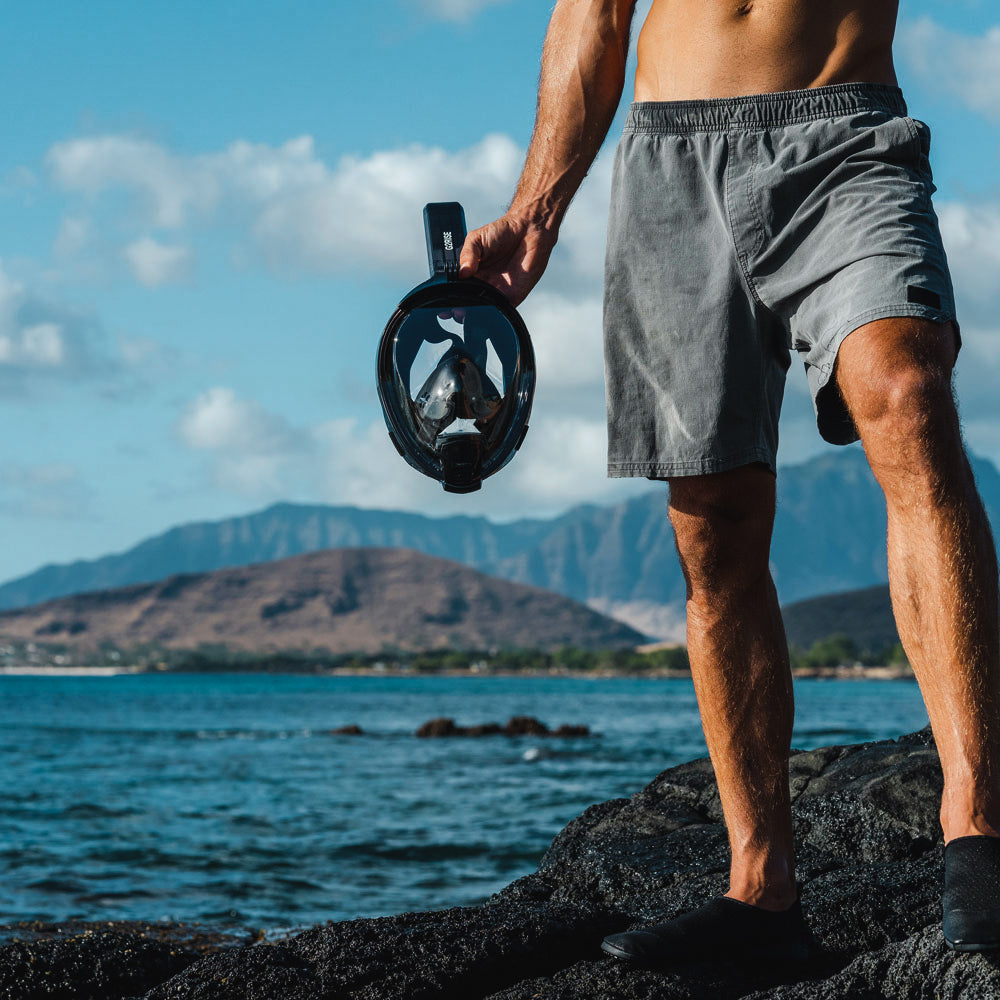
The G2RISE SN01 sits in the full face category — built for surface snorkeling with properly separated airflow channels, a 180° panoramic lens, and a silicone seal designed to fit a wide range of face shapes. If you're looking for a starting point, it's what we stand behind.
What Should You Actually Look For When Buying?
Past the safety basics, here's what separates a good experience from a frustrating one:
- Fit first. The seal between the mask silicone and your face determines whether water gets in. Different masks fit different face shapes. Before any ocean trip, test your mask in a bathtub. If it leaks there, it'll leak in the sea.
- Separated airflow channels. Not optional. Required. Look for it explicitly in the product description.
- Purge valve at the bottom. For clearing any water that does get in. Good masks have one. Cheap masks sometimes don't.
- Panoramic lens coverage. The wider the viewing area, the less you need to turn your head to see what's around you. For reef snorkeling especially, this matters.

FAQ: Full Face Snorkel Mask Questions, Answered Directly
Why are full face snorkel masks banned at some snorkel tours?
A combination of early incidents (mostly involving cheap, badly designed masks) and tour operator liability concerns. Some operators also don't carry replacement parts for full face masks, so a broken strap mid-tour is a bigger problem. The blanket ban is an overcorrection — quality masks are safe — but tour operators set their own policies and aren't obligated to accommodate every gear choice you bring.
Can you dive down with a full face snorkel mask?
Not comfortably. You can't equalize ear pressure (no nose access to pinch), and the mask will squeeze hard against your face under water pressure. These are surface-only tools.
Are there full face snorkel masks for kids?
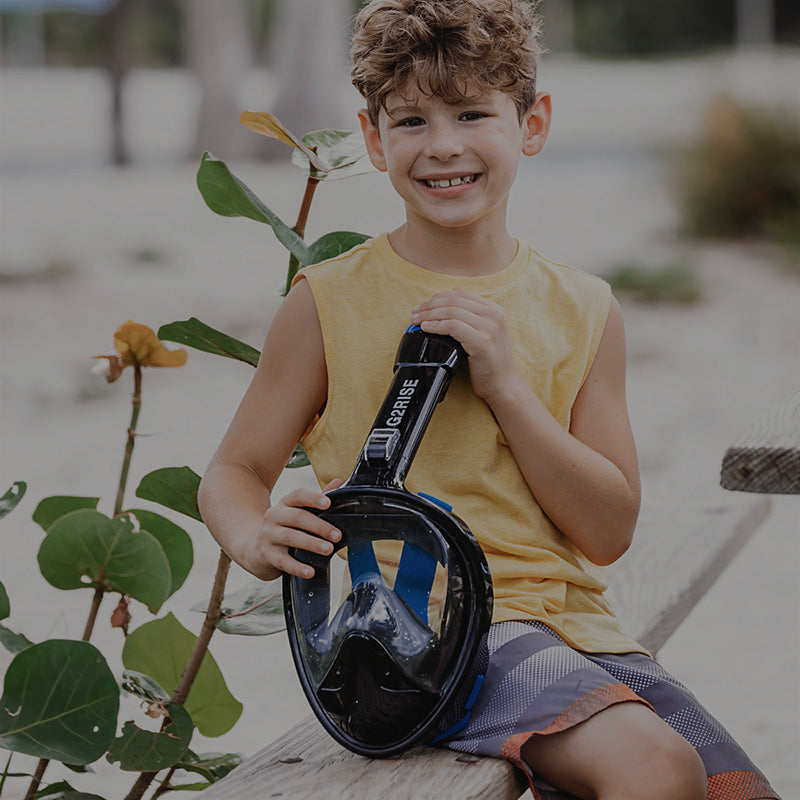
Yes. Most brands including G2RISE make youth sizing. Fit matters even more for kids because an adult-sized seal won't close properly on a smaller face. Measure the face before buying if you can, and test the seal in a tub before the trip.
What's the best full face snorkel mask for beginners?
Prioritize separated airflow, a proper seal, and a purge valve — in that order. Those three features matter more than brand name or price point. If you're buying without trying it on, make sure the return policy is solid.
How long can you use a full face snorkel mask in one session?
As long as you want, with a quality mask that's fitted and ventilated properly. If you get a headache or feel dizzy during use, surface immediately — that's CO2 accumulation, which means something is wrong with the seal or the mask's airflow design.
Are full face snorkel masks good for swimming laps?
No. They're not designed for flip turns or competitive swimming positions. For lap swimming, use standard swim goggles. Full face masks are built for leisurely surface snorkeling, not for anything that requires putting your face completely in the water repeatedly.


Leave a comment
This site is protected by hCaptcha and the hCaptcha Privacy Policy and Terms of Service apply.