
Snorkel Float: How to Choose One for Safer Trips
A snorkel float can make a surface session calmer, more visible, and easier to manage—but only when the float matches the swimmer and the water. Some models are simple rest platforms. Others are bright tow buoys with a small storage pocket. A certified personal flotation device is a different category altogether. Mixing those jobs up is where bad buying decisions start.
This guide gives you a practical way to choose. We’ll look at the type of support you actually need, the features that matter, how to tow a float without creating a snag problem, and the conditions where leaving it on shore is smarter. One rule runs through the whole article: a float adds a layer to your plan. It doesn’t replace swimming ability, supervision, a buddy, or conservative conditions.

What Is a Snorkel Float and Who Needs One?
A snorkel float is a surface aid used for visibility, rest, towing, or carrying small essentials. It may help a capable swimmer reduce effort, but it isn’t automatically a life jacket. Beginners, families, tour groups, and open-water snorkelers can benefit when the device is chosen for a specific job and used within its label.
The phrase covers several products that behave very differently. A chest-supported inflatable lets you pause with your face near the water. A tow float trails behind you and makes your position easier to see. A snorkel vest adds wearable buoyancy. A Coast Guard-approved or otherwise locally approved PFD is designed and labeled under a formal flotation standard. Don’t assume one can stand in for another.
Start with the problem you’re trying to solve:
- I want a stable place to pause. Look at a handled rest float or a simple foam support used in calm water.
- I need to be more visible at the surface. A bright tow buoy may fit, provided the line won’t snag in your environment.
- I want wearable support. Compare a snorkel vest, flotation belt, and an approved PFD according to your ability and local rules.
- I need certified life-saving performance. Skip general recreational floats and choose a properly fitted, approved device for the activity.
Children need direct adult supervision even when they’re holding a float. One current reversible model reviewed during our research explicitly says it can be used by children or adults in pools, lakes, or the ocean, while also stating that children require adult supervision. That last sentence matters more than the product’s cheerful shape.
What Types of Snorkel Floats Are Available?
The main choices are rest floats, tow buoys, wearable snorkel vests or belts, approved life jackets, and simple foam supports. The best type is the one that solves your primary need with the least interference. A device that feels reassuring in a calm pool can become awkward in wind, surf, current, rocks, or crowded water.
Handled or reversible rest floats
These are usually broad inflatables with handles. You hold or lean on them while keeping your face near the surface. Some can be flipped for a different body position. The reversible float found in our SERP research was listed at $29.95 at the time of research and described two orientations: handles down for a snorkeling position and handles up for swimming support. That’s a useful design idea, not a universal specification.
Tow floats and dry-bag buoys
A tow float follows on a leash and is usually chosen for visibility. Some have a dry compartment for keys, a small towel, or other light items. Treat storage claims conservatively. A dry compartment isn’t a promise that electronics will stay dry, and a loaded buoy catches more wind. Use a separate waterproof case for anything you can’t afford to lose.
Snorkel vests, flotation belts, and life jackets
Wearable devices keep the support attached to your body. Belts tend to leave the shoulders free. Snorkel vests can offer adjustable surface support. Life jackets generally provide more structured buoyancy but may restrict the face-down position or your arm movement. Boss Frog’s comparison separates belts, jackets, and snorkel vests and also notes five PFD rating categories. Check the label and local regulation instead of buying by appearance.
Foam boards and simple supports
A foam float or kickboard-style aid can be pleasantly uncomplicated in a calm, supervised bay or pool. There’s no inflation valve to fail, and it gives your hands a clear resting point. Its weakness is portability and windage. It can also slip away because it isn’t worn, so it shouldn’t be treated as emergency flotation.
Which Safety Features Matter Most?
Prioritize a clear purpose label, high visibility, secure handles, reliable inflation or foam integrity, and an attachment system appropriate for the site. Then check the warnings. The safest-looking float can still be the wrong tool if it has an uncontrolled tow line, poor fit, weak seams, or no recognized approval for the support you require.
Visibility comes first for tow buoys. Bright orange, yellow, or pink is easier to distinguish than ocean-colored blue. Reflective details can help in flat light, but they don’t turn a swimmer into a navigation marker. In areas with boats, use only established snorkeling zones and follow local operator or lifeguard guidance.
Handles should work when your hands are wet. You shouldn’t have to pinch a narrow fabric loop or hold a sharp plastic edge while tired. If the float is inflatable, inspect the valve, seams, and chambers before every outing. Inflate it on land and leave it for a few minutes. A slow leak is easier to find beside your bag than offshore.
The label needs to match the claim. Words like “buoyant,” “support,” and “float” don’t necessarily mean the product is an approved PFD. If a tour, jurisdiction, age group, or swimmer requires approved flotation, look for the exact certification and size range on the device. Marketing copy isn’t certification.
Also keep the float in perspective. A Seaview 180 article summarizing a Hawai‘i snorkel-safety survey reported that 38% of incident participants used a full-face mask, and 90% of those users considered it a contributing factor. Those figures don’t prove one simple cause. They do reinforce a broader lesson: equipment can’t cancel health, breathing, fit, exertion, or open-water risk.
How Much Buoyancy and Storage Do You Need?
There’s no responsible universal buoyancy number for every snorkeler. Body size, exposure suit, salt or fresh water, swimming ability, and the device’s intended use all change the answer. Follow the manufacturer’s weight and use limits, choose certified support when required, and test the complete setup in shallow, controlled water before going farther.
For a rest float, you want enough support to pause without climbing onto it or forcing it underwater. For a tow buoy, you mainly want visibility and a brief handhold unless the manufacturer explicitly states more. For a wearable device, fit is as important as raw buoyancy: something that rides toward your face, loosens, or rotates can make an anxious moment worse.
Storage should stay small and boring. Keys, a compact signaling item, and a tightly protected phone may be reasonable if the product permits them. Heavy water bottles, shoes, cameras, and a day’s worth of gear turn a light float into a sail. More load means more drag, and more drag means more work—the opposite of why many people bring flotation.
Ask these questions before choosing a storage float:
- Does the maker give a payload limit, and is that separate from buoyancy?
- Is the storage truly submersible or only splash-resistant?
- Can you open it without deflating the main chamber?
- Will the load stay balanced if the float rolls?
- How much extra pull will wind and current put on the tether?
A two-minute shallow-water test tells you more than a long feature list. Tow the packed float. Turn around. Roll onto your back. Let go briefly. If it twists the belt, bumps your fins, or pulls your body out of line, reduce the load or change the setup.

How Do You Attach and Tow a Float Safely?
Attach a tow float exactly as its maker directs, keep the leash controlled, and test your release method before entering open water. The line should trail without crossing your fins or another swimmer. Never improvise an attachment around the neck, and don’t use a tethered float where coral, rocks, kelp, surf, or structures create snag hazards.
Most purpose-built tow buoys use a waist belt, though designs vary. The belt should be snug enough not to rotate freely but comfortable enough for normal breathing and movement. The connection point belongs behind you. Before the real swim, practice reaching the buckle or release with either hand. Stress makes simple hardware feel unfamiliar.
Give other snorkelers space. A long leash sweeping across a group can catch a fin, camera arm, or snorkel. If you’re sharing the float, decide who controls it before entering. Don’t pass the leash back and forth in waves. In surge or near reef, a handheld untethered support—or no float at all—may create less risk than a trailing line.
Wind deserves special respect. A bright inflatable has area above the water and can pull downwind faster than you expect. If you notice continuous tension on the belt, turn back early. Don’t let the float persuade you to continue. It’s an accessory, not a tow boat, and fighting it burns energy.
Finally, rehearse the boring stuff: inflate, close the valve, attach, release, repack. Rinse salt and sand from the buckle and leash afterward. Dry the float fully before storage. Check for abrasion where the tether meets the body, because a tiny worn spot can become a failure point under steady pull.
When Should You Avoid Using a Snorkel Float?
Avoid a snorkel float when its tether can snag, wind can overpower it, surf can throw it, or the device encourages you beyond your ability. Skip it in breaking waves, tight reef passages, strong current, heavy boat traffic without a managed zone, and any site where local experts advise against trailing equipment. Conditions outrank your packing list.
Don’t use a general float as permission for a weak swimmer to enter deep water. A person who can’t calmly clear a snorkel, recover a mask, roll onto the back, and signal a buddy needs instruction and correctly selected support—not distance from shore. The same goes for anyone who is ill, exhausted, short of breath, or uncomfortable before entry.
Children shouldn’t be sent ahead because they’re holding a colorful board. Stay within immediate reach, choose shallow water, and follow the device’s age and weight instructions. Inflatable toys are particularly easy to confuse with safety equipment. If a child needs life-saving flotation, use an approved, properly fitted PFD and direct supervision.
Be willing to cancel. Cloud build-up, a choppy entry, a changed wind direction, a missing buddy, or an unfamiliar current are all valid reasons. Good water judgment rarely looks heroic. It looks like putting the float back in the car and finding breakfast.

What Other Gear Completes a Safer Setup?
A safer setup combines a well-fitting mask, an easy-breathing snorkel, appropriate fins, exposure protection, a buddy, and a clear exit plan. Add flotation only when it improves that system. No single item fixes poor fit, excessive effort, bad conditions, or weak communication. Test everything together in calm water before the trip begins.
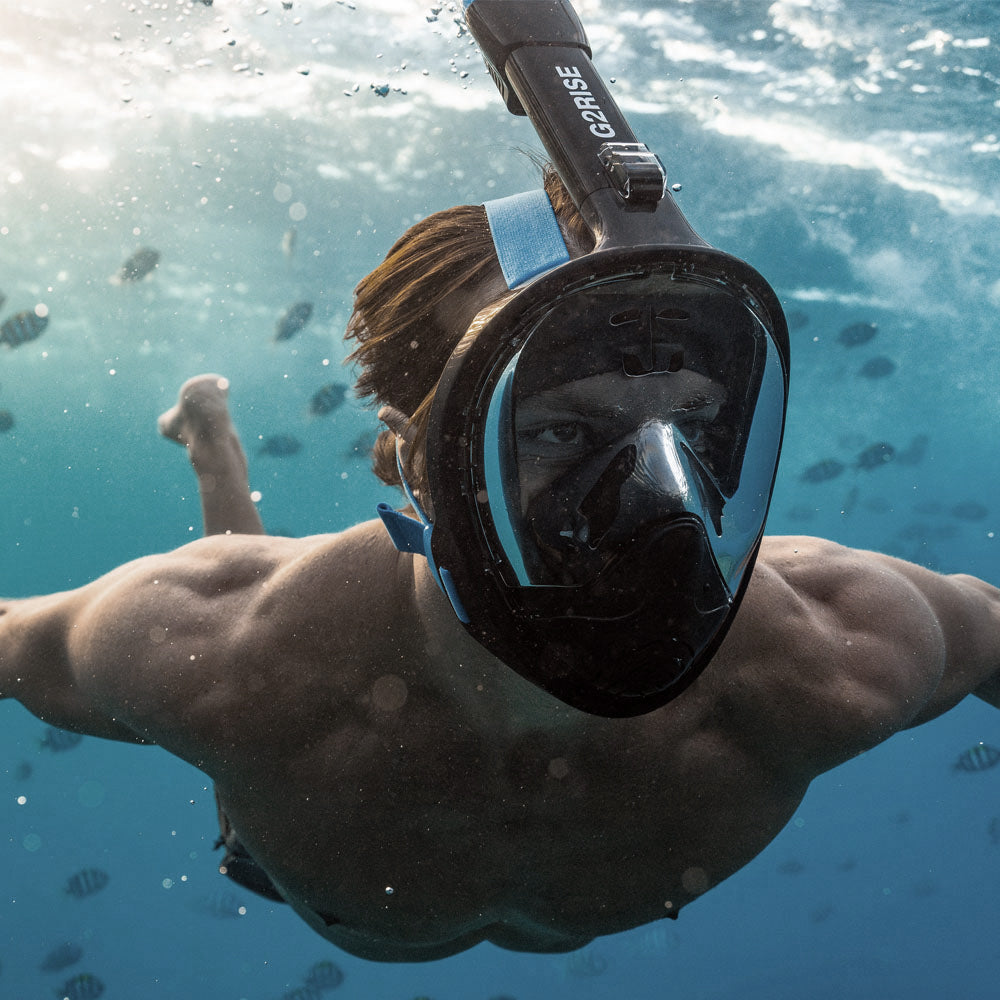
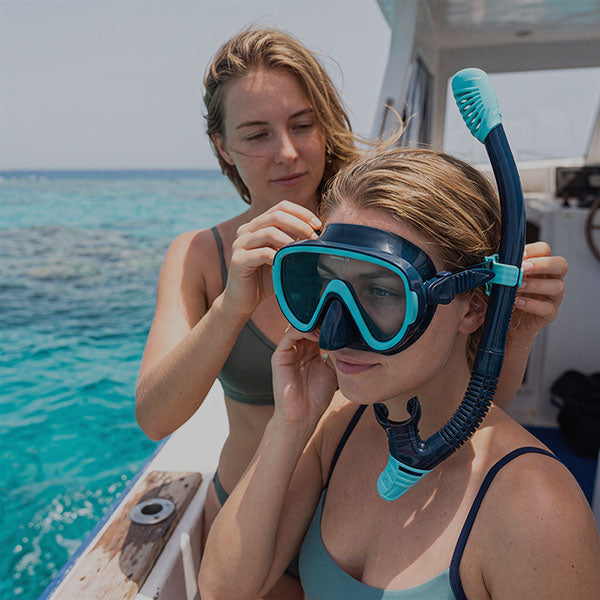
Your mask should seal without being painfully tight. Your snorkel mouthpiece should sit comfortably without forcing your jaw. Fins need to stay secure without rubbing. If you use a full-face mask, follow its surface-only instructions, verify unobstructed airflow, and stop immediately if breathing feels difficult. Whichever style you choose, don’t continue through unexpected shortness of breath or sudden fatigue.
Build a simple pre-entry routine:
- Check weather, wind, surf, current, and local warnings.
- Tell your buddy the route, turnaround point, and distress signal.
- Inspect mask straps, snorkel valves, fin straps, float seams, and tether hardware.
- Enter where you can stand and confirm that every item behaves normally.
- Stay close, look up regularly, and turn around with energy in reserve.
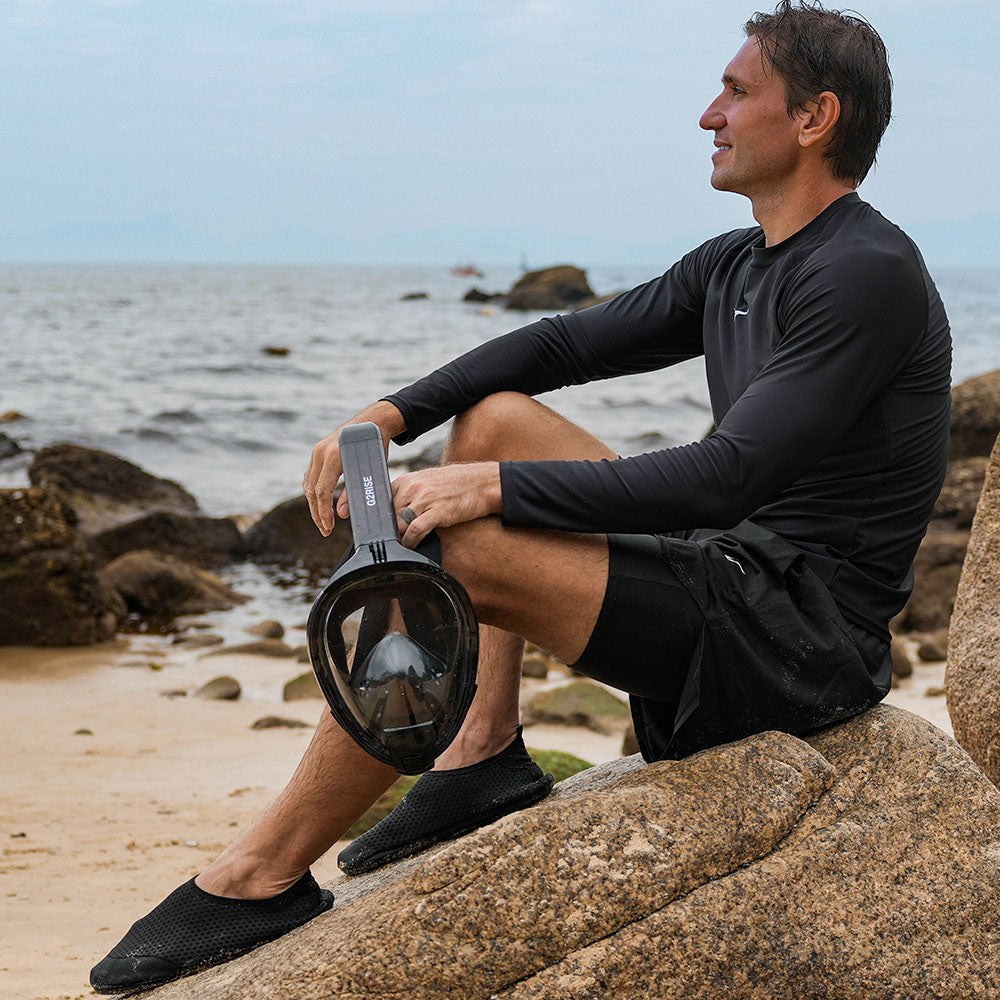
If you’re assembling the rest of your kit, G2RISE snorkeling gear is worth comparing for the mask-and-snorkel side of the system. Choose by fit and use case, not by the promise that one product will make open water risk-free. A good snorkel float may give you visibility, a place to pause, or a way to carry a few essentials. The best choice is the one that does exactly that job—without quietly creating a new problem.

Leave a comment
This site is protected by hCaptcha and the hCaptcha Privacy Policy and Terms of Service apply.