
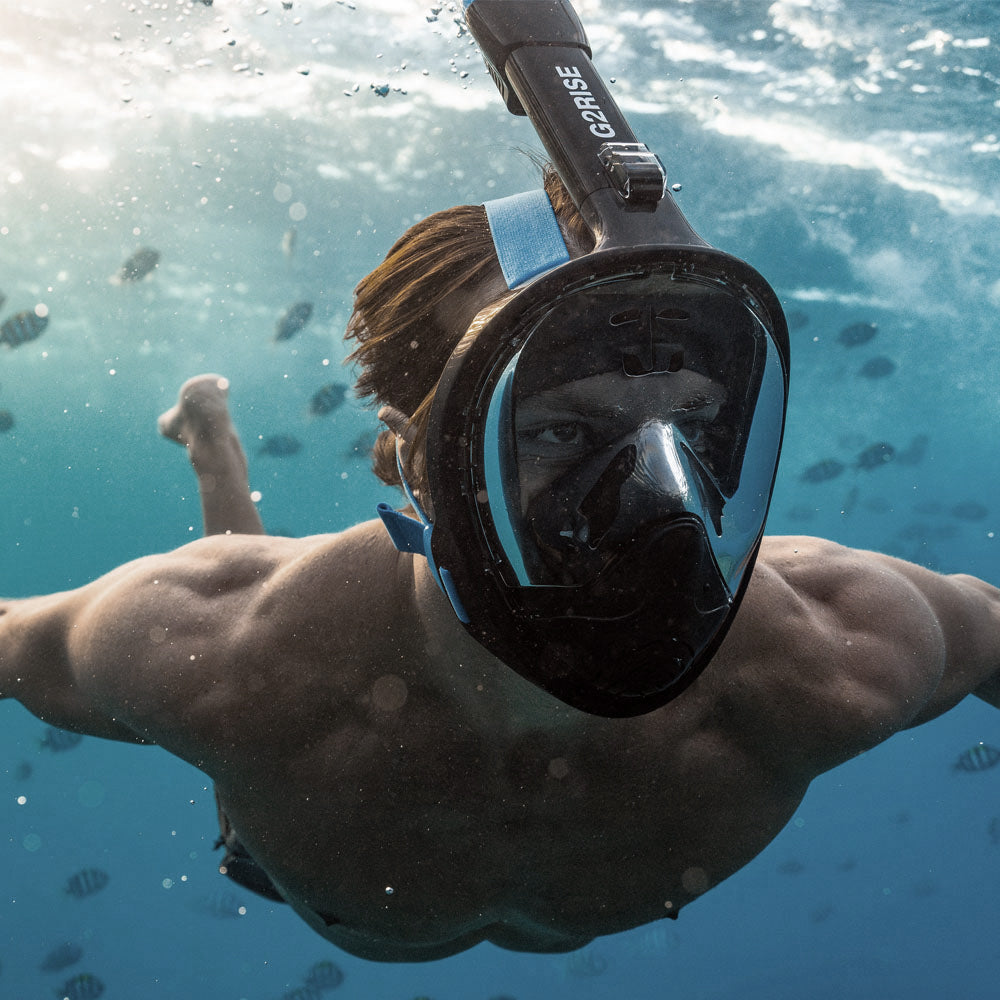
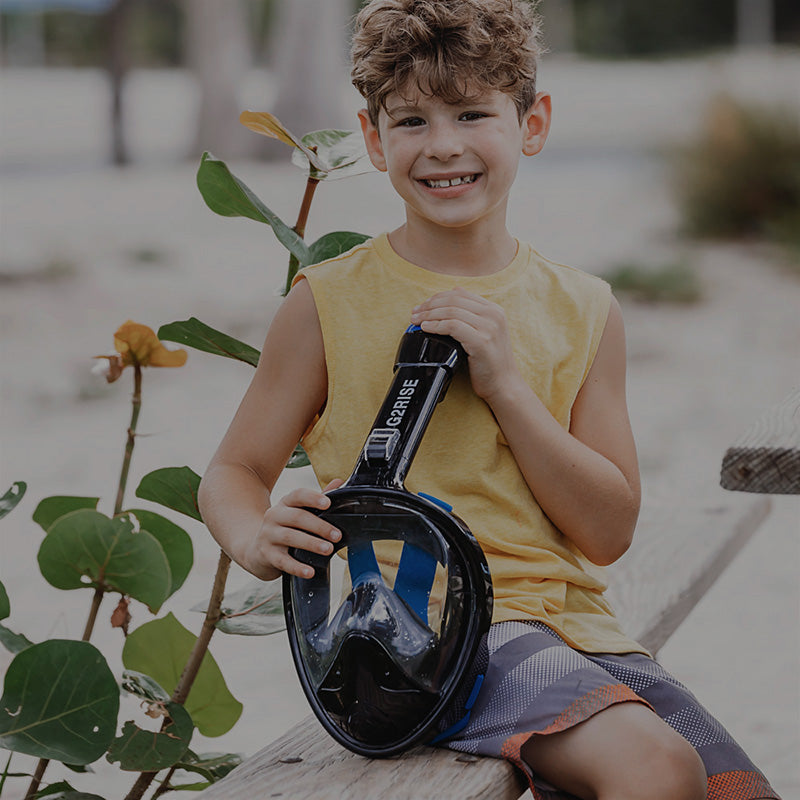
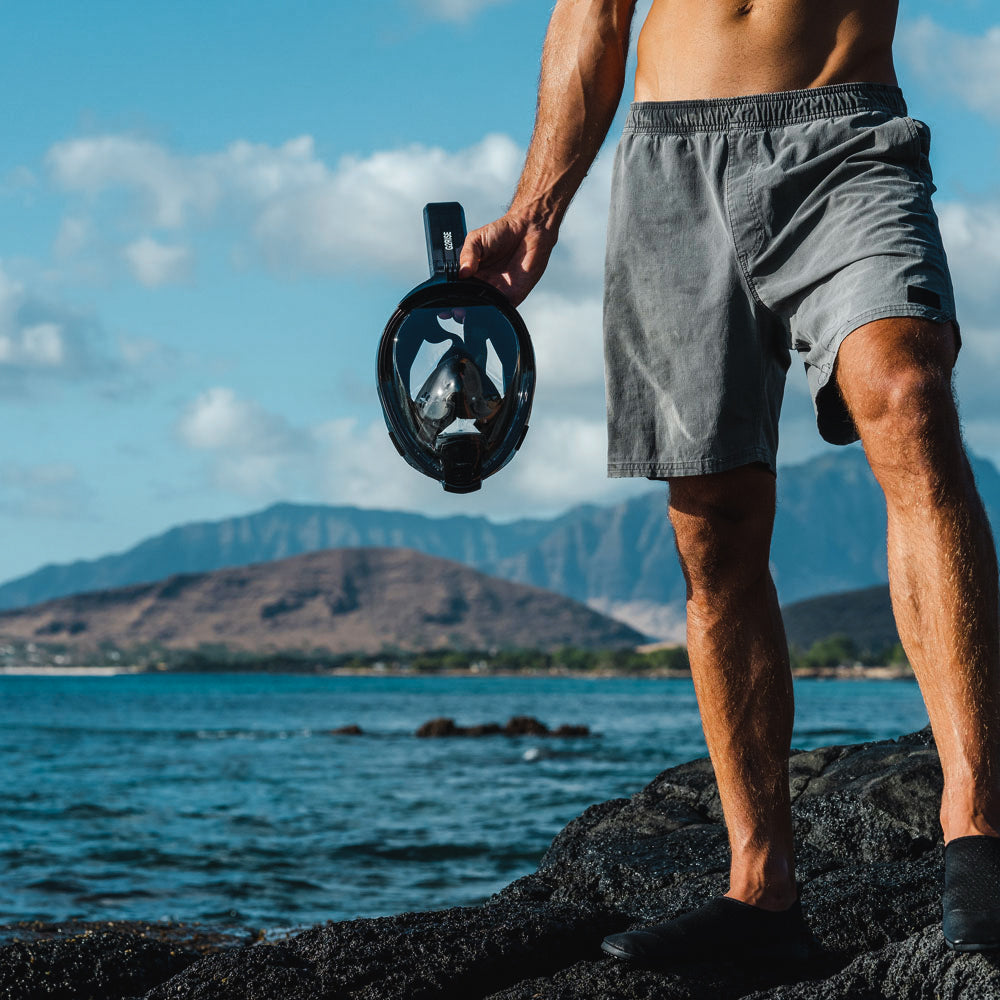
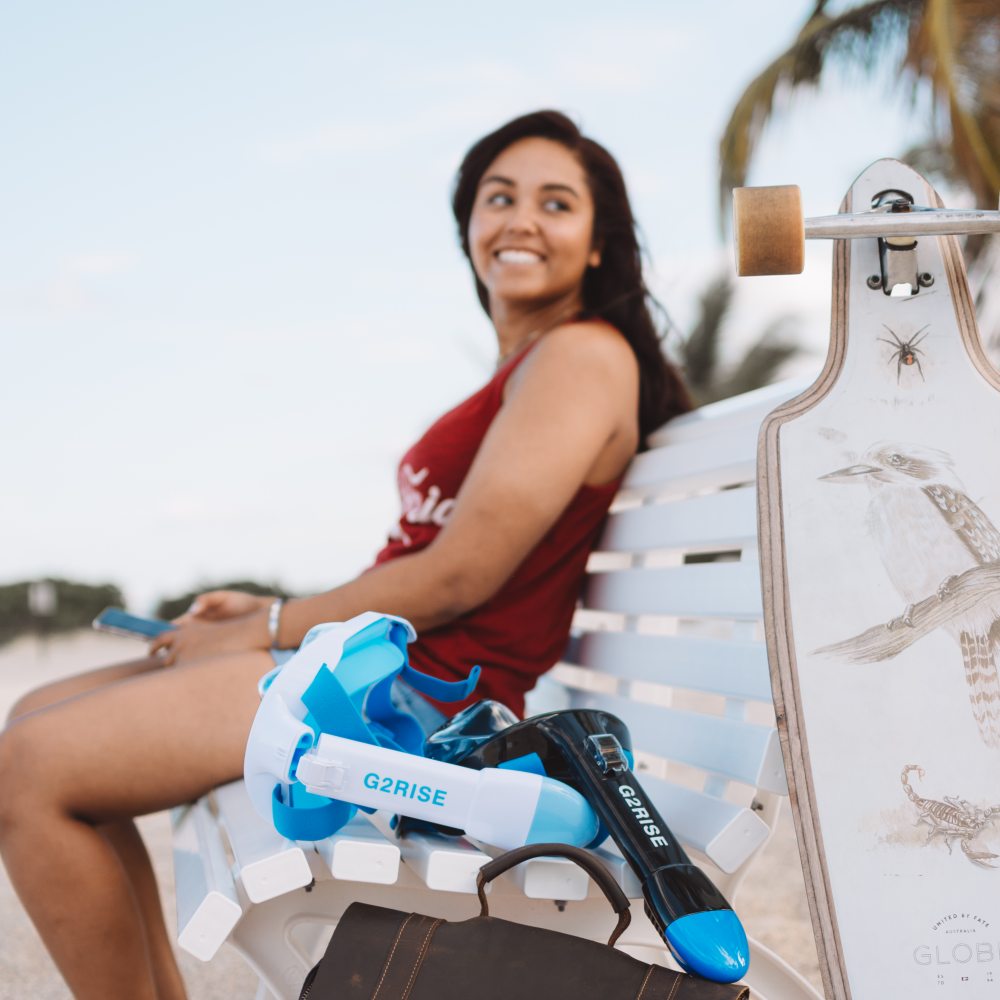

The mask is the one piece of gear that controls the quality of your entire snorkel trip. A scuba instructor with 20+ years of teaching put it bluntly: the mask can make or break your vacation. He's seen people give up on entire trips because of a leaking, fogging mask that wouldn't stop ruining every session.
The good news: choosing the right snorkel mask is actually straightforward once you know what to look for. Here's what actually matters — and what doesn't.

Why Does Mask Fit Matter More Than Brand or Price?
Fit is everything. A mask that seals perfectly on your friend may leak constantly on you — regardless of price, brand, or how many stars it has online. Every face is shaped differently, and the only way to know if a mask works for you is to test it against your actual face.
The classic test: place the mask against your face without using the strap. Breathe in gently through your nose. A properly fitting mask will stay in place from suction alone. Let go — if it stays, the skirt shape is compatible with your face geometry. If it drops, move on.
There's something most guides skip: what experienced instructors call emotional fit. Some people feel anxious in dark-skirted masks that block peripheral light. Others feel distracted by a clear skirt. If a mask creates any unease before you even get in the water, that's going to compound underwater. Try both clear and black skirts and see which one feels better.
How Tight Should You Wear Your Snorkel Mask?
Less tight than you think. Most beginners overtighten — and it backfires.
Over-tightening forces the skirt to conform to your face rather than the other way around. It can cut off circulation, cause nosebleeds, trigger headaches, and leave a deep red crease around your face. Here's the counterintuitive part: it doesn't actually improve the seal. Over-tightening often creates gaps.
A properly fitting mask should sit on your face lightly. The strap just holds it in place. The silicone skirt does the sealing work. If you need to crank the strap to stop leaking, the mask doesn't fit your face shape. Tighter is not the solution.
What Is the Dual Seal and Why Does It Matter?
Quality silicone masks have two seals: the outer rim of the skirt, and an inner lip that also makes contact with your skin. Both need to make continuous contact for the mask to stay watertight.
Here's how to check: put the mask on without the strap and look in a mirror. You should see that inner lip touching your skin all the way around — no gap above the eyebrows, no gap at the nose pocket, no gap at the temples. Any break in that inner seal is where water enters.
Common fit problems to watch for:
- Mask too narrow: Cuts into your eye sockets. Gaps form whenever you make any expression or squint.
- Mask too wide: Nose pocket sits too far from your upper lip. The gap gets worse when you hold a snorkel in your mouth.
- Facial hair: Look for a mask with a narrow nose bridge ridge. A mask wax product — available at any dive shop — applied under the mustache creates a seal.

One answer: high-grade silicone. Not rubber. Not PVC.
Rubber dries out in storage. Use a mask once, put it in the closet for three years, and you'll pull it out to find a cracked strap or a skirt starting to split. Rubber degrades even when not in use. PVC gets hard over time — it loses the flexibility needed to seal against your face.
High-grade silicone lasts 20 to 25 years with proper care. It stays pliable in cold water and hot conditions, forms a comfortable seal, and won't degrade sitting between trips. This is why every serious diving and snorkeling mask uses it. Pay for it.
Don't try to save money on the mask. If you're going to economize anywhere in your kit, do it elsewhere. A cheap mask will cost you the experience. A quality silicone mask is a 20-year investment in experiences you'll actually enjoy.
Single Lens vs Dual Lens: Which Should You Choose?
Both work well. They serve different needs.
Dual lens masks (two lenses divided by a center bridge) sit closer to your eyes, giving lower internal volume. Less air to clear if the mask floods. They're also the standard for prescription lens replacement — if you wear glasses, dual lens is what dive shops fit with your prescription.
Single lens masks give you an unobstructed, panoramic view. No center bridge means a wide, open feel. For casual snorkeling, single lens is often the better choice simply because the view is more immersive.
Does Lens Shape Affect How You See Underwater?
Yes — and this is a detail most buyers overlook.
A taller lens (more height top-to-bottom) lets your eyes move vertically without tilting your neck. When you're floating face-down and want to look at something below you, you can do it with eye movement instead of constantly lifting your head. That matters more than you'd think over a long session.
Some masks have lenses angled slightly downward — paired with a tall lens, this means you can see directly below you while keeping your neck in a neutral position. Wider masks with squarer outer edges increase peripheral vision: you can spot fish to the sides without turning your head.
Should You Get a Purge Valve on Your Mask?
No. Skip it.
A purge valve — the small one-way silicone flap at the bottom of some masks — seems convenient. The problem is it's a structural weak point. Sand gets trapped under it. Salt crystals build up beneath it. Leave the mask in the sun and the flap warps. Any of these means your mask now leaks constantly. Professional divers don't use purge valves. They're not on expensive gear for a reason.
Clearing a mask without a purge valve takes about one minute to learn. Tilt your head slightly back, press the top frame against your forehead, and exhale through your nose. Water exits the bottom. No moving parts, no failure points.

How Do You Stop a New Mask From Fogging?
Here's something almost nobody tells first-time buyers: every new mask comes from the factory with a coating on the lens. It's a manufacturing lubricant that dries invisible. You can't feel it or see it — but it prevents defog products from bonding to the glass. Your brand-new mask will fog constantly until you remove it.
Before your first session, clean the inside of the lens with a dedicated mask scrub product. Not dish soap, not shampoo — these chemicals degrade the silicone-to-glass bond over time. Use a mask-specific product, work it in with your finger, rinse, and repeat twice.
After that one-time prep, apply quality defog spray before each session. Good modern defog products last multiple sessions.
How Do You Care for a Snorkel Mask?
Rinse with fresh water after every use. Salt and chlorine both break down silicone faster over time. Don't leave the mask in direct sun — UV degrades silicone and can warp the skirt shape. Store it in a protective case to keep the lens scratch-free.
If you have longer hair, consider a fabric "slap strap" upgrade. Standard silicone straps grip wet hair and pull when you take the mask off. A microfiber-lined fabric strap slides through your hair cleanly and can hold it back naturally. Small upgrade, noticeably better experience.

The Honest Bottom Line
Snorkel mask shopping comes down to three things: fit (does the dual seal contact your face all the way around?), material (high-grade silicone?), and lens style (what view do you want?). Everything else is secondary.
At G2RISE, we've designed our masks around one principle: a mask that fits correctly disappears. You stop thinking about it and start thinking about what's below you. If you're ready to find that, start with fit.


Leave a comment
This site is protected by hCaptcha and the hCaptcha Privacy Policy and Terms of Service apply.