
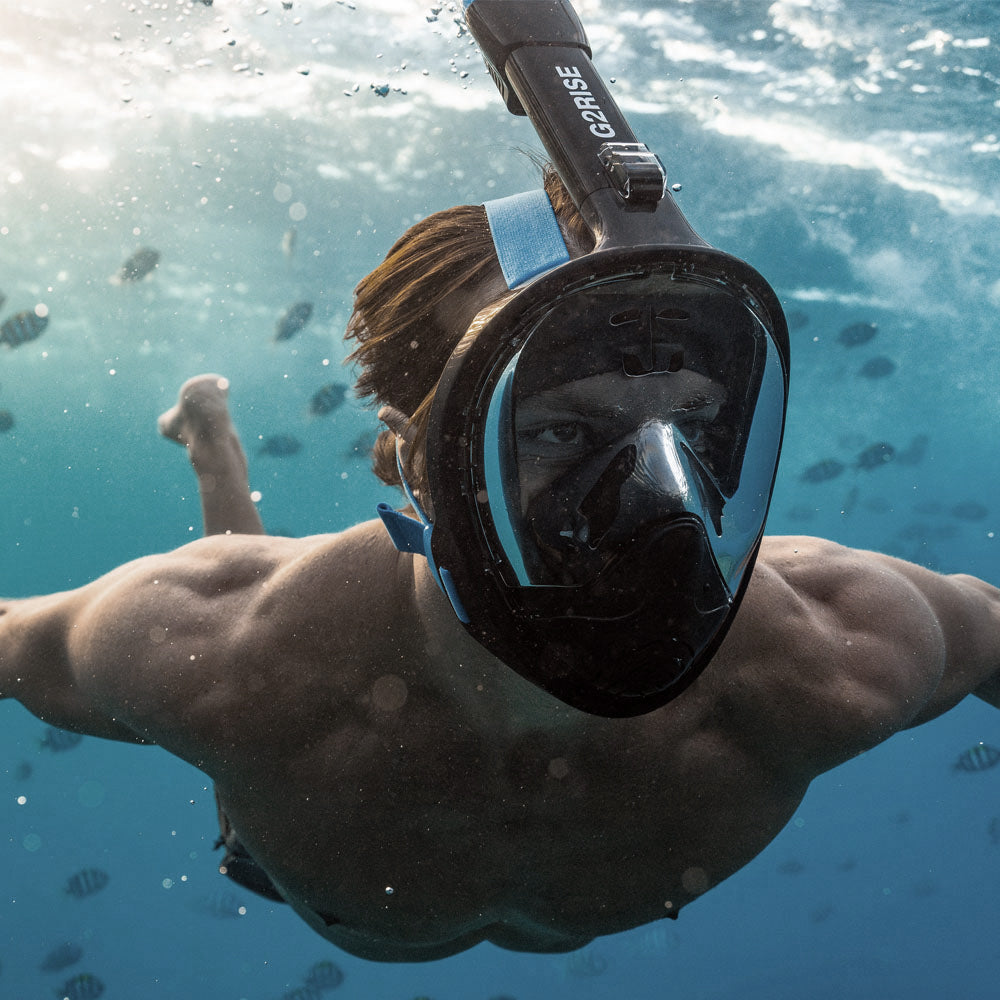
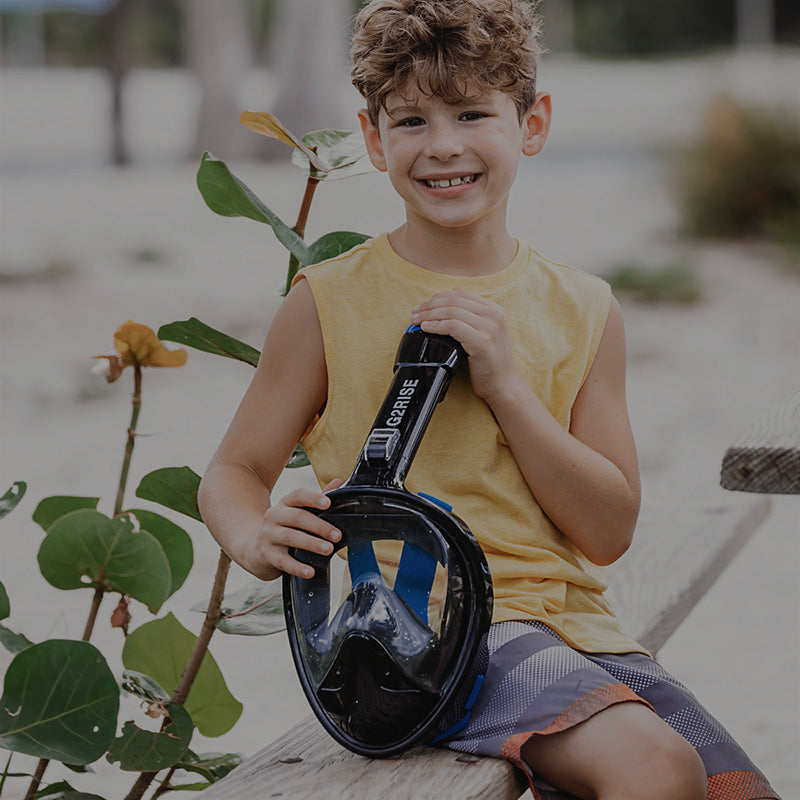
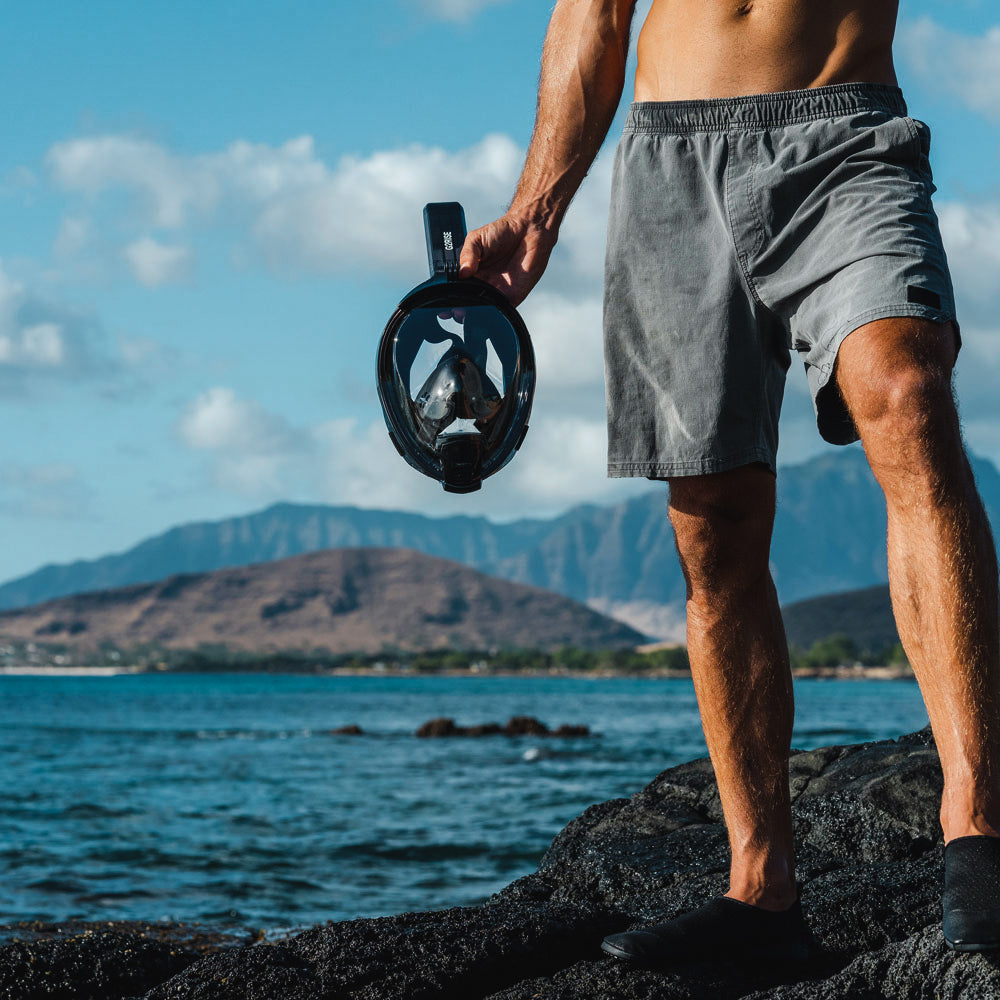
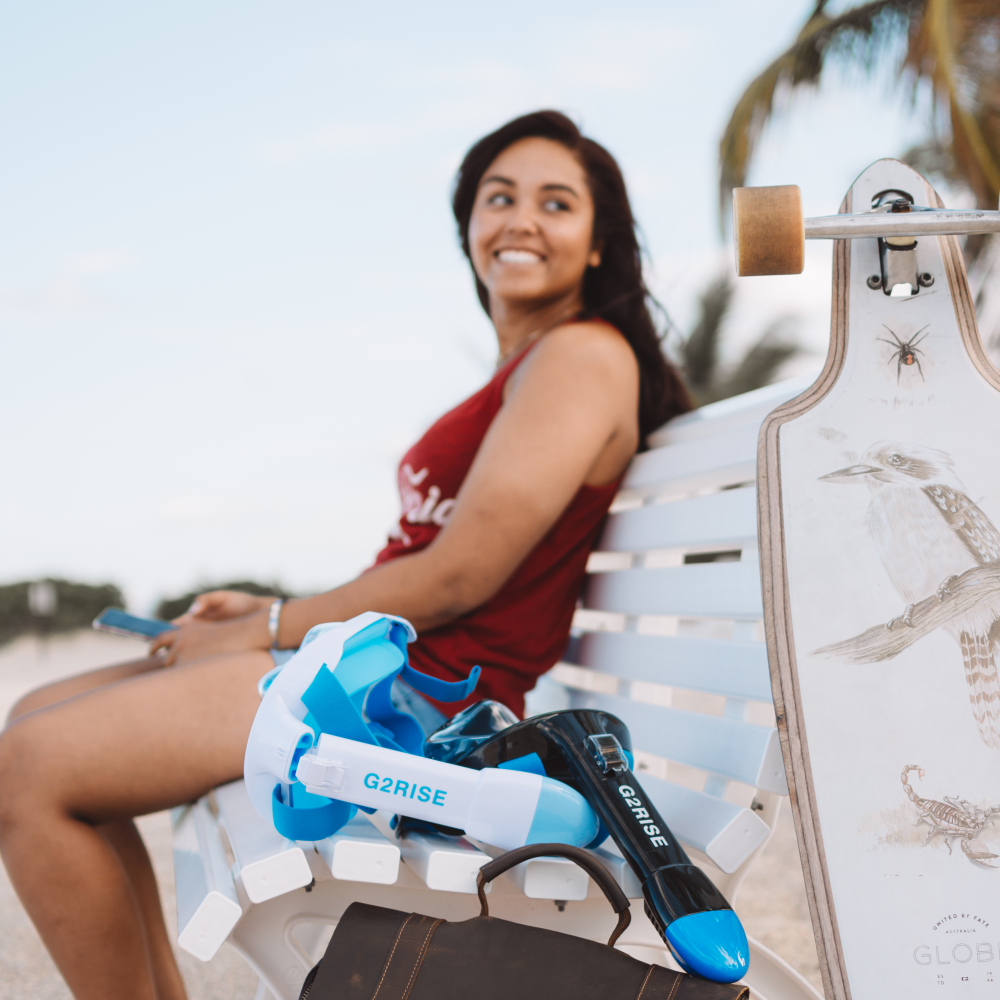

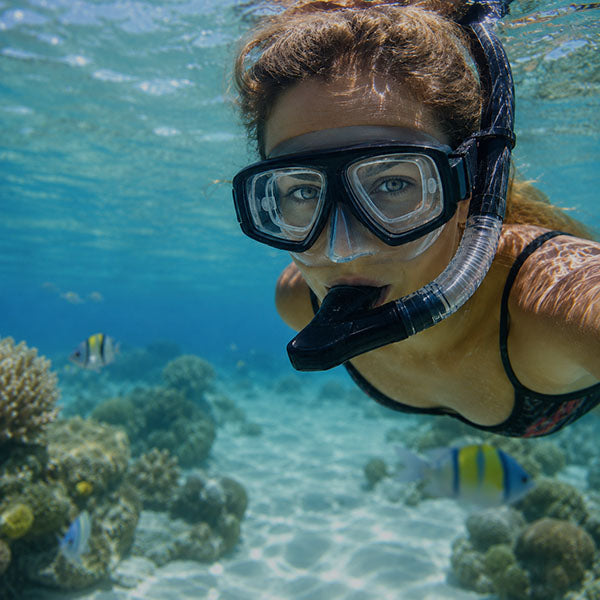
Short answer: Yes, you can snorkel and see the reef clearly even if you're nearsighted — without wearing your everyday glasses. The four proven options are (1) optical lenses fitted into your mask, (2) a prescription-ready snorkel mask, (3) daily contact lenses, or (4) going uncorrected if your eyesight is only mildly blurry. For most snorkelers, drop-in optical lenses are the cheapest and most reliable fix. Here's how each option compares.

Key takeaways
- You can't just wear glasses under a snorkel mask — the arms break the watertight seal and the mask won't fit.
- Optical lenses that mount inside your mask are the best value for most people (around $11 per side).
- Underwater, objects look ~25–30% bigger and closer, so you can often pick a lens slightly weaker than your glasses.
- Contacts work, but carry a small infection risk in open water — keep your eyes closed during mask clearing.
Why you can't just wear your glasses
It's the first thing everyone tries — and it doesn't work. A snorkel mask seals against your skin to keep water out. The arms of your glasses run straight through that seal, breaking it and letting water flood in. The frames also push the lenses too far from your eyes to focus properly. So leaving your glasses on isn't an option — but the four below all are.
Option 1 — Optical lenses fitted into your mask (best for most people)
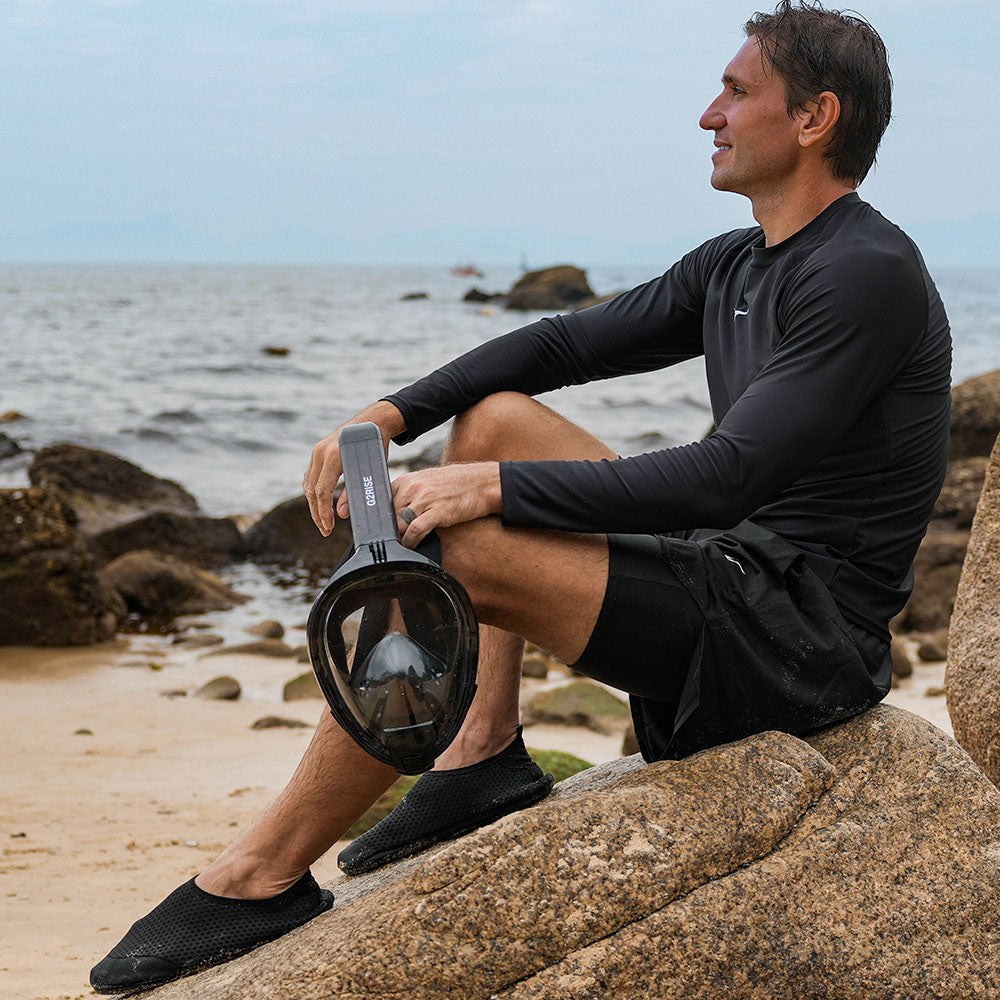
Purpose-made corrective lenses attach inside your mask, directly in your line of sight, so you get vision correction without anything touching your eyes. G2RISE's snorkeling optical lenses use small suction cups, install in seconds, and come in strengths from -1.5 to -6.0. You order the left and right side to match each eye — handy if your two eyes differ.
- Pros: Cheapest long-term fix (~$11/side), reusable, nothing in your eyes, works in salt and chlorinated water.
- Cons: Only corrects nearsightedness (myopia), and your mask must be compatible.
- Best for: Anyone with a -1.5 to -6.0 prescription who snorkels more than once or twice.
Option 2 — A prescription-ready snorkel mask
Some masks — including the G2RISE full-face SN01 and SN04 models — are designed to take drop-in lenses, so you buy the mask and the lenses together as one corrected system. This is the cleanest setup: one mask, dialed in to your eyes, ready every trip.
- Pros: Permanent, no fuss each session, full panoramic view.
- Cons: Higher upfront cost than lenses alone.
- Best for: Regular snorkelers who want a "set it and forget it" mask.
Option 3 — Daily contact lenses
If you already wear contacts, they're the simplest path: pop them in, put on any mask, and go.
- Pros: Works with any mask, corrects astigmatism too.
- Cons: Small risk of eye infection from waterborne microbes (Acanthamoeba), and contacts can wash out if your mask floods.
- Safety tip: Use daily disposables you'll throw away after, keep your eyes closed while clearing water from your mask, and never snorkel in contacts if your eyes feel irritated.
Option 4 — Go uncorrected (mild myopia only)
If your prescription is weaker than about -1.5, you may be fine as-is. Water magnifies everything by roughly 25–30%, so the reef appears bigger and closer than it does on land. Try a short test in calm, shallow water first.
Quick comparison
| Option | Cost | Best for | Watch out for |
|---|---|---|---|
| Optical lenses in mask | ~$11/side | Most nearsighted snorkelers | Mask must be compatible |
| Prescription-ready mask | Mask + lenses | Frequent snorkelers | Higher upfront cost |
| Daily contacts | Ongoing | People already in contacts | Infection risk; can wash out |
| Uncorrected | Free | Mild myopia (< -1.5) | Not enough for stronger Rx |
How to pick the right lens strength
Match the lens to your eyeglass prescription for each eye — but with one twist: because water magnifies, if your exact strength isn't available, choose the next lower number (e.g. pick -4.5 if you're -4.75). You'll still see clearly, and a slightly weaker lens is more comfortable for the long, relaxed focus distances you use underwater. If your two eyes differ, order a different strength for each side.
Frequently asked questions
Can I wear my regular glasses under a snorkel mask?
No. The arms break the mask's seal and let water in, and the lenses sit too far from your eyes to focus. Use mask-mounted optical lenses or contacts instead.
Can I wear contact lenses while snorkeling?
Yes, but use daily disposables, keep your eyes closed when clearing your mask, and remove them if your eyes get irritated — open water carries a small infection risk.
What if my prescription is stronger than -6.0?
Drop-in lenses typically top out around -6.0. If you're beyond that, daily contacts under any mask are usually the better route.
Do both lenses have to be the same strength?
No. Order each side to match that eye — one of the advantages of lenses sold per side.
Does this work for farsightedness?
These nearsighted (myopia) lenses correct distance blur only. Most snorkeling vision problems are nearsightedness, since you're looking at the reef a few feet away.

Ready to see the reef clearly?
Pair G2RISE snorkeling optical lenses with a compatible full-face mask and you'll never miss a fish again. Both come with a 12-month warranty and 30-day replacement.

Leave a comment
This site is protected by hCaptcha and the hCaptcha Privacy Policy and Terms of Service apply.