

Snorkeling safety guides tend to cover the same eight or ten items in the same order: buddy system, check the weather, fit your gear, know your limits. These aren't wrong, but they concentrate on the visible, controllable risks while consistently omitting the ones that actually cause serious incidents. This guide covers the standard tips, but leads with the risks that most snorkelers have never heard of — because those are the ones most likely to surprise you.

What's the Most Underreported Snorkeling Danger Nobody Warns You About?
There are two. The first is a phenomenon called "quiet death" in Hawaiian lifeguard training. The second is swimming-induced pulmonary edema, known as SIPE.
Quiet death. Unlike scuba divers, who sink when they lose consciousness (providing a visual cue that something is wrong), snorkelers float face-down at the surface when unconscious. An unconscious snorkeler looks identical to a snorkeler who is simply observing the reef. From a boat deck or the shore, a person in trouble is visually indistinguishable from everyone else in the water — hence the term. Hawaii's lifeguard community coined it because the pattern recurs in coastal drowning incidents: a snorkeler becomes incapacitated, floats face-down, and isn't identified as a problem until minutes have passed.
The mechanism is typically cardiovascular — cardiac events, sudden arrhythmias, or loss of consciousness from CO2 buildup in full-face masks — but the result is the same regardless of cause. This is why the buddy system check-in is not merely a recommendation for pleasant companionship; it exists specifically to detect quiet deaths within 30 to 60 seconds of onset, which is the recovery window that matters.
Swimming-induced pulmonary edema (SIPE). SIPE occurs when fluid leaks into the lungs during vigorous aquatic exertion, typically in cold water or with significant physical effort. It presents as a persistent cough while in the water, sometimes with pink or frothy sputum, and often with shortness of breath and an unusual feeling of pressure in the chest. Most snorkelers who experience it mistake it for swallowed water or a minor irritation and continue. SIPE is a medical emergency that worsens in the water. Risk factors: being over 50 years old, high blood pressure (even controlled), obesity, and vigorous exertion — particularly swimming hard against a current while wearing a wetsuit that compresses the chest.
If you experience persistent cough, shortness of breath, or pink-tinged mucus while snorkeling: exit the water immediately, inform your buddy or guide, and seek medical attention. In mild cases, symptoms resolve within hours of exiting the water. Severe cases require emergency care. The condition is underreported in snorkeling literature because it's not widely known outside aquatic medicine, but it accounts for a meaningful proportion of snorkeling hospitalizations in adults over 50.
Why Isn't the Buddy System Enough on Its Own?
The buddy system, as most guides describe it, means snorkeling with a partner. That's a necessary but insufficient safety measure on its own. What makes it actually function as a safety system is the check-in frequency.
Thirty to sixty seconds is the recommended check interval — not "periodically" or "frequently." Here's why the specific interval matters: the relevant emergencies (quiet death, cardiac event, sudden current overpowering a weaker swimmer) develop within that window. At 90 seconds without a visual on your buddy, enough time has passed for a serious situation to have become a worse one.
In practice, good buddy-system execution involves: agreeing on hand signals before entering the water (OK, not OK, surface, go back), staying within 3 to 5 meters of each other, and performing an explicit visual check on each other at intervals you've agreed on — not just occasionally glancing in the same direction and assuming the other person is fine. The check is: make eye contact with your buddy, get an OK signal, move on. If you can't get a response, act immediately.
Groups larger than pairs should designate clear pairs. "Everyone stick together" in a group of six doesn't create anyone's specific responsibility to check anyone else. A designated pair structure means each person has one specific person they're responsible for observing.

What Should You Check Before Getting in the Water?
Four categories of pre-entry assessment, in order of importance:
Conditions today vs. yesterday. Ocean conditions can shift several times daily. Check current forecasts (NOAA marine forecast, local surf reports) the morning of your snorkel, not the night before. In tropical locations, afternoon storms are common; an idyllic 9 AM window can become dangerous by noon. Ask local guides or operators about the specific site — general forecasts miss local features like channel currents and wave refraction from headlands.
Gear function. The mask seal test should be non-negotiable before every session: place the mask on your face without the strap, inhale through your nose, and let go. It should hold from suction alone. If it falls, the fit is wrong and water will enter during use. Test your snorkel by blowing through it — the purge valve should clear cleanly. Check fin strap integrity, particularly on open-heel designs where cracked straps fail in the water.
Entry and exit points. Survey the exit before you need it. Currents drift you; the comfortable entry point may not be where you surface 30 minutes later. Identify at least two potential exit points and note landmarks that let you find them from the water. Rocky entries demand more planning: time waves before you step in, identify handholds, and know that an entry-point surge that seems manageable while watching can feel very different when you're committed to it.
Your own physical state. Alcohol within 12 hours, significant fatigue, a respiratory illness, or feeling "off" for any reason all meaningfully increase risk in the water. The ocean doesn't offer the same forgiving margin as a pool — conditions can change faster than your ability to respond when your baseline is compromised.
Are Full-Face Snorkel Masks Safe?
This requires a specific answer because a blanket "yes they're fine" is inaccurate and a blanket "no" is an overcorrection. The honest assessment:
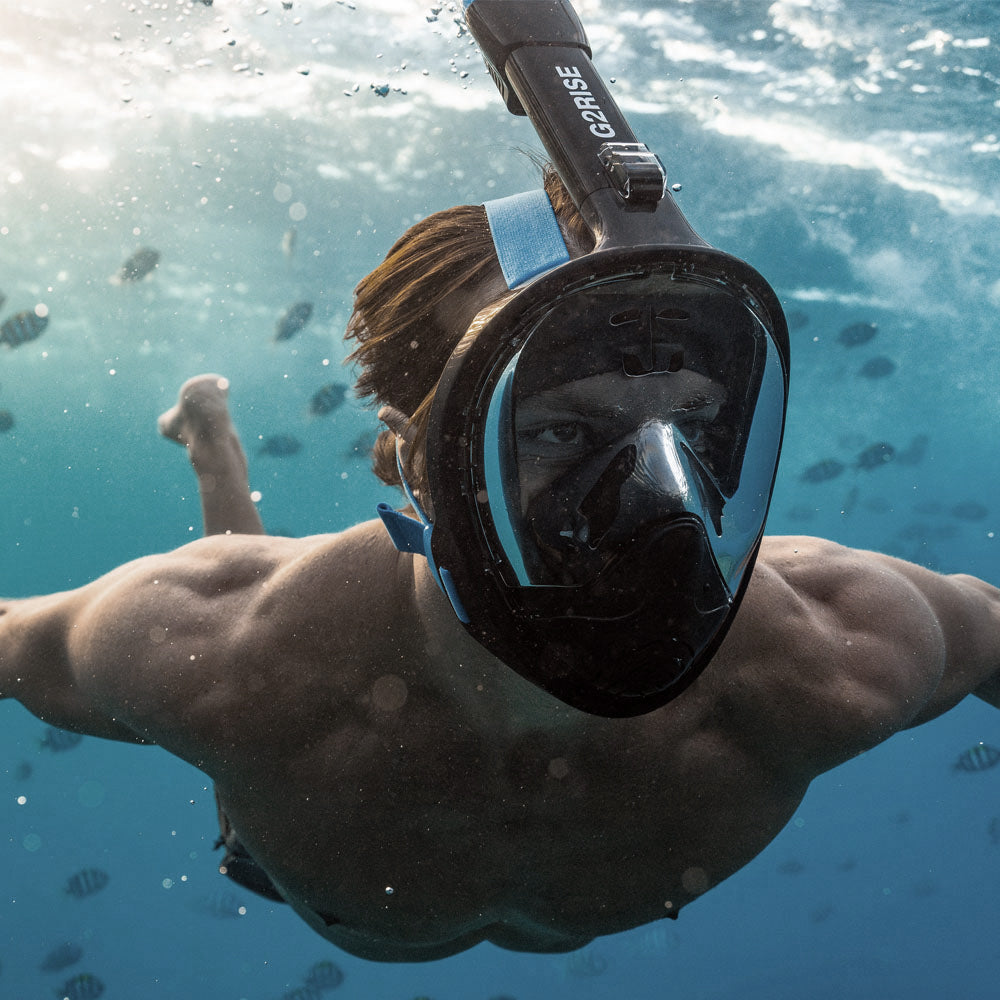
Quality full-face masks from established manufacturers (Ocean Reef, HEAD/Mares, Tribord) are designed and tested for surface snorkeling at rest or gentle drift. They include ventilation systems that separate exhaled CO2-rich air from the fresh air pathway. These products function as designed under the conditions they're designed for.
Problems emerge in three specific situations. First: vigorous exertion. Swimming hard against a current or covering distance quickly generates CO2 faster than the ventilation design can exhaust. Mild CO2 buildup causes headache and fatigue; significant buildup causes confusion and, in rare cases, loss of consciousness. Second: submersion beyond 1 to 1.5 meters. The larger air volume in the mask and the pressure dynamics at depth combine unfavorably. Full-face masks are not appropriate for any duck diving. Third: cheap or counterfeit products with inadequate ventilation. The U.S. Consumer Product Safety Commission (CPSC) has issued warnings about specific models causing breathing difficulties and deaths. In 2026, a specific recall involved OUSPT full-face masks, which the CPSC found could cause consumers to experience labored breathing, loss of consciousness, and drowning.
For recreational surface-only snorkeling in calm conditions, a quality full-face mask from a reputable brand is legitimate. For any situation involving exertion, conditions, depth, or uncertain product quality: a traditional two-piece mask and snorkel is lower risk, easier to clear if flooded, and allows you to remove the mouthpiece for better breathing if you need to surface quickly.
How Do You Escape a Rip Current?
The survival protocol is well established, but most snorkelers have never been taught to identify a rip current before they're in one. Identification is more valuable than escape instructions.
From the shore before entering: look for a channel of water that appears darker than the surrounding shallows (indicating depth), a line of foam or debris extending persistently offshore, or water that appears to move steadily seaward without breaking waves. Rips form in gaps in sandbars, along jetties and piers, and at the edges of headlands. If the beach has a lifeguard, ask them where currents run today. If it doesn't, spend five minutes watching the water before entering.
From inside the water: you'll feel a gentle pull toward the sea that can become rapid and alarming. Most people's instinct is to swim directly against it back toward shore. This is wrong — rip currents can run 2 to 3 meters per second, faster than any recreational swimmer can sustain against current for more than a few seconds. Fighting it directly leads to exhaustion without progress.
The escape: swim parallel to the shore, across the current rather than against it. You're getting out of the channel, which is typically 10 to 30 meters wide, not fighting the speed of the water. Once you feel the current release, angle toward shore at a diagonal. Conserve energy throughout — take slow, efficient strokes rather than panic-swimming. Fins provide enormous advantage here, which is one of the practical safety arguments for always wearing fins in open water regardless of conditions.
How Do You Avoid Overheating While Snorkeling?
Overheating while snorkeling sounds counterintuitive, but it's a real risk in tropical conditions. Here's the mechanism: your face and front are cooled by contact with the water. Your back is exposed to direct sun and reflects sunlight from the water surface, receiving UV from above and reflected UV from below simultaneously. Your internal thermal sensation — which integrates cooling at the front and heating at the back — doesn't correctly register the imbalance. You feel comfortable while the back of your neck and shoulders accumulate serious sunburn and, in extended sessions, heat stress.
Prevention: cover your back. Long-sleeve UPF rash guard eliminates the thermal imbalance problem while also providing UV protection. Limit unprotected sessions in high sun (10 AM to 3 PM) to 30 minutes or less. When surfacing, turn your back to the sun to give your cooled front time to equalize. Carry water on the boat and drink between dives — exertion and dehydration accelerate heat effects even when ambient temperature feels comfortable.
Warning signs of heat stress: headache during or after a session, unusual fatigue, nausea, or confusion on return to the boat. These symptoms are often attributed to "swallowing seawater" or "being tired from swimming," which masks what's actually happening. If you experience them, shade, cool water (drunk, not poured on your head), and rest are the immediate response. If symptoms worsen, seek medical attention.

What Are the Signs You Should Get Out of the Water Immediately?
Exit the water without delay if you experience:
- Persistent cough or shortness of breath that doesn't clear within 30 seconds (possible SIPE)
- Pink or frothy sputum in any amount
- Chest tightness, pain, or pressure
- Dizziness, confusion, or unusual weakness
- Muscle cramps that don't release within a few seconds of stopping movement
- Increasing difficulty maintaining position against a current
- Equipment failure: mask flooding repeatedly that you can't stop, fin losing grip, snorkel that won't clear
- Any feeling that something is wrong that you can't identify
The relevant point is that each of these symptoms, in the water, has a very different urgency than the same symptom on land. A chest twinge at your desk is worth monitoring. A chest twinge while snorkeling 200 meters from shore warrants immediate action: signal your buddy, turn toward the nearest exit, conserve energy, surface and breathe normally, and get out.

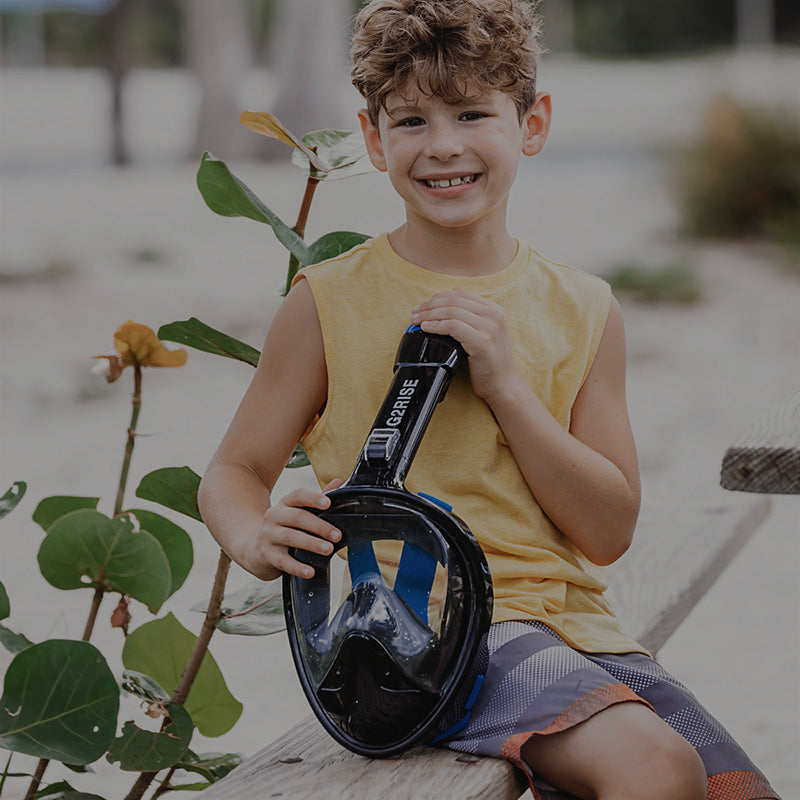
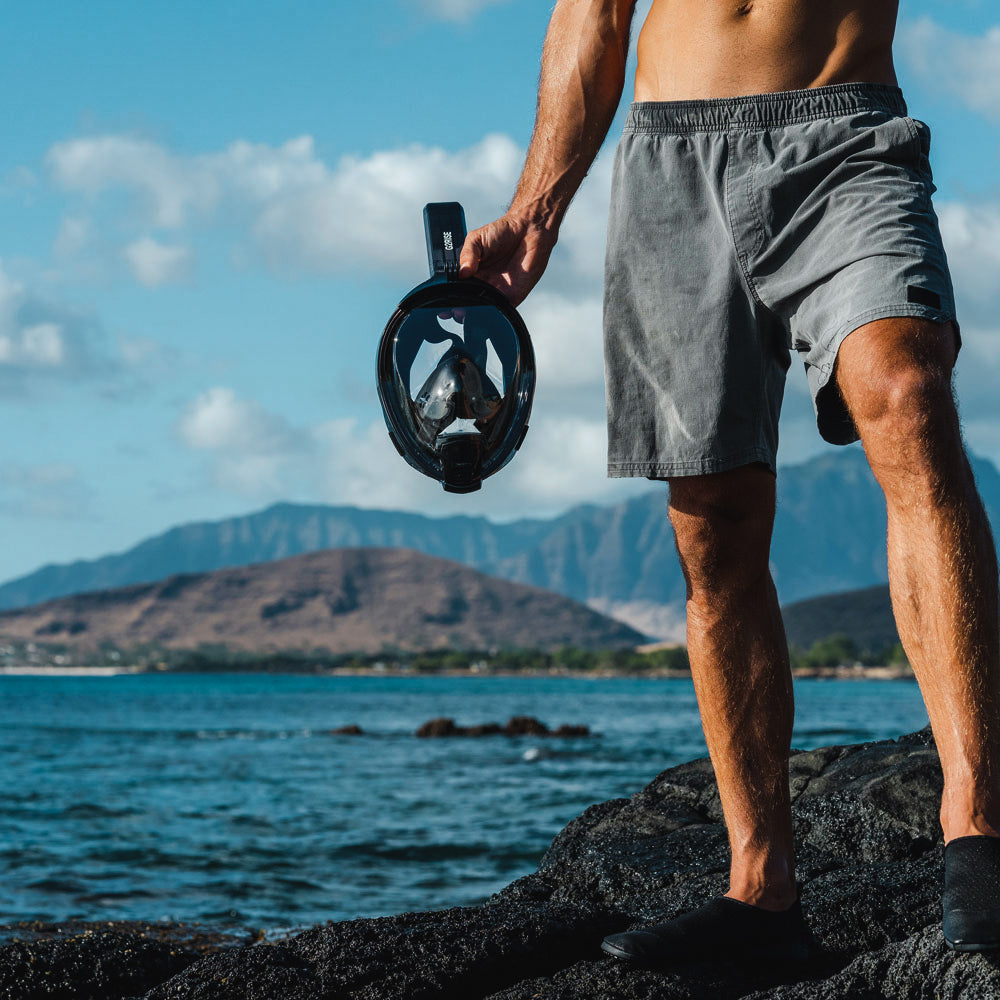
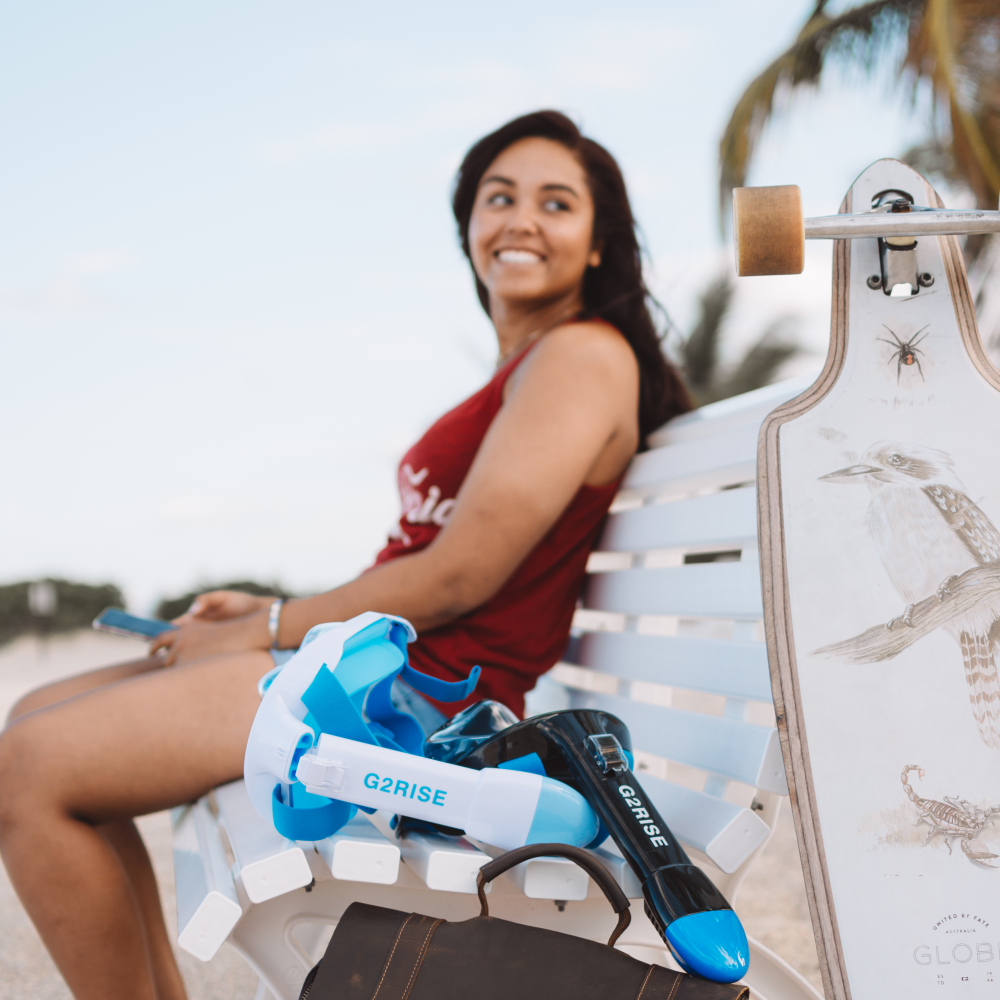
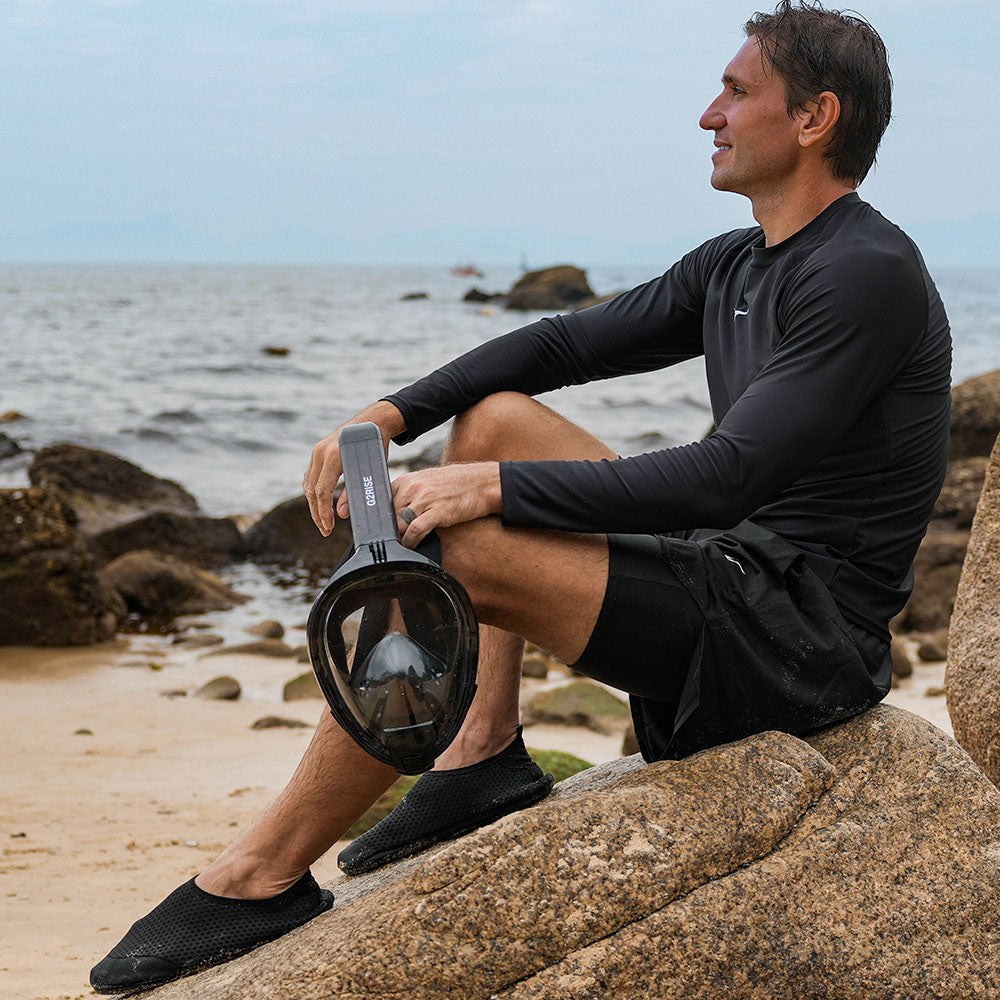
G2RISE's SN01 mask is designed to reduce one common source of in-water alarm: unexpected flooding. The dual-layer silicone seal maintains integrity over a wider range of face shapes than single-edge designs, and the dry-top snorkel closes automatically when submerged — which prevents the sudden gulp of seawater from a wave that causes panic in inexperienced snorkelers. Equipment that behaves predictably is safety equipment. When the mask doesn't flood and the snorkel doesn't fill unexpectedly, you stay calm, and staying calm is the most important safety skill you have in the water.

Leave a comment
This site is protected by hCaptcha and the hCaptcha Privacy Policy and Terms of Service apply.