
Snorkeling with kids is one of those activities where the gap between "this is going to be amazing" and "this is a disaster" comes down almost entirely to preparation. Get the gear right, pick the right moment, and most children take to it instantly. Get it wrong and you'll spend the whole time on the beach watching your kid cry about a leaky mask. This guide covers what actually works—from age and gear to teaching technique and safety—based on real family experience in the water.

What Age Can Kids Start Snorkeling?
Most kids can start proper masked snorkeling around age 5, though the real minimum is more about readiness than birth year. Some 4-year-olds take to it enthusiastically; some 7-year-olds need another season. The markers to watch for: can your child breathe calmly through their mouth on command, tolerate a mask on their face without panicking, and float reasonably well with support? If yes, they're likely ready to try.
Younger children—even babies in the right conditions—can enjoy the water with floats and basic goggles, peering at the surface from above. Toddlers in calm lagoons with a parent holding them can see marine life without any snorkeling equipment at all. There's no rule that says you need a mask and tube to have an underwater experience. Match the gear to where your child actually is, not where you want them to be.
What Snorkel Gear Do Kids Actually Need?
The essentials: a well-fitting snorkel mask and a dry-top snorkel. That's the core kit. Everything else is optional depending on conditions and confidence level.
The mask is the non-negotiable item. It needs to fit your child's face, not just be small-sized. A mask that's too wide will leak constantly—no amount of strap tightening fixes a poor seal. Test it the same way you'd test an adult mask: have your child place it on their face without the strap, breathe in through the nose, and let go. Stays on? Good fit. Falls off? Try the next one. Many brands make dedicated kids' masks with smaller nose pockets and narrower skirt dimensions. Don't assume a standard adult "small" will do.
For the snorkel, look specifically for a dry-top design. A dry-top has a float valve at the top of the tube that seals when the snorkel submerges—so if a wave washes over or your child dips down, water doesn't flood the tube. This removes the need to "clear" the snorkel by blowing hard, which is genuinely difficult for small kids. Also check that the mouthpiece is sized for children: adult mouthpieces are too wide and cause jaw fatigue.
Should Kids Use Full-Face Snorkel Masks?
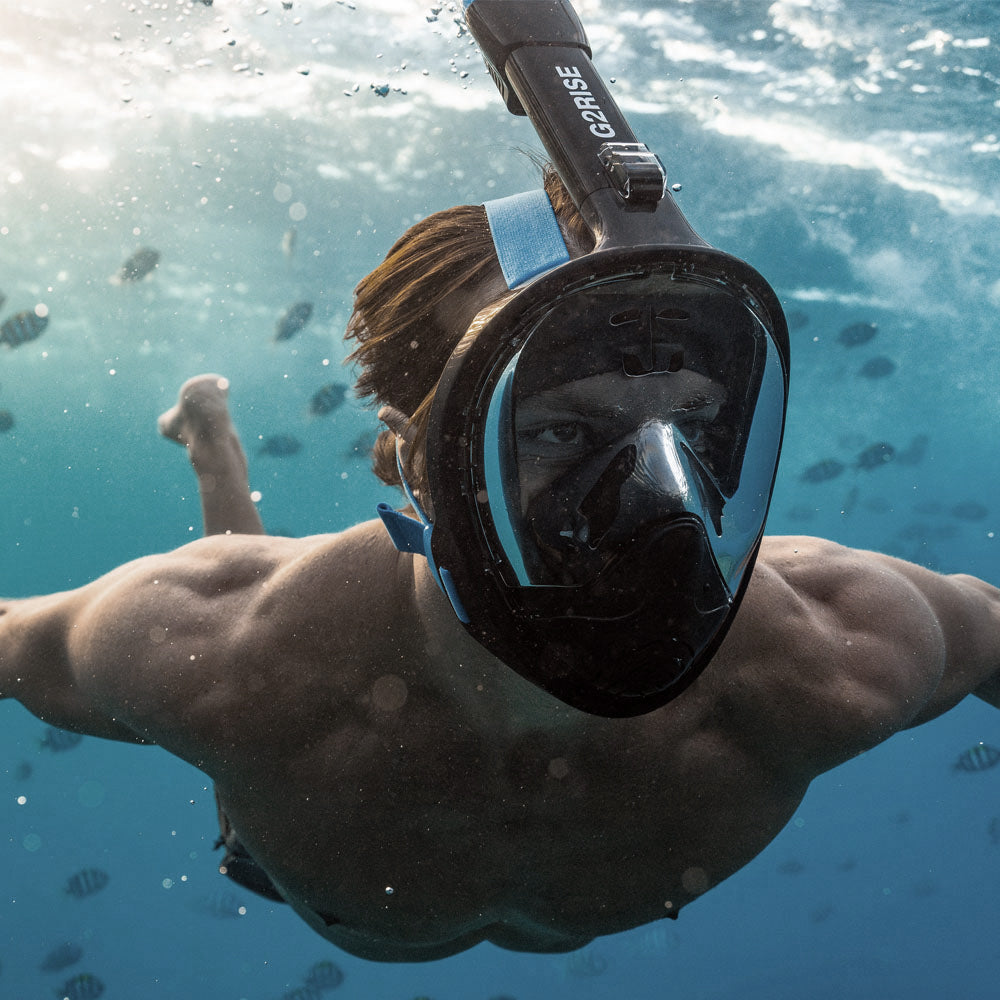
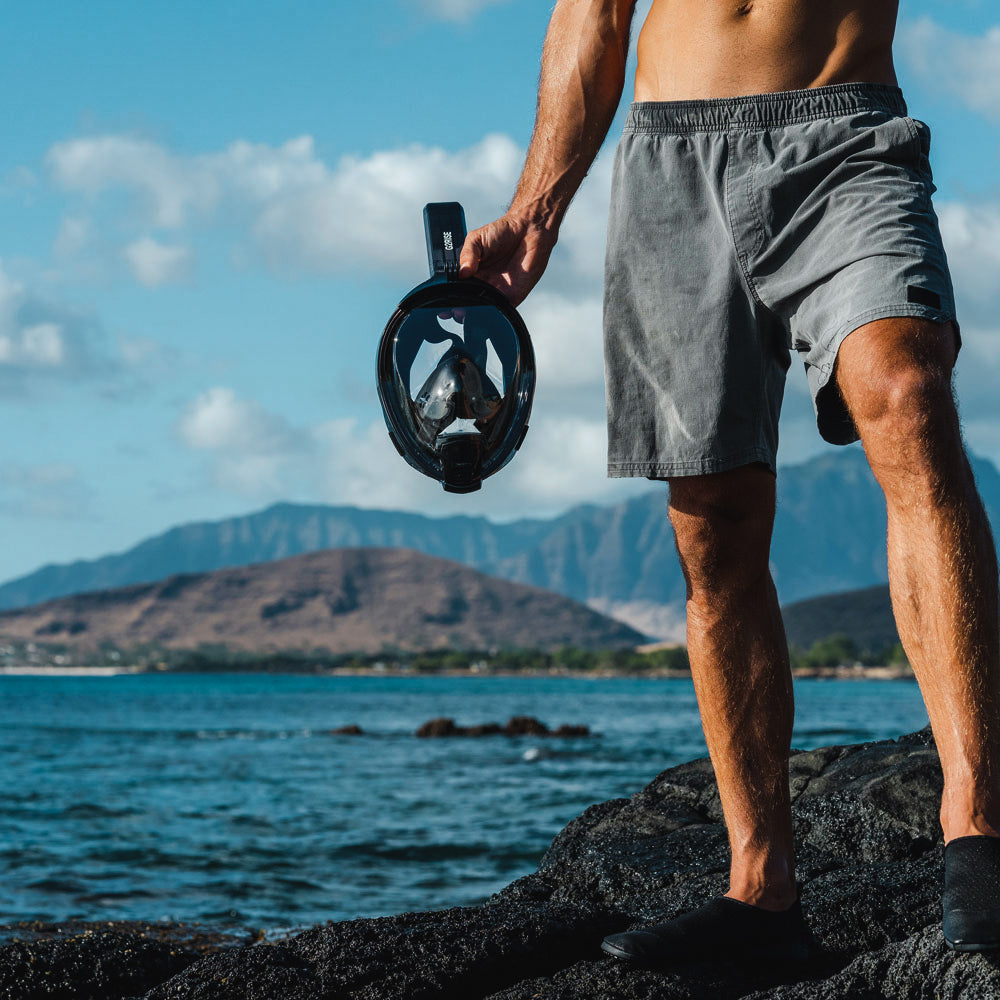
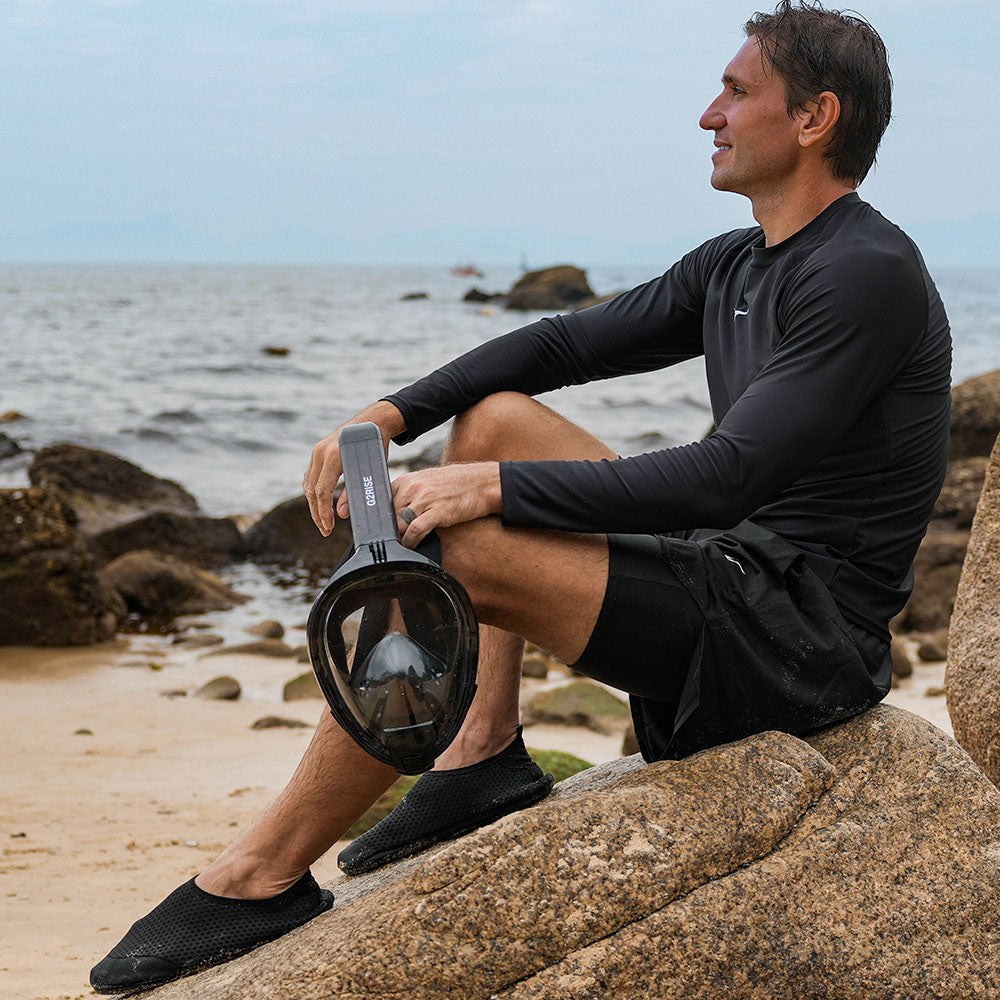
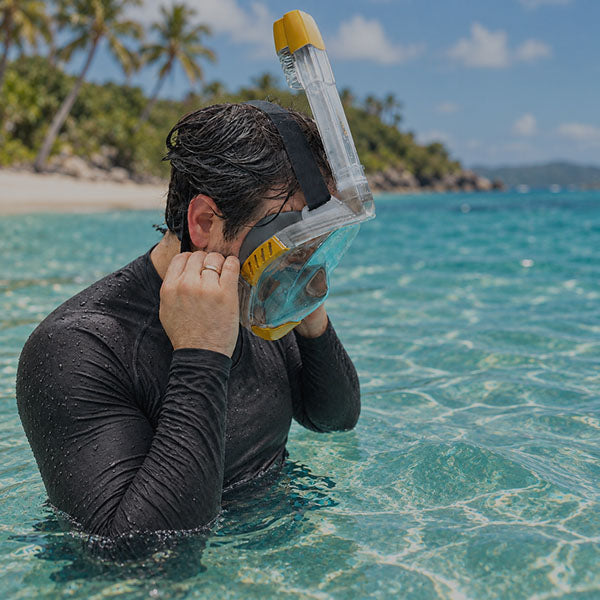
No. This is the strongest recommendation in this guide, and it's based on real documented incidents, not theoretical concern. Full-face masks cover the entire face—eyes, nose, and mouth—and have a built-in snorkel. They look easy to use because you breathe normally through both nose and mouth. But cheap or poorly designed full-face masks can trap carbon dioxide in the breathing zone, causing dizziness, nausea, and in serious cases loss of consciousness.
Children are at higher risk than adults because their smaller lung capacity means CO2 builds up faster relative to the mask volume. One parent describes buying an expensive branded full-face mask for her son: 30 minutes of use later, he surfaced showing clear signs of impaired oxygen. She threw the masks away immediately. Multiple snorkeling guides and organizations—including the Oceanic Society—now advise against full-face masks entirely and have seen some destinations ban them outright.
Stick with a traditional separate mask and snorkel. It's the setup that's been tested in millions of hours of real-world use. You can clear it quickly in an emergency, and if there's a problem, the mask comes off in seconds.
Do Kids Need Fins for Snorkeling?
Not initially. Most guides advise against giving fins to beginner child snorkelers for a simple reason: it adds a learning curve at the exact moment when your child is already managing a new mask, a new breathing method, and an unfamiliar water environment. That's already a lot.
Without fins, kids in calm shallow water do just fine. They swim naturally. Fins only become worthwhile once a child is comfortable enough to focus on technique—because fins require a specific kick pattern (long, sweeping motion from the hip, not bent-knee flutter kicks) that takes practice to get right. Getting it wrong just makes them tired faster.
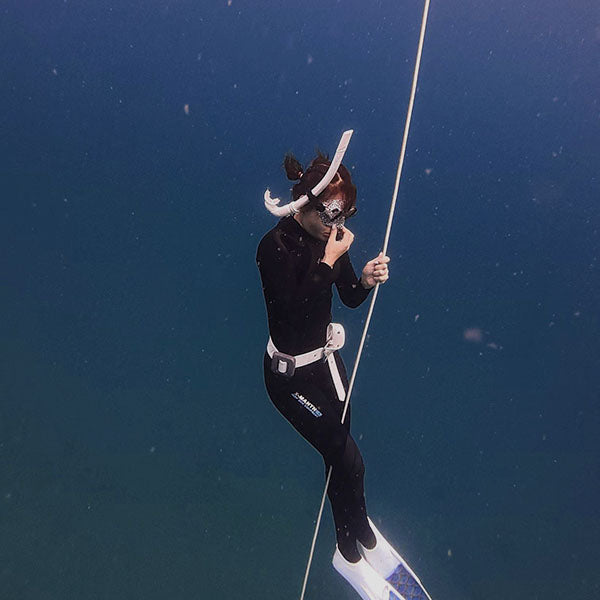
If you do add fins, go short. Short fins give less propulsion than long ones but are vastly easier to control and fit into a carry-on bag. Full-foot fins need to be sized like shoes—too tight and you'll get blisters by day two. If you're renting, size up slightly from what feels snug on land.

How Do You Teach a Child to Snorkel?
Start in the bathtub, seriously. Have your child put the mask on, adjust the strap (it should be snug but not tight—overtightening causes leaks, not prevents them), and practice breathing through the snorkel while their face is in the water. Even five minutes of this before a beach trip dramatically reduces first-session panic.
The progression that works: pool or bathtub first → shallow calm water (knee-to-waist deep where they can stand) → gradually deeper water as confidence builds. Never rush it. A child who feels safe progresses quickly; a child who feels pushed progresses very slowly and often regresses.
In the water, float alongside them and hold their hand if needed. Give them something specific to look at—a fish, a rock, a sea cucumber—so they're focused on discovery rather than the mechanics of breathing. The moment they see something exciting, most kids forget entirely that they were nervous.
One practical tip from families who snorkel regularly: bring spare swim goggles as backup. Rental gear is often sized for adults, and sometimes a child's mask just won't seal on that particular beach. A pair of swimming goggles means they can still see underwater even if the snorkel mask fails—not ideal, but better than a ruined day.
Life Jackets, Vests, and Flotation
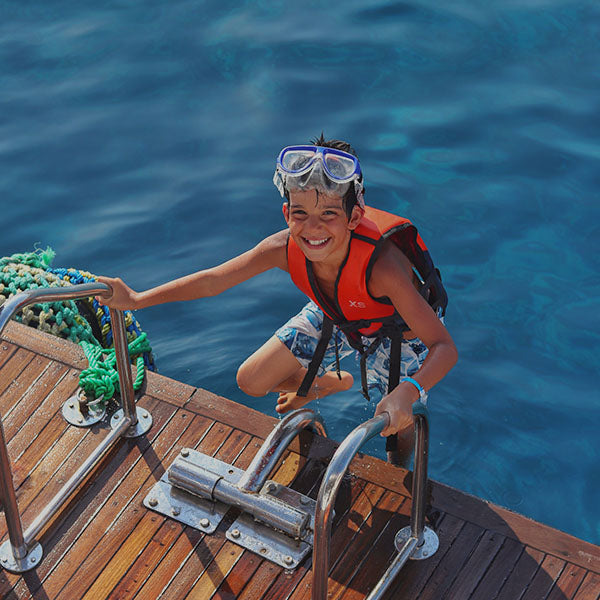
For non-swimmers or beginners, flotation is not optional—it's safety. The classic choice is a standard life jacket. It keeps the child effortlessly at the surface but prevents them from diving down for closer looks at the reef. For children who can swim but want extra confidence, snorkel vests are a better option: they're worn deflated so you can still dive, and you inflate them when you want to rest or if conditions change suddenly.
If you're snorkeling with a non-swimmer child, the ratio is 1:1—one capable adult swimmer for each child who can't swim. Ocean conditions are unpredictable and a frightened child can climb onto you in the water, potentially taking you both under. In organized guided tours, trained staff and lifeguards are in the water with you, which makes supervised group tours an excellent starting point even for kids who've never snorkeled before.
What to Wear in the Water
Sun protection is the most overlooked part of snorkeling prep with kids. When a child is face-down in the water, the back of their body—shoulders, neck, backs of legs—gets continuous direct UV exposure. It's easy to get a severe burn without realizing until you're back on shore.
The most effective protection is a long-sleeve rash guard plus UV-protective swim pants, rather than relying on sunscreen alone. Most commercial sunscreens wash off quickly in the water and need constant reapplication. More importantly, many conventional sunscreen chemicals (oxybenzone, octinoxate) are harmful to coral reefs—they're banned in several snorkeling destinations including Hawaii's protected areas and parts of the Caribbean. If you do use sunscreen, choose mineral-based formulas with zinc oxide and apply at least 30 minutes before entering the water.
Bright colors work best for visibility. Neon orange, yellow, and pink make it much easier to spot your child in the water, especially in choppy conditions or if you're on a boat watching from above. Avoid shiny metallic swimwear—it can attract curious fish and in very rare circumstances may increase shark curiosity in murky water.
Safety Essentials for Snorkeling With Kids
Snorkeling is generally safe when managed well. The main risk is drowning—ocean water is unpredictable, currents shift, and fatigue sets in faster than you'd expect, especially in children. Never let kids snorkel alone. Use the buddy system even when conditions seem calm.
The fear of sharks is real but wildly disproportionate to actual risk. The statistical probability of an unprovoked shark attack while snorkeling is roughly 1 in 4.3 million—far below the risk of being in a car accident on the way to the beach. What you should actually watch for: currents (stronger than they look from shore), boat traffic in areas without designated swimming zones, and your own child's energy level. Kids tire fast and may not say so when they're in the water having fun.
Before entering the water, always check in with the beach: lifeguard flags, local warnings, visible currents near shore. Morning sessions are generally calmer and less crowded. If in doubt about conditions, skip the session—there will be another day.
First Snorkeling Gear for Kids: What to Look For
You don't need to spend a lot, but you need to spend on the right things. A leaky $10 mask that floods every 30 seconds will ruin the trip more thoroughly than any other factor. Spend adequately on the mask—it's the one item where fit and seal quality directly determine whether your child has a good experience or a miserable one.
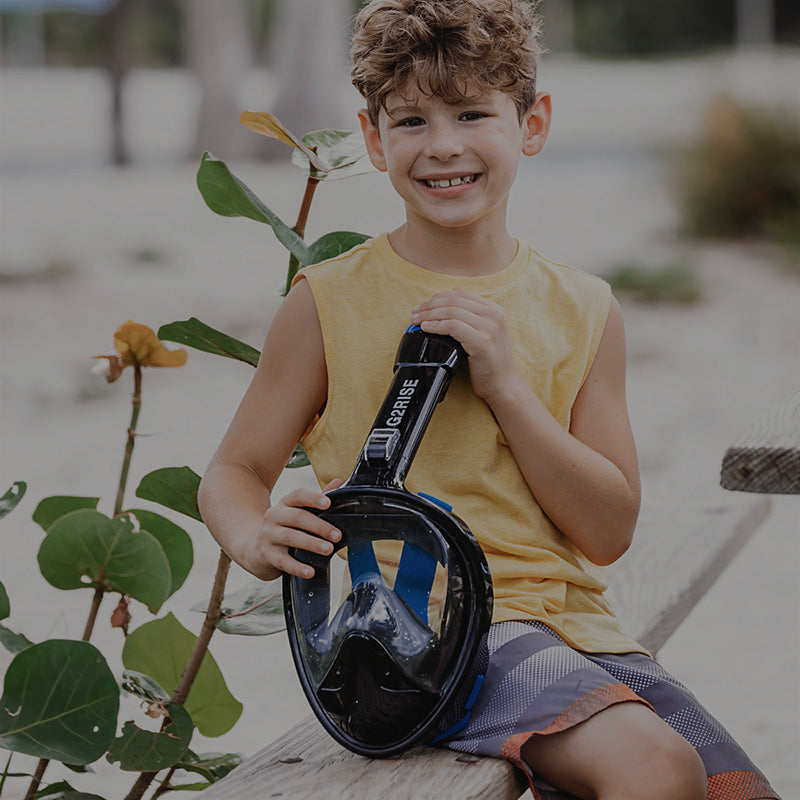
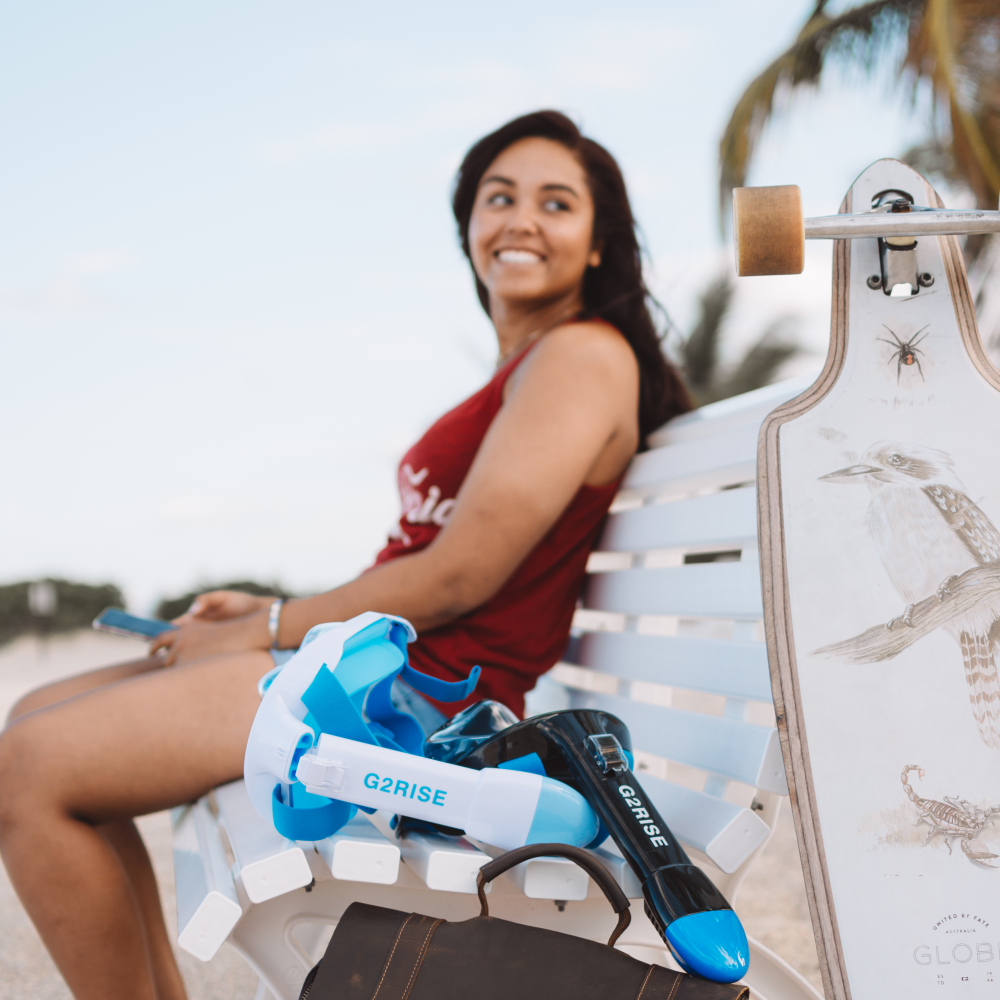
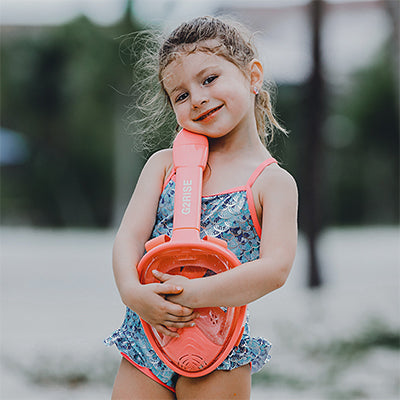
G2RISE's kids' snorkel sets are designed around this exact problem: smaller skirt dimensions for child face geometry, soft silicone that seals reliably without over-tightening, and a dry-top snorkel with a child-proportioned mouthpiece. Short fins are included in some sets—not because beginners need them, but because by the time a child is comfortable enough to want fins, you don't want to be sourcing them separately on vacation. The full set fits in a carry-on bag without drama, which matters when you're juggling everything else that comes with traveling with kids.

The Bottom Line
Most kids who try snorkeling in the right conditions with properly fitting gear love it immediately. The failures happen almost entirely because of gear that doesn't fit, conditions that weren't right, or rushing the learning curve. Take it step by step—bathtub, then pool, then calm shallow water—and let your child set the pace. The underwater world is genuinely magical when seen for the first time at age 5. That wonder is worth getting the prep right.

Leave a comment
This site is protected by hCaptcha and the hCaptcha Privacy Policy and Terms of Service apply.