
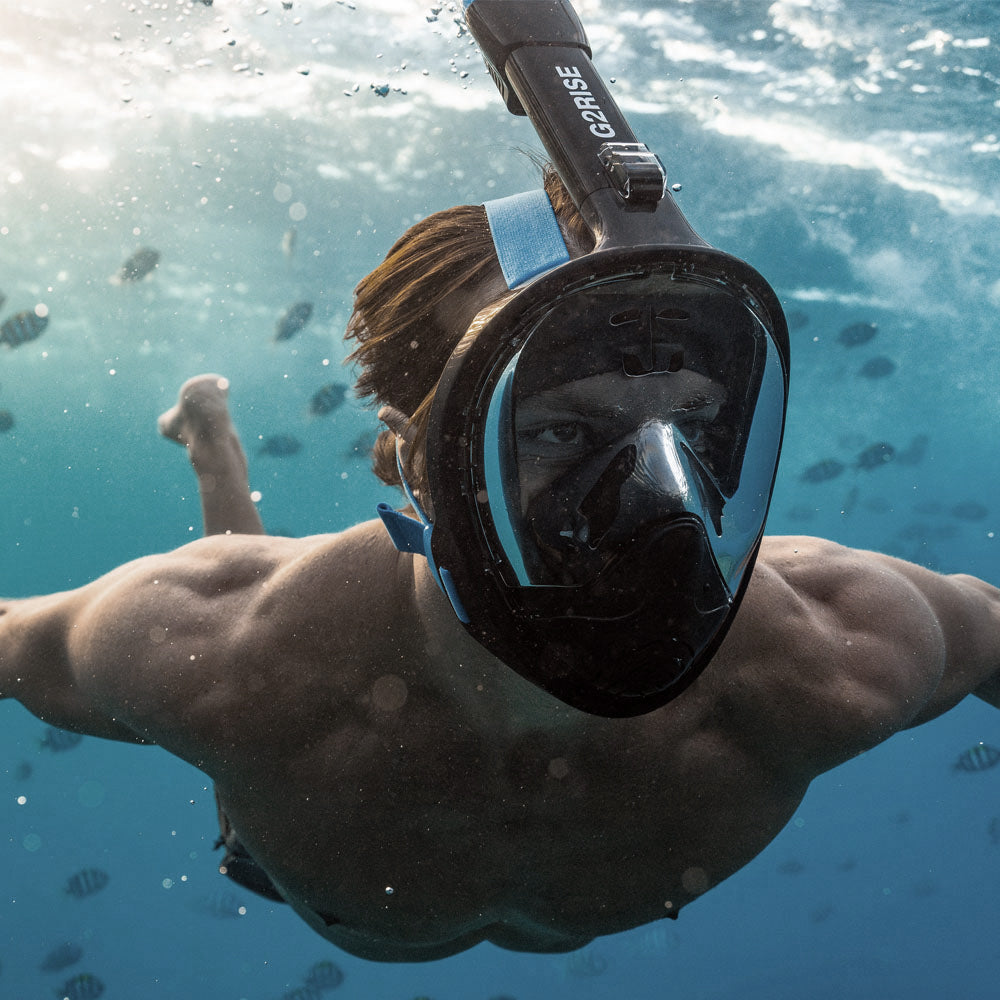
A little water in a snorkel is common. A tube can catch spray, dip below the surface during a turn, or collect a few droplets near the purge chamber. Repeated mouthfuls aren’t something to “push through,” though. They mean your position, technique, fit, or equipment needs attention.
The quickest fix is to work from the symptom. Notice when the water appears, return your face above water, and inspect the setup on shore if flooding repeats. Don’t troubleshoot while you’re coughing, breathless, or anxious. Float, stand, or get out first.

Why Does Water Get Into a Snorkel?
Water gets into a snorkel when the top opening is splashed or submerged, when the tube points into oncoming water, or when a valve or mouthpiece fails to seal. Small droplets can also come from condensation. The timing and amount of water usually reveal which path it took.
Start with one simple question: did the tube top go underwater? A wave, a low head position, or a sharp turn can submerge even a well-designed top. A splash guard reduces direct spray but doesn’t create an invisible wall. A dry-top float can close during brief submersion, yet sand, angle, or movement may keep it from sealing perfectly.
Traditional snorkels fall into three broad types: wet, semi-dry, and dry. A wet J-tube has an open top and the fewest moving parts. A semi-dry snorkel adds a splash guard. A dry snorkel adds a mechanism intended to close the top when submerged. Many semi-dry and dry models also use a purge valve at the bottom. That’s three different water-management approaches, not three levels of guaranteed dryness.
Water can also enter lower down. A cracked mouthpiece, a loose connection, or grit under a purge valve may admit water close to your mouth. That often feels different from a top flood: instead of one obvious rush after a wave, you notice a recurring gurgle or small sip with each breath.
Are Waves or Head Position Causing the Problem?
Waves and head position are the most likely causes when the snorkel works in calm water but floods in chop or during turns. Keep the tube opening high, angle it slightly behind your head, look forward and a little down, and rotate with your body instead of swinging only your neck.
The Snorkel Venture guide offers a useful observation: looking straight down can swing the tube forward, where it begins to scoop water as you move. A better position is neutral—eyes down and ahead, neck relaxed, snorkel closer to vertical than horizontal.
Large head turns cause another predictable problem. Turn hard to look behind you and the snorkel tip may trace an arc straight through the surface. If water arrives after checking on a buddy, practice rotating shoulders, hips, and fins together. The view changes while the tube stays more upright.
Attachment height matters too. If the clip sits too low, the mouthpiece can pull upward and the tube may lean forward. If it sits too high, the mouthpiece can tug at your lips and break the seal. Adjust the clip on land, put the mouthpiece in without clenching, and ask a buddy whether the top sits above and slightly behind your head.
In chop, slow down. A hurried kick raises your breathing demand and makes every small splash feel bigger. Keep your hands quiet, use relaxed kicks, and choose a route that doesn’t require you to fight wind-driven surface water. Changing conditions is a better reason to leave than a challenge to prove your equipment.

Is the Splash Guard or Dry Top Working Correctly?
A splash guard should deflect spray, while a dry top should close when submerged and reopen at the surface. Neither system works well when packed with sand, blocked by residue, mounted at the wrong angle, or physically damaged. Rinse the top with fresh water and verify that moving parts travel freely.
Test the mechanism visually, not by inhaling against a blocked tube. On many dry snorkels, you can gently tilt the clean, dry unit and watch a float move. The exact action varies by model, so use the manufacturer’s instructions. If the float binds, the cap is cracked, or a keeper is missing, stop using the snorkel until it’s repaired.
A dry top can also close when you don’t expect it. If a wave lifts the float or the tube leans sharply, inhalation may suddenly feel blocked. Return the top fully above water and upright. If normal airflow doesn’t return immediately, remove the mouthpiece and breathe normally. Never keep pulling harder through an obstructed snorkel.
After beach snorkeling, top mechanisms deserve more than a quick rinse. Fine sand hides under caps, and salt dries into crystals. Soak the snorkel in clean fresh water as the maker recommends, agitate gently, rinse again, and air-dry out of direct sun.
Can a Purge Valve or Mouthpiece Leak?
Yes. A bottom purge valve can leak when sand, hair, salt, or a folded silicone edge prevents it from lying flat. A mouthpiece can leak through a split bite tab, torn skirt, or loose joint. Lower leaks usually create repeated small sips or gurgling instead of one wave-sized flood.
| Symptom | Most likely path | What to check on shore |
|---|---|---|
| One sudden mouthful after a wave | Top opening | Position, splash guard, dry-top movement |
| Small gurgle every few breaths | Purge chamber or condensation | Valve seat and collected droplets |
| Water appears when the tube twists | Mouthpiece or connection | Cracks, joint security, clip position |
| Water returns right after clearing | Purge valve not sealing | Debris, curled membrane, damaged housing |
| Airflow stops after submersion | Dry top still closed | Float movement and upright position |
Rinse the lower chamber and inspect the valve in bright light. Don’t poke it with a blade. If the valve is removable according to the manufacturer, clean and reseat it in the original orientation. If it is torn, stiff, swollen, or unable to stay centered, replace the correct part—or the whole snorkel when the valve isn’t serviceable.
For the mouthpiece, flex it gently and check both bite tabs, the lip flange, and the joint with the tube. A mouthpiece that makes you clench can fatigue your jaw and distort the seal. Correct positioning should let you hold it lightly rather than bite as if you’re trying to keep it from escaping.
How Do You Clear Water Safely?
To clear a small amount of water, keep your face near the surface and give a firm, controlled exhale through the snorkel. A purge-equipped model sends water downward; a simple wet tube pushes it out the top. After clearing, take the next breath cautiously so you can detect residual water.
Practice where you can stand. Add only a small, controlled amount of water, keep a buddy close, and remove the mouthpiece if the first clear doesn’t work. Beginners often make the second breath too large and fast. A slow “test sip” of air gives you time to stop if the tube still gurgles.
The blast-clear method uses a forceful exhale to expel water. The displacement method, used after a breath-hold dive with an open snorkel, begins exhaling during ascent so expanding air helps push water out before the surface. That second technique requires training and isn’t necessary for ordinary surface snorkeling.
Never count on a dry-top label to avoid learning how to respond to water. Even a good system can admit spray or fail when dirty. Your reliable backup is simple: recognize the water, clear only if calm and able, and otherwise lift your face and breathe directly.
How Can Beginners Prevent Repeat Flooding?
Beginners prevent repeat flooding by combining calm-water practice, neutral head position, correct clip height, relaxed breathing, and a clean snorkel. Work on one variable at a time. If you change the tube angle, mouthpiece, and top mechanism together, you won’t know which change solved the problem.
- Assemble the snorkel on the side and at the height recommended for your setup.
- Check the mouthpiece, top, and purge valve before entering the water.
- Practice breathing with your face barely in the water where you can stand.
- Practice a small controlled clear, then take a cautious next breath.
- Swim ten relaxed strokes while keeping the tube slightly behind your head.
- Practice turning with your whole body instead of snapping your head around.
- Move to deeper water only when the routine feels boringly easy.
Keep the snorkel on the left if your design or scuba configuration calls for it; many snorkels are shaped that way because scuba regulators normally approach from the right. A symmetric J-tube may work on either side. The important point is to follow the product’s geometry instead of forcing a curved mouthpiece backward.
Match conditions to experience. Calm, clear, shallow water is a better classroom than a choppy beach entry. If waves keep washing over the top, leaving the water is a valid troubleshooting step—not a failure.

When Should You Stop and Inspect the Equipment?
Stop immediately when flooding repeats, airflow feels restricted, you inhale water, or you become breathless, dizzy, panicked, or unusually tired. Lift your face, remove the mouthpiece, breathe normally, and move to stable support. Equipment diagnosis comes after you’re calm and safely out of the water.
On shore, use the symptom table to isolate the likely path. Rinse the unit, inspect every flexible seal, verify the top and purge mechanisms, and retest only in shallow water. Retire equipment with cracks, damaged silicone, missing parts, or a mechanism that sticks after cleaning.
Don’t modify a breathing tube, block a valve, glue a cracked housing, or combine unidentified parts. These shortcuts may hide the symptom during a dry check and fail after the snorkel moves, cools, or meets water pressure.
If you’re replacing a troublesome setup, look for equipment you can inspect, clean, and practice with easily. The G2RISE snorkeling range is a practical place to compare options, but fit and skill still matter more than any “dry” label. Choose your gear, then rehearse the boring basics before the view gets interesting.


Leave a comment
This site is protected by hCaptcha and the hCaptcha Privacy Policy and Terms of Service apply.