
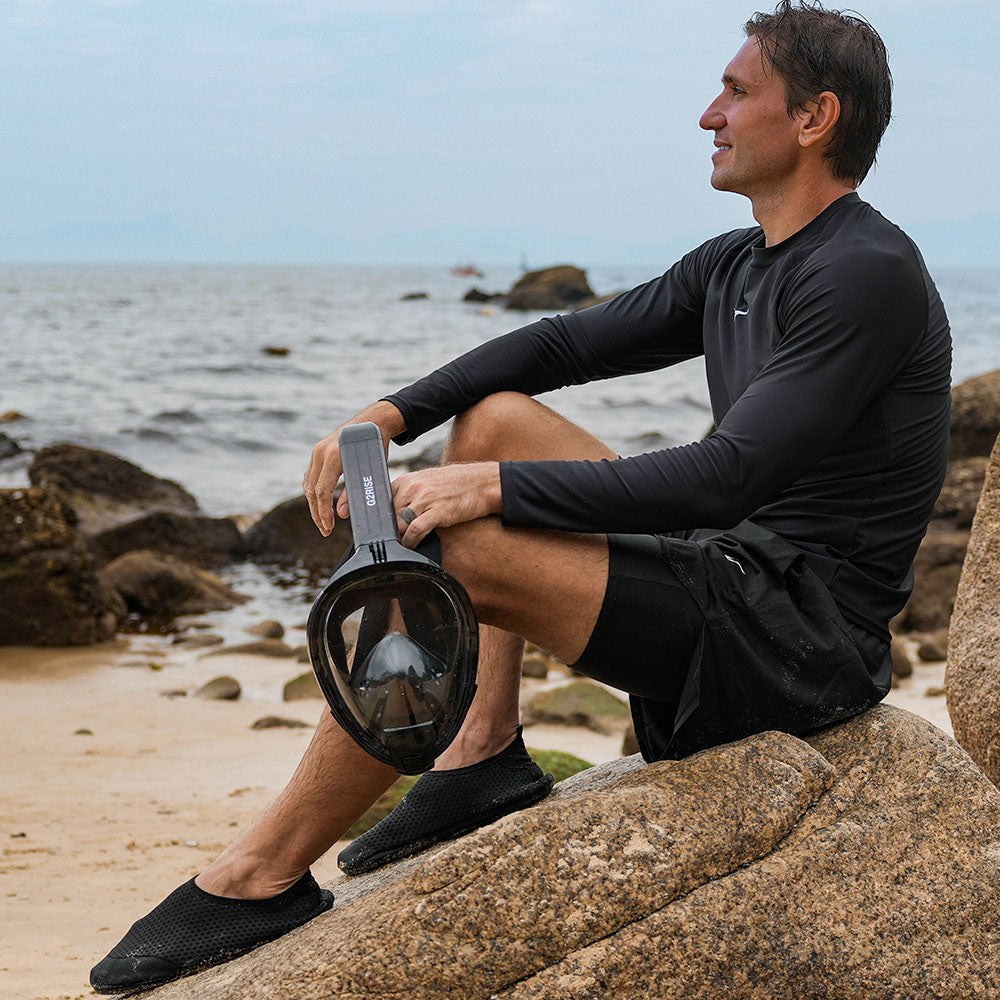

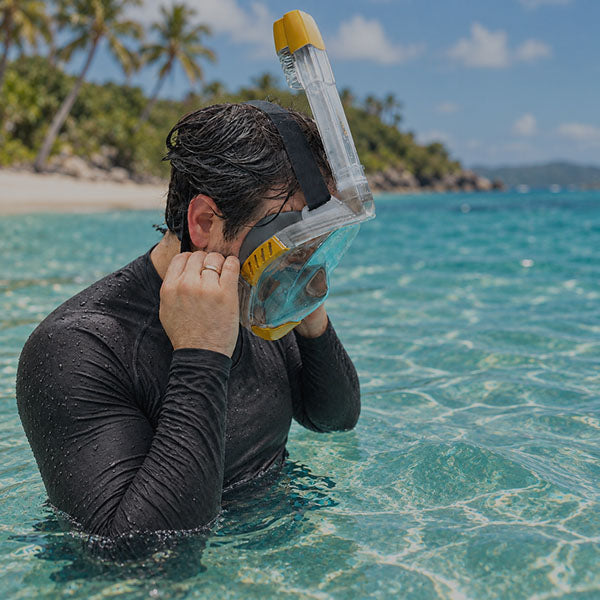
A beard doesn't ruin your snorkeling experience — but a mustache very well might. The distinction matters because the fix for each is different. A beard grows primarily on the cheeks and jaw, sitting well clear of the mask's sealing area. A mustache grows directly under the nose, in the exact zone where the silicone skirt needs to make watertight contact with skin. One to three millimeters of hair in the wrong spot channels water in steadily, and no amount of strap-tightening solves a structural seal problem.

Why Does Facial Hair Cause Mask Leaks?
A snorkel mask works by pressing a flexible silicone skirt against your face to create an airtight seal. Hair interrupts that seal by lifting tiny sections of the skirt off the skin, creating channels that let water enter under surface pressure. The amount of leakage depends on hair density, length, and exactly where it sits relative to the seal line.
Most full-beard snorkelers find their mask leaks almost exclusively from the upper lip and nose area — not the cheeks or chin, which sit further from the critical seal zone. A clean-shaven upper lip paired with a full beard below typically seals fine. A thick mustache extending over the lip is the problem. Stubble at 2–3mm or less can often be managed with technique alone. Dense, long mustache hair that sits over the lip creates a persistent leak regardless of what else you try.
What Sealing Agents Actually Work for Snorkeling With a Beard?
Sealing agents create a temporary waterproof gasket between the hair and the silicone skirt. The question isn't whether they work — most do — it's how long they hold and what they do to your mask skirt over time.
- Beeswax or beard balm: The best option for most snorkelers. Both are thick enough to fill gaps between hair shafts, safe for use in ocean water, and resistant to washing out quickly. Apply before you get in, and it'll typically hold for a full session without reapplication.
- Food-grade silicone grease: Dive-specific or food-grade silicone grease provides a very reliable waterproof layer and is completely safe for silicone mask skirts. Slightly messier to apply but highly effective, especially for longer sessions.
- Chapstick or lip balm: Widely available and surprisingly effective for shorter snorkels. It's a waxy compound that fills hair gaps reasonably well. Won't last all day but works for 30–60 minute sessions in calm conditions.
- Petroleum jelly (Vaseline): Works short-term but degrades silicone over time. Petroleum-based products break down the polymer chains in the silicone skirt with repeated exposure. Use it in a pinch; don't make it a regular habit.
Application technique matters as much as the product. Work the compound into the mustache hairs from below, pressing it against the skin to fill the gap between skin and hair shaft. Applying it only to the surface of the hair doesn't create a useful gasket — you need to get it underneath.
How Much Mustache Is "Too Much" for a Traditional Mask?
No universal threshold exists, but the practical guideline from instructors is: if hair extends more than about 3mm over the top lip into the seal zone, expect noticeable leakage with a standard mask. Very short stubble — 1–2mm — often seals reasonably well against a soft, pliable silicone skirt that can conform around individual hairs.
Where the mustache grows matters as much as how long it is. Hair on the outer edges of the upper lip typically doesn't interfere with the seal at all. The critical strip is directly under the nostrils, from the septum outward about 1.5 centimeters. Some experienced divers maintain a full mustache by trimming only a narrow strip directly beneath the nostrils — often nearly invisible in the overall mustache profile, but enough to give the skirt clean skin to seal against in the highest-risk zone.
Should You Use a Full-Face Mask If You Have a Beard?
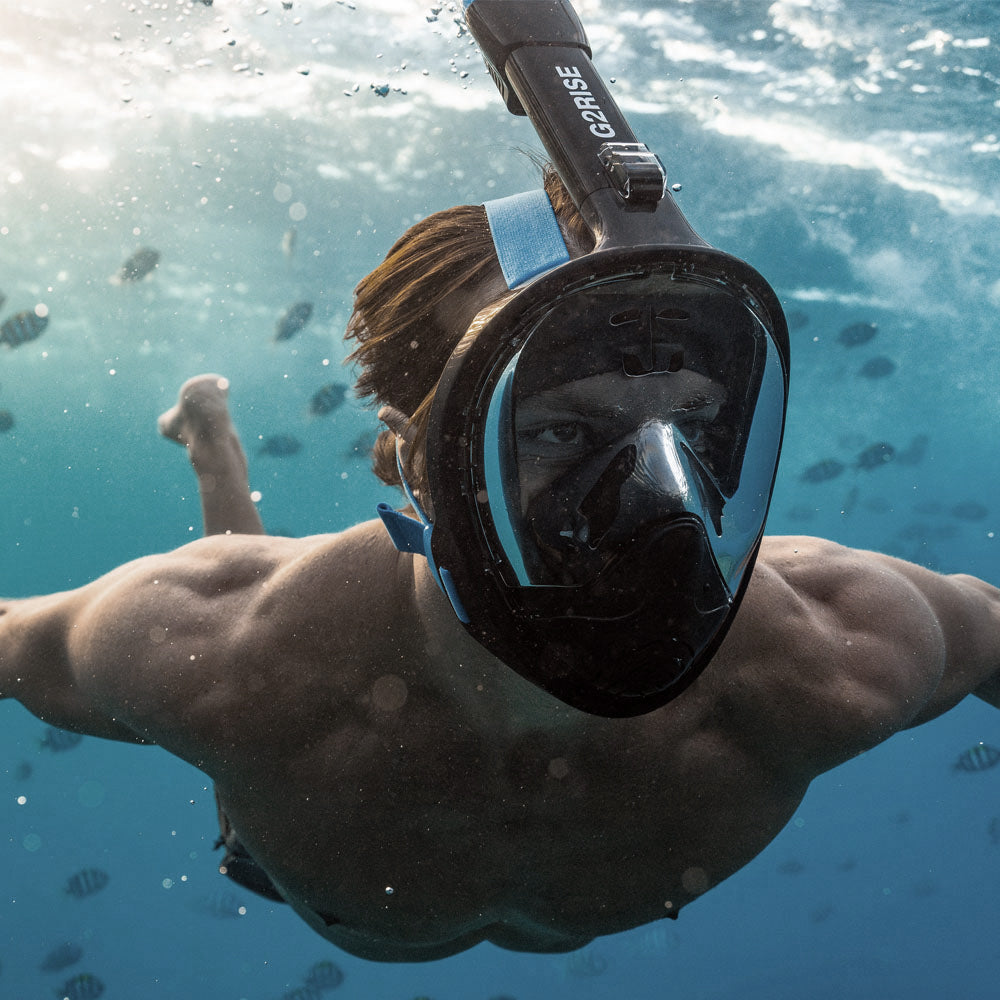
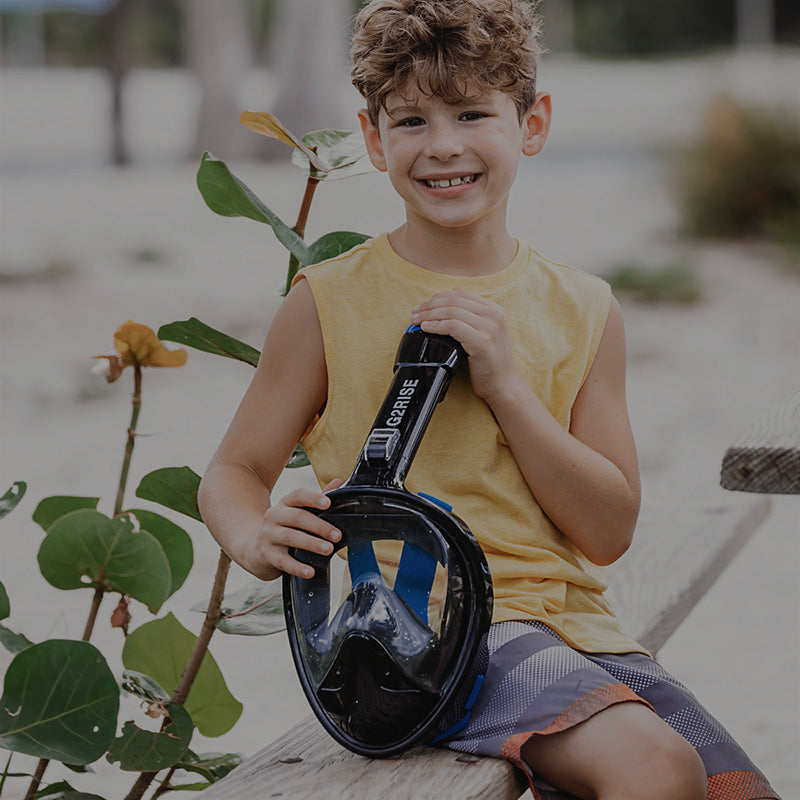
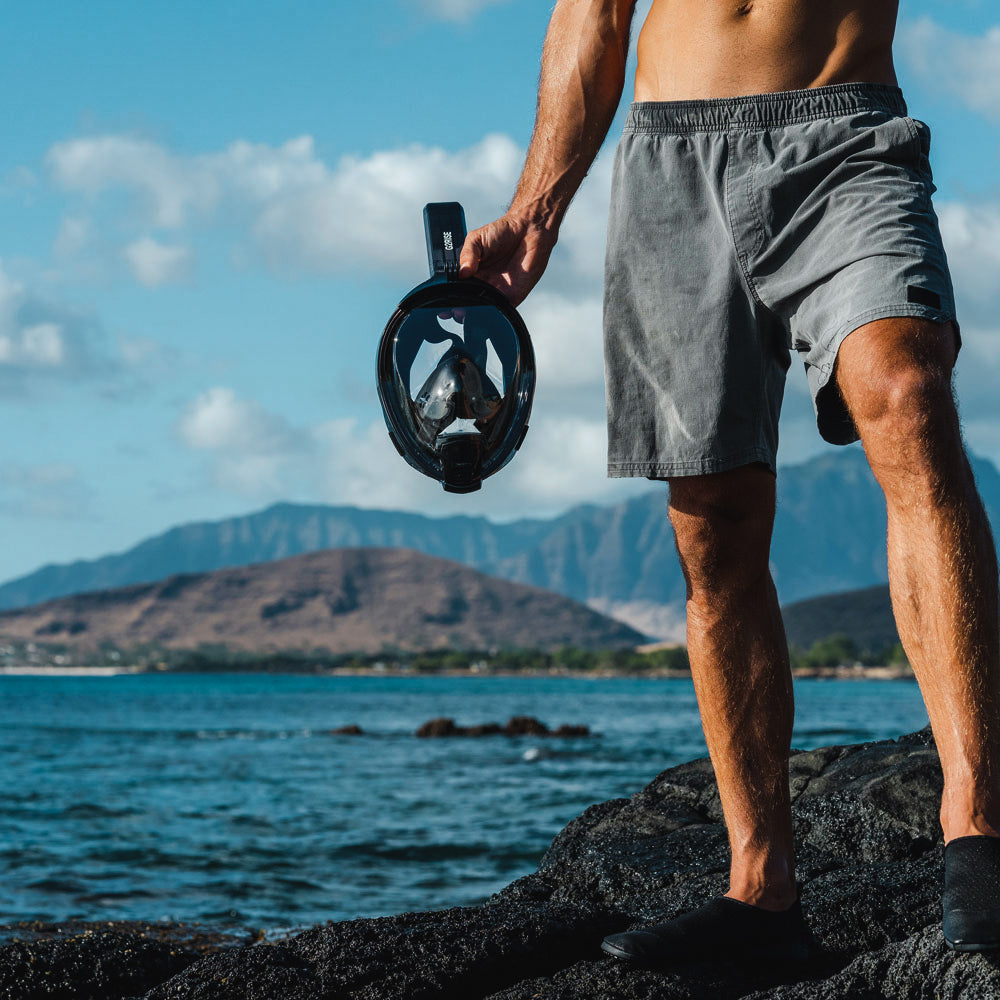
For men with heavy mustaches and lighter cheek or chin growth, a quality full-face mask is worth considering. Full-face masks seal along the outer perimeter of the face — the jawline and temples — rather than close to the nose. This means a mustache doesn't interfere with the seal at all. If the mask fits the outer perimeter of your face properly, facial hair at the lip is simply not part of the sealing equation.
Two caveats apply. First, a very dense, full beard might still break the outer perimeter seal on a full-face mask along the jawline and sideburns — you'd need to test it. Second, cheap full-face masks have documented CO2 safety issues: the large breathing volume, combined with poor ventilation design in low-quality versions, can allow exhaled air to partially recirculate. Buy reputable brands and inspect the ventilation design carefully. A quality full-face mask from an established brand is a legitimate option for surface snorkeling with a mustache; a bargain version is not.
What Grooming Adjustments Help Without Shaving Everything?
Several targeted adjustments make traditional masks work with facial hair without requiring a full shave:
- Down-combing before fitting the mask: Wet your mustache thoroughly, then comb all the hairs straight downward before placing the mask. Laying the hairs flat against the skin rather than projecting outward reduces the gap they create under the skirt. It's a small mechanical change that meaningfully reduces leak rate.
- The clearance strip: Use clippers to remove a 2–3mm strip of hair directly under the nostrils. This strip is usually invisible from the front within a full mustache. Done well, it eliminates leaking in the highest-risk zone while preserving the visual profile of the mustache.
- Don't overtighten the strap: Pulling the strap very tight warps the silicone skirt, distorting it away from the face rather than pressing it more firmly. A snug-but-not-tight fit lets the skirt conform naturally to whatever surface it meets — including hair. The classic fit test: place the mask on your face without the strap, inhale through your nose, let go. If it holds briefly from suction, the fit is correct. If it falls, the mask shape isn't matching your face geometry regardless of strap tension.
- Master mask clearing: Accept that some water will enter and get comfortable clearing it. Press the top of the mask frame lightly against your forehead, tilt your head back slightly, and exhale through your nose. The water drains out the bottom of the skirt. Experienced bearded snorkelers often clear their mask every few minutes as routine, not as a sign of failure.
What Mask Characteristics Work Best With Facial Hair?
The skirt material determines how much the seal can adapt to irregular surfaces. Softer, more pliable silicone conforms around hair better than stiffer material. Higher-quality masks use silicone with greater flexibility, which makes a genuine difference for bearded snorkelers even before any sealing agents are applied.
Opaque silicone skirts — black or colored — tend to be more supple than clear transparent skirts. Clear skirts often use stiffer silicone to maintain optical clarity at the edges. For facial hair specifically, an opaque-skirted mask is often more forgiving. Frameless masks also tend to have lower-profile skirts that hug closer to the face, since the absence of a rigid frame allows the skirt to flex more freely. The combination of frameless construction and high-grade flexible silicone is generally the most beard-compatible design in a traditional mask.

What's the Best Mask for Snorkeling With a Beard?
The honest answer is: test several on your specific face. Mask fit is personal, and the intersection of face geometry and beard placement is even more so. That said, the characteristics to prioritize are high-grade flexible silicone skirt, frameless or low-frame construction, and a nose pocket that sits reasonably high — a low-hanging nose pocket that presses against the mustache defeats even the best skirt material.
G2RISE's SN01 mask uses a dual-layer silicone skirt with both an inner and outer sealing edge. The dual-layer construction creates additional contact area around the face, giving the mask more surface to work with when hair is interrupting the primary seal. For a well-managed beard with a trimmed or moderately short mustache — especially with beeswax or beard balm applied — the conforming silicone performs across a wide range of face shapes. It won't solve an extremely dense, untrimmed handlebar mustache without additional measures, but it's a more forgiving starting point than a single-edge skirt.


Leave a comment
This site is protected by hCaptcha and the hCaptcha Privacy Policy and Terms of Service apply.