
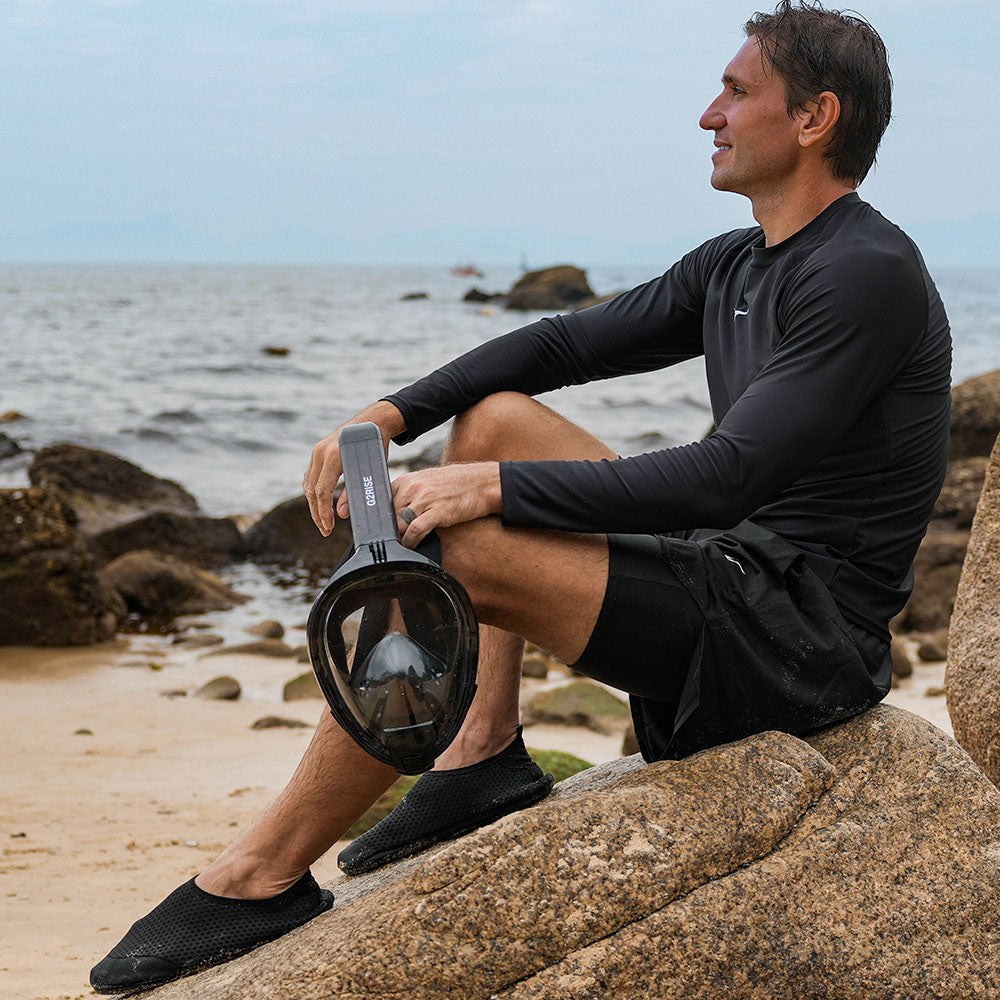
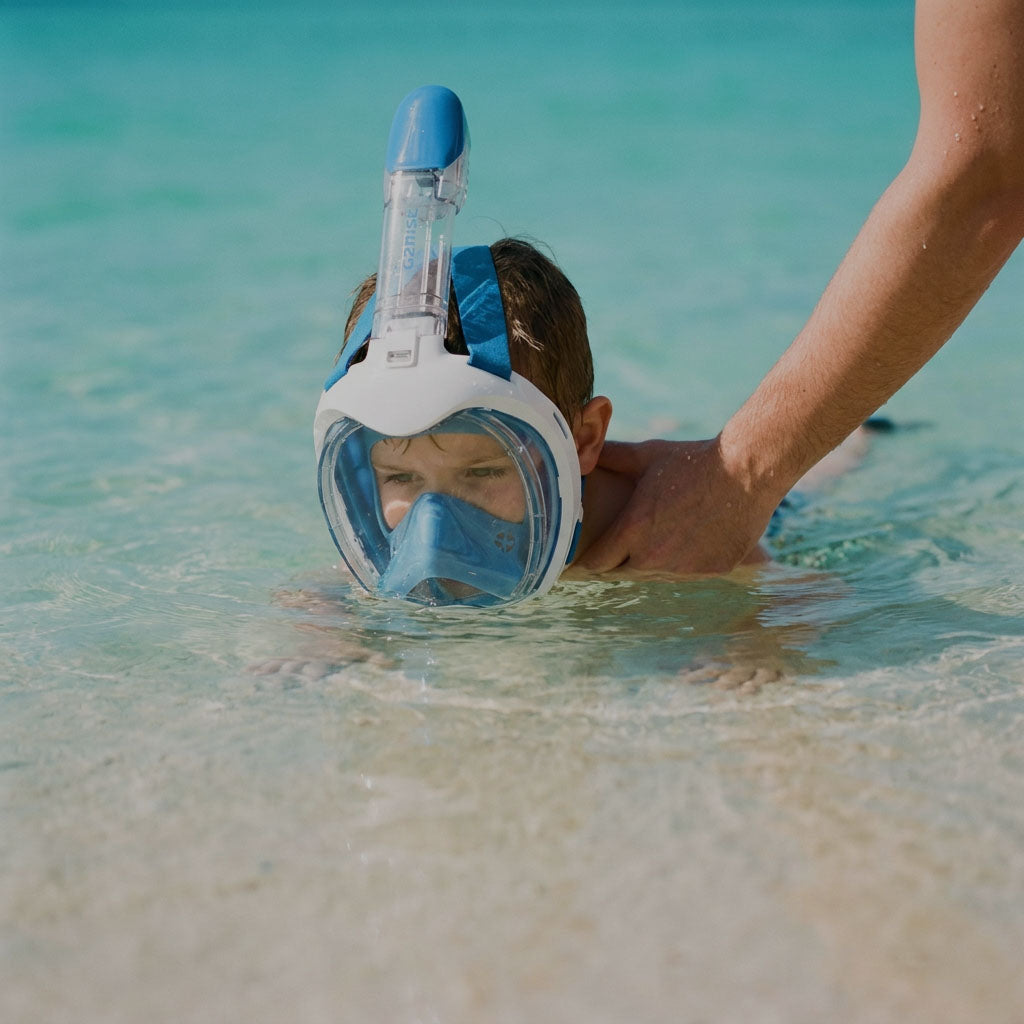
You've got the gear. Now what? Snorkeling is one of the most accessible water activities there is — you don't need certifications, you don't need to hold your breath, and you don't need to be a strong swimmer. But there are a handful of things that separate a relaxed, memorable first session from a frustrating one. These are the tips that actually help.

Should You Practice in a Pool Before Snorkeling in the Ocean?
Yes — especially if you've never breathed through a snorkel before. Even experienced swimmers find the sensation unusual at first: face-down in water, breathing through a tube. The pool removes every other variable (currents, depth, salt) so you can focus on getting comfortable with the equipment alone.
For complete beginners, even a bathtub works for getting used to the mask seal and learning how to clear a snorkel. Then graduate to the shallow end of a pool before heading to open water. Even confident adult swimmers benefit from having the basic technique feel second-nature before they're dealing with ocean conditions on top of it.
What Are the Two Most Important Pieces of Gear for Beginners?
A mask that fits and a dry snorkel. That's the entire mandatory kit. Everything else is optional.
The mask has to seal to your face. A leaking mask is the single most common reason first-timers have a bad time. If water is constantly trickling in and you're always stopping to deal with it, you can't relax enough to enjoy what's below you. Before open water, do the no-strap test: press the mask to your face, breathe in gently through your nose, let go. If it stays — good fit. If it drops — wrong mask for your face shape.
A dry snorkel is forgiving. Traditional snorkels flood when the tube goes underwater, requiring you to blast water out by exhaling hard. Dry snorkels have a float valve at the top that seals automatically when submerged. For beginners, this is meaningfully easier. When water does get in, a purge valve at the mouthpiece drains it gently.
How Do You Clear Water from a Snorkel Without Panicking?
This is the one technique that makes snorkeling stress-free instead of stressful. Water in the snorkel is inevitable, especially early on. The instinct is to jerk your head up and rip the snorkel out. That instinct makes it worse.
Instead: with water in the tube, take a small careful breath in through your mouth — there's usually still some air available. Then exhale sharply and forcefully, as if blowing out a thick candle. That pressure blows the water up and out the top of the tube. You don't need to lift your head. You don't need to remove the snorkel. Stay face-down and keep going.
With a dry snorkel it's even simpler — a gentle exhale drains water through the purge valve at the mouthpiece without the dramatic blast.
The most important rule: if water gets in and you start to feel panicked, just ascend, lift your face out of the water, and breathe fresh air. Float. There's no rush. Snorkeling is a leisure activity — treat it like one.

What Is the Correct Body Position When Snorkeling?
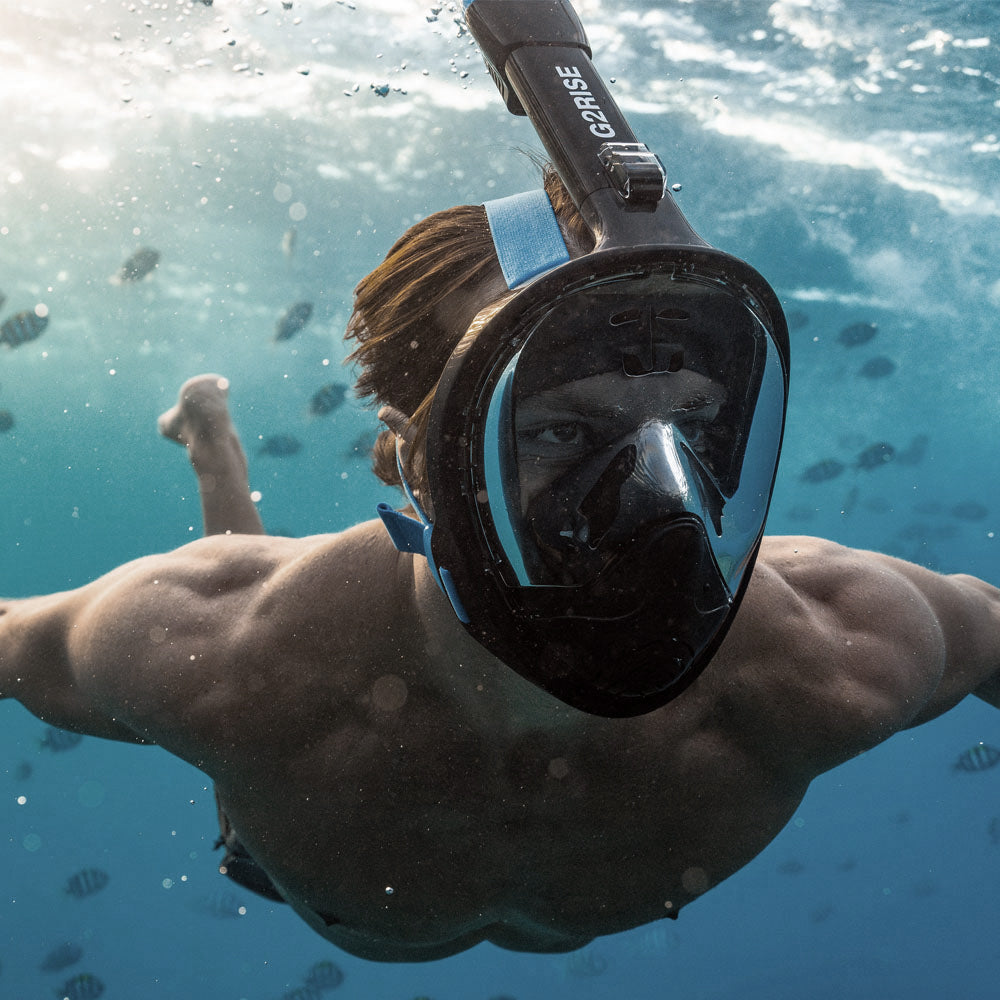
Float as horizontally as possible, face down. Your body should be roughly parallel to the surface. The snorkel tube stays above the water line at all times — if you dip your head too far down, the tube submerges and fills.
Kick from your hips and thighs, not your knees. Keep your legs as straight as you comfortably can. Bending at the knee while kicking with fins is inefficient — it creates drag and tires you out quickly. Long, slow, rhythmic kicks cover more distance with far less energy than rapid churning.
Your arms can rest at your sides or clasp in front of you. You don't need to use your arms for propulsion. Let the fins do it.
What If You're Not a Strong Swimmer?
You can still snorkel. Wear a buoyancy vest or life jacket. You can put your face in, breathe through the snorkel, and see everything below you — the buoyancy keeps you effortlessly at the surface without any treading or effort.
Many people snorkel with a buoyancy vest indefinitely because it lets them focus entirely on what they're seeing rather than staying afloat. If you're snorkeling in busy water, a brightly colored vest also makes you visible to boat traffic.
What Should You Do If You Start to Panic Underwater?
Stop moving first. Panic makes you want to thrash, which burns energy and makes you sink more. Instead: stop kicking, let your natural buoyancy bring you toward the surface, lift your face out of the water, and breathe.
Most underwater panic comes from one unexpected stimulus — a wave that pushed you sideways, a mouthful of water, your mask fogging suddenly — plus the instinct to fight it. The counter is calm. Assess what happened. Clear your snorkel. Adjust your mask if needed. Go back under when you're ready.
Even experienced snorkelers occasionally inhale water. It happens. You cough it out, float for a moment, and continue. It's not an emergency.

Where Are the Best Places to Snorkel?
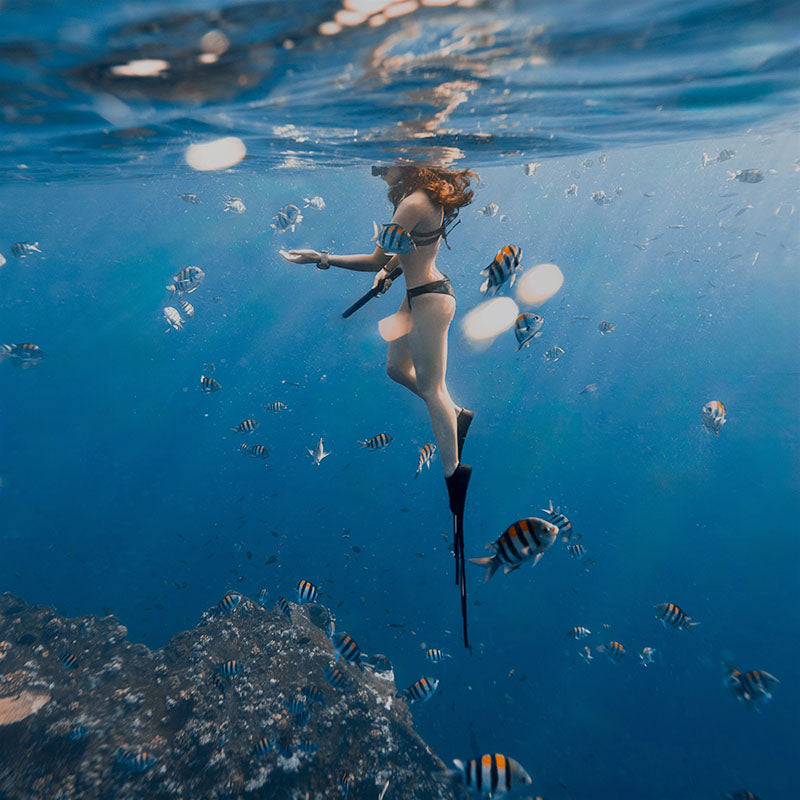
Look for calm water with structure beneath — rocks, coral formations, reef systems. Marine life congregates wherever there's shelter, food, and places to hide. Wide open sandy flats tend to be quieter. Headlands (rocky points that jut into the water), protected bays, and areas near shallow reefs are typically where you see the most.
Avoid snorkeling in strong currents when starting out. If you enter the water and feel yourself being pulled sideways without kicking, exit calmly and find somewhere calmer. Fighting a current is exhausting and can become dangerous.
Lakes and rivers are excellent snorkeling locations too, not just oceans. Freshwater visibility is sometimes exceptional, and you'll encounter fish, interesting geology, and in lakes — genuinely surprising finds on the bottom.
How Do You Prevent Your Mask From Fogging?
Anti-fog spray applied to the inside of the lens before each session is the simplest solution. Spray, spread with a finger, brief rinse, put it on. Quality defog products last multiple sessions.
If you don't have spray, spit works — it's genuinely what divers use. Apply it to the inside of the lens, swish a tiny amount of water around, and go.
New mask note: if your brand-new mask is fogging despite defog, the lens has a factory coating that's preventing the defog from bonding. Clean the inside with a dedicated mask scrub product before your first use. One-time process, fixes the problem permanently.
What's the Mindset Shift That Changes Everything?
Stop trying to do anything. Just float.
Snorkeling isn't an athletic event. The goal is to be as neutral and relaxed as possible so you can observe without disrupting what you're watching. When you're calm, your breathing is slow and quiet, fish don't scatter, and you can hover in one spot for several minutes at a time watching behavior you'd never see if you were thrashing.
Calm snorkelers stay longer, see more, and feel better afterward. Slow down. Breathe gently. Let the water hold you. Everything else — clearing technique, duck diving, finding the best spots — comes naturally once you've got that baseline.

Snorkeling Is Supposed to Be Fun
There's nothing to master on day one except breathing through a tube while your face is in the water. That's the whole foundation. Everything else develops over time.
At G2RISE, we make gear for exactly this kind of joy-first snorkeling — masks that fit and stay put, snorkels that just work. If you're gearing up for the first time, start with the basics, and then get in the water.

Leave a comment
This site is protected by hCaptcha and the hCaptcha Privacy Policy and Terms of Service apply.