
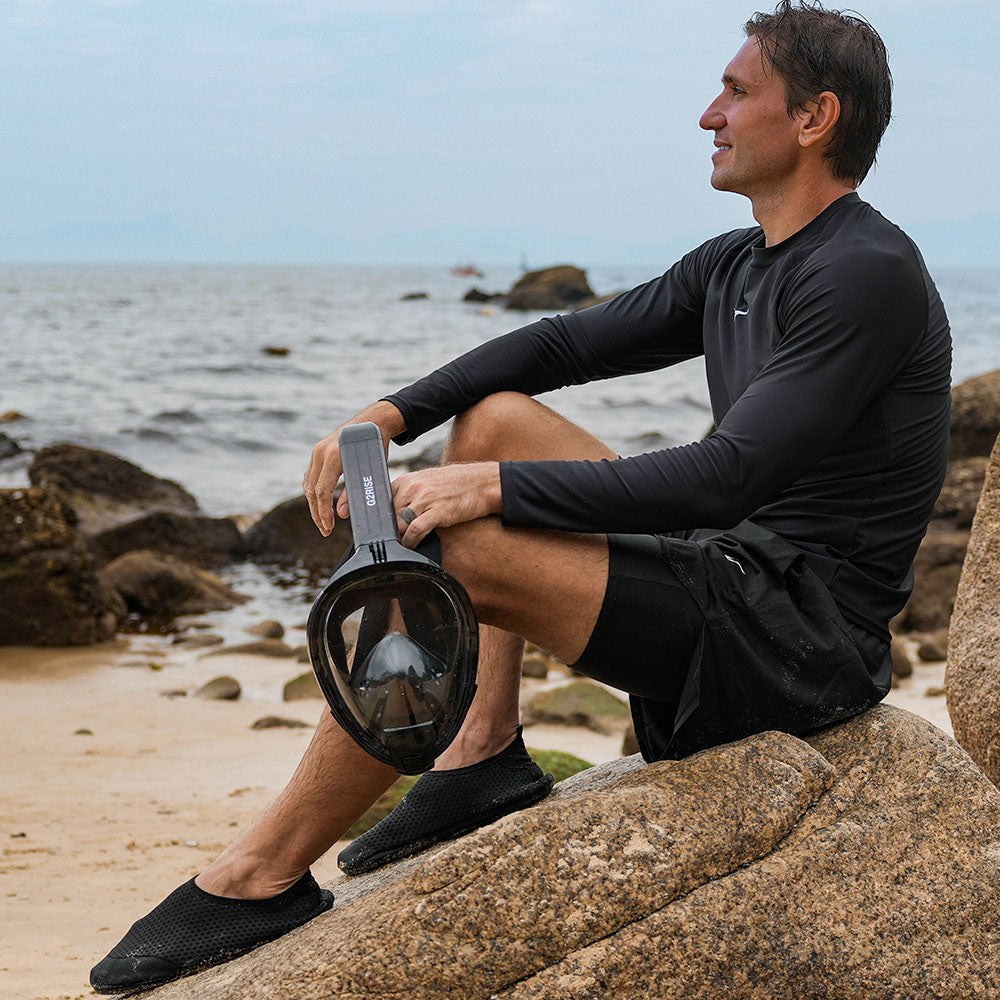

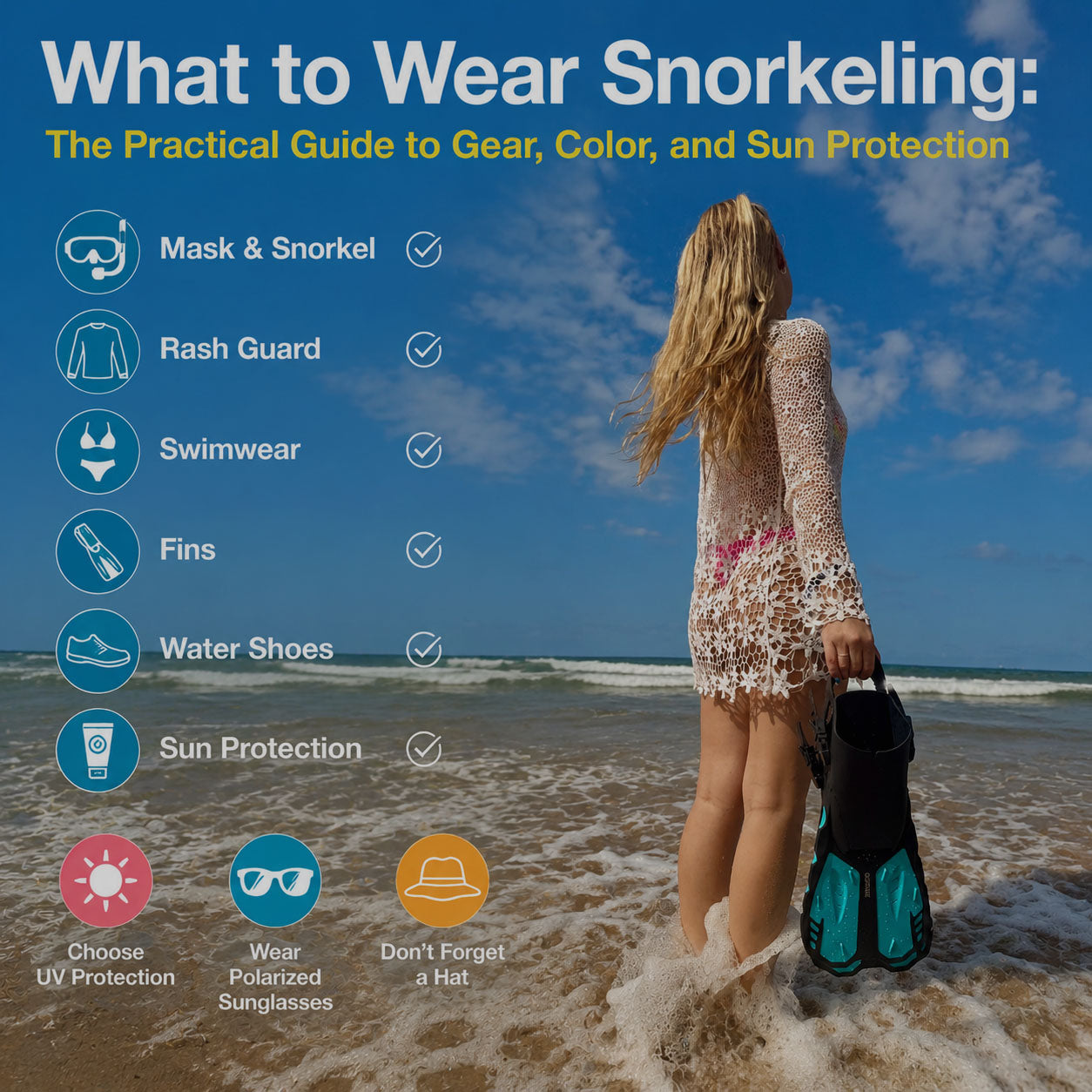
What you wear snorkeling matters differently than what you wear for most water activities — because snorkeling puts you face-down and nearly motionless at the surface for extended periods. That body position changes everything about which parts of your body need protection, what weight your limbs have to carry, and what fabrics will work with you or against you over a 60-minute session. Standard swimming advice doesn't fully apply here.

What Swimsuit Works Best for Snorkeling?
The primary requirement is secure fit that doesn't shift when you're horizontal in the water. Snorkeling isn't lap swimming — you're floating face-down with minimal limb movement, which means you're not generating the water resistance that holds a loose suit in place. A swimsuit that stays put while standing will drift upward, twist, or migrate when you're in the prone floating position with current or wave action.
For women, one-piece swimsuits are the most reliable choice for coverage and stability. Bikinis work if the top has adjustable ties or solid clasps rather than purely decorative hardware, and if you've tested that the bottoms don't shift with your kick pattern. Rash guards worn over bikini tops provide a secondary layer that eliminates most exposure concerns regardless of how the suit moves underneath.
For men, fitted swim shorts or board shorts with a mesh liner perform better than loose board shorts. Short inseam (7 inches or less) matters because longer shorts add drag when you do kick, and they increase the surface area exposed to any current you're drifting with. The drag is minor in calm conditions; in any current, it's the difference between floating where you want and being pushed sideways.
One material to avoid unconditionally: cotton. Cotton absorbs and holds water, adding significant weight when saturated. It doesn't dry between surface breaths. It takes body heat to maintain temperature against the wet fabric, which accelerates cooling in water below 78°F (26°C). And in borderline cold conditions — say, 72 to 75°F water — wet cotton actively moves body heat away from your core. Even for a 30-minute snorkel, skip cotton entirely.
Do You Need a Rash Guard for Snorkeling?
If you're snorkeling in daylight in tropical or subtropical conditions, yes — and the rash guard should be your primary UV protection, with reef-safe sunscreen covering only what the rash guard can't reach.
Here's why this matters: when you're floating face-down, your back, the backs of your upper arms, and the backs of your legs receive direct overhead sun exposure for the entire session. You feel the water cooling your front and have no sensation that your back is being cooked. Snorkelers consistently burn their backs — not because they forgot sunscreen, but because the cooling effect of the water masks the heat signal that would normally prompt them to take cover.
A long-sleeve UPF 50+ rash guard covers the back of your neck, shoulders, and arms. A rash guard over swim leggings covers everything from neck to ankles. For a 90-minute session in Florida Keys sun or at any Hawaiian reef, this combination is significantly more protection than sunscreen applied to bare skin — because sunscreen rinses off, breaks down in UV exposure, and requires reapplication every 40 to 80 minutes. A rash guard doesn't require reapplication.
For snorkeling specifically (rather than swimming laps), UPF long-sleeve coverage is more practical than it might sound. You're not fighting water resistance for speed; you're drifting. The extra fabric creates negligible resistance at the pace of casual snorkeling. In water below 78°F, the neoprene-blend rash guards also provide a small degree of thermal protection — enough to extend comfortable sessions by 20 to 30 minutes.

What Color Should You Wear Snorkeling?
This question appears frequently in search results ("what colors not to wear snorkeling") and most articles either skip it or give a vague answer. There are three distinct considerations:
Visibility for safety. If you're snorkeling in an area where boats transit, or in open water where you might drift from the group, high-visibility colors — orange, yellow, neon green — make you dramatically more visible from the surface. Hawaiian lifeguard protocols consistently cite poor visibility as a factor in delayed rescue of surface snorkelers. A bright rash guard or snorkel vest buoy makes you visible at hundreds of feet; a navy or black suit at the same distance blends with the water. In group snorkeling tours or any open-water setting, bright is safer.
Shark and wildlife considerations. The research on color and shark behavior is not simple, and "yellow attracts sharks" is an oversimplification of older studies. What is established: high contrast between swimwear and skin tone creates a pattern similar to fish coloring (many prey fish are patterned). Solid, low-contrast colors are less stimulating to visual predators than striped or spotted patterns. In areas with shark presence, solid colors over patterned swimwear is the conservative choice — not because stripes cause attacks, but because there's no reason to add unnecessary visual interest.
Heat absorption in tropical sun. This matters more than people expect. While you're snorkeling, your back is exposed to direct sun. Black and dark navy absorb solar radiation significantly; the surface of a black rash guard in direct Caribbean sun can reach temperatures well above ambient air temperature. Light-colored UPF garments (white, pale blue, light gray) reflect a meaningful portion of that radiation. If you're snorkeling in high-sun tropical conditions for extended periods, this difference can be felt as comfort over a 90-minute session.
When Do You Need a Wetsuit for Snorkeling?
The decision point is water temperature combined with session length and your personal cold tolerance. Here's a practical decision framework rather than a single number:
- Above 80°F (27°C): No thermal protection needed. Rash guard for UV only.
- 75–80°F (24–27°C): Comfortable for most people in a rash guard. Leaner body types or those who run cold may prefer a 1mm neoprene rashguard for sessions over 60 minutes.
- 70–75°F (21–24°C): A 1–2mm shorty wetsuit is comfortable for most. Without it, sessions longer than 45 minutes become progressively uncomfortable for the average person, and for lean body types, this range can cause meaningful heat loss.
- Below 70°F (21°C): A 2–3mm full wetsuit or shorty + rash guard combination is appropriate. At these temperatures, unprotected snorkeling causes muscle cramping (particularly in legs and feet, where the blood supply is farthest from the core) within 30 to 45 minutes.
One benefit of wetsuits that snorkeling-specific content rarely mentions: buoyancy. Neoprene provides positive buoyancy proportional to its thickness. For beginners or weaker swimmers, a shorty wetsuit makes surface floating effortless — you stay up without treading water or kicking. For experienced snorkelers who want to duck dive, this buoyancy works against them at depth and requires more effort to descend.
What Footwear Makes Sense for Snorkeling?
The right answer depends entirely on how you enter the water:
Boat entry: Full-foot silicone fins worn over bare feet. You're not walking on any surface. Lighter and more hydrodynamic than boot-fin combinations.
Sandy beach entry: Full-foot fins work here too. You can walk in the fins for the short distance from dry sand to knee-deep water, then start swimming. If the fins are awkward to walk in, carry them and put them on once you're floating.
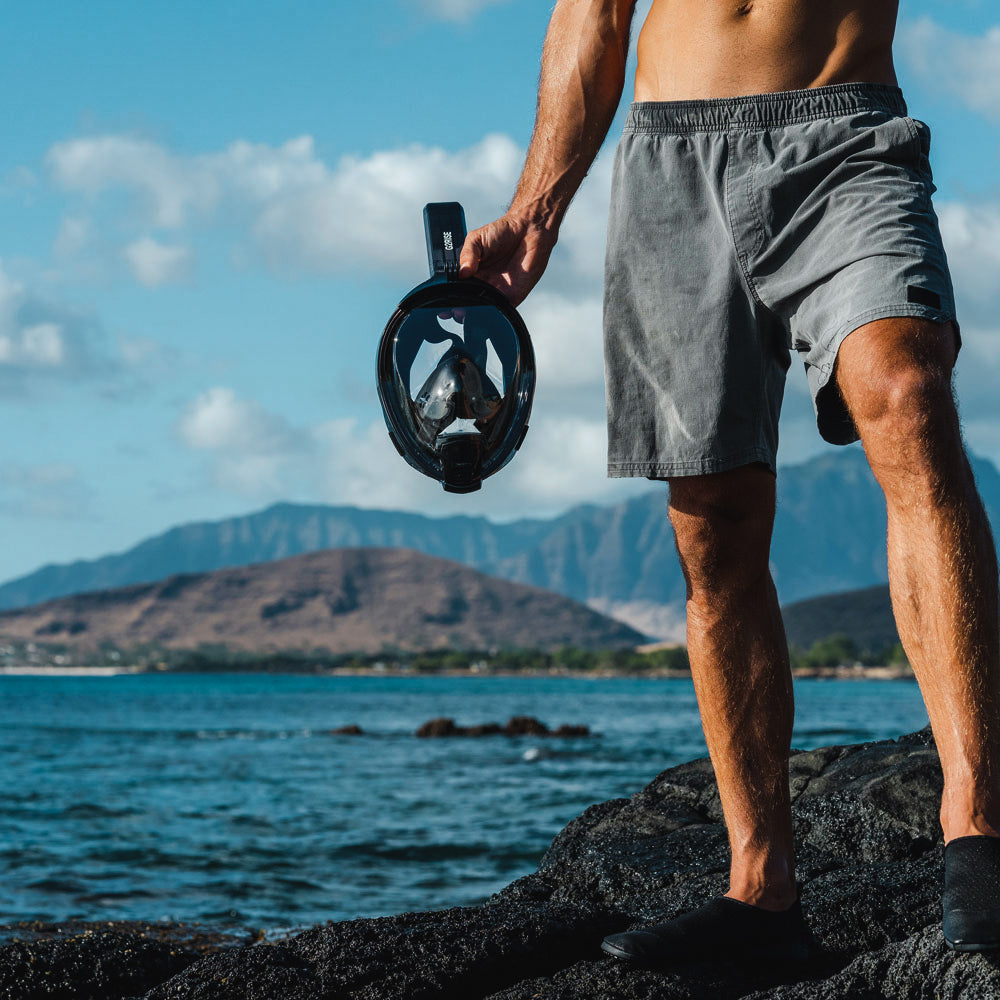
Rocky shore entry: This is where footwear matters significantly. Open-heel fins with neoprene booties (3–5mm) protect your feet from sharp lava, barnacles, or rocky substrates while walking to the water. You walk in the booties, enter the water, slip the fins onto the bootie feet, and push off. The trade-off is weight — the bootie and open-heel fin combination is heavier than full-foot silicone fins, which causes more leg fatigue over a long session.
Coral or shallow reef entry: Water shoes or booties with a hard sole protect your feet while crossing shallow reef flat. Never walk barefoot on coral — contact damages the coral (which is alive) and coral cuts have a notorious reputation for slow healing and infection due to the organisms that live on reef surfaces.

What Sunscreen Is Reef-Safe for Snorkeling?
Hawaii, Palau, the U.S. Virgin Islands, and numerous other jurisdictions have banned or restricted sunscreens containing oxybenzone and octinoxate — chemicals that research associates with coral bleaching and larval toxicity in marine organisms. For snorkeling in reef environments specifically, this isn't a theoretical concern: sunscreen rinses off your skin directly into the water where you're swimming.
Reef-safe sunscreens use mineral UV filters — zinc oxide and titanium dioxide — rather than chemical filters. They work differently: rather than being absorbed into the skin and converting UV to heat, they sit on the skin surface and physically scatter UV. The practical downside is that mineral sunscreens tend to leave a white cast and are slightly harder to rub in. Tinted mineral formulations reduce this significantly.
The effective hierarchy for snorkeling sun protection:
- UPF rash guard (covers most surface area, doesn't wash off, most effective)
- Reef-safe mineral sunscreen on all exposed areas (face, neck, backs of hands)
- Sun hat or neck gaiter for surface intervals between dives
Chemical sunscreens belong entirely off the list in reef environments. The reef itself and the marine life you came to see are the affected parties.
What Should You Never Wear Snorkeling?
- Cotton clothing of any kind. Already covered: adds weight, accelerates heat loss, doesn't perform any protective function when wet.
- Jewelry. Rings, bracelets, and necklaces catch on coral, potentially damaging both the coral and the jewelry. Metal in saltwater undergoes galvanic corrosion. Bracelets on wrists interfere with fin strap adjustment and can chafe at wrist seals. Leave all jewelry ashore or locked on the boat.
- Loose or baggy clothing not designed for water. Drag, shifting, and the weight of saturated fabric. Even "water shorts" with a mesh liner perform poorly compared to fitted swimwear designed for horizontal propulsion.
- Street shoes or closed-toe canvas shoes. They hold water, they're difficult to remove in the water if you need to, and the soles degrade from saltwater and UV exposure. Water shoes designed for snorkeling or reef walking use rubber that handles these conditions.
- Contact lenses without a watertight mask. If your mask leaks, ocean water contacts your lenses with real infection risk. See the full guide on snorkeling with contact lenses for the protocol when this is unavoidable.

What Do Kids Need to Wear Snorkeling?
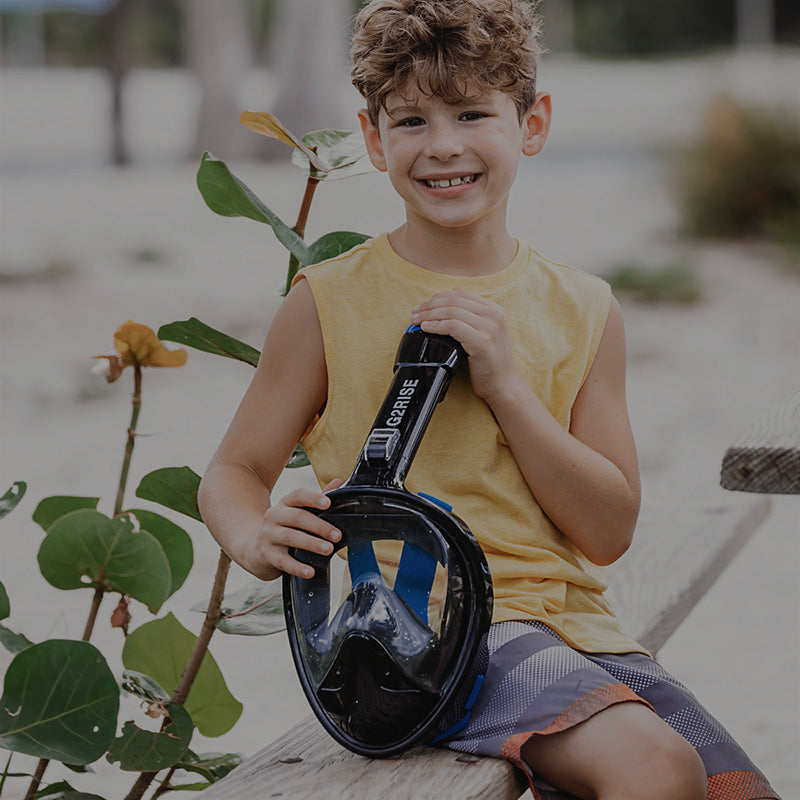
Children's requirements differ in two important ways. First, sun protection should be more aggressive: full-length rash guard plus swim leggings for all daylight snorkeling, regardless of how much they tan at the pool. Children's skin has a higher ratio of surface area to body mass, meaning they absorb more UV relative to their size. Second, children lose body heat significantly faster than adults in water below 80°F. A shorty wetsuit for children in any water below that threshold is worth the hassle, because a child who gets cold stops having fun immediately and stops communicating about their comfort state. The adult equivalent — "I'll be fine for another few minutes" — doesn't exist for small children.
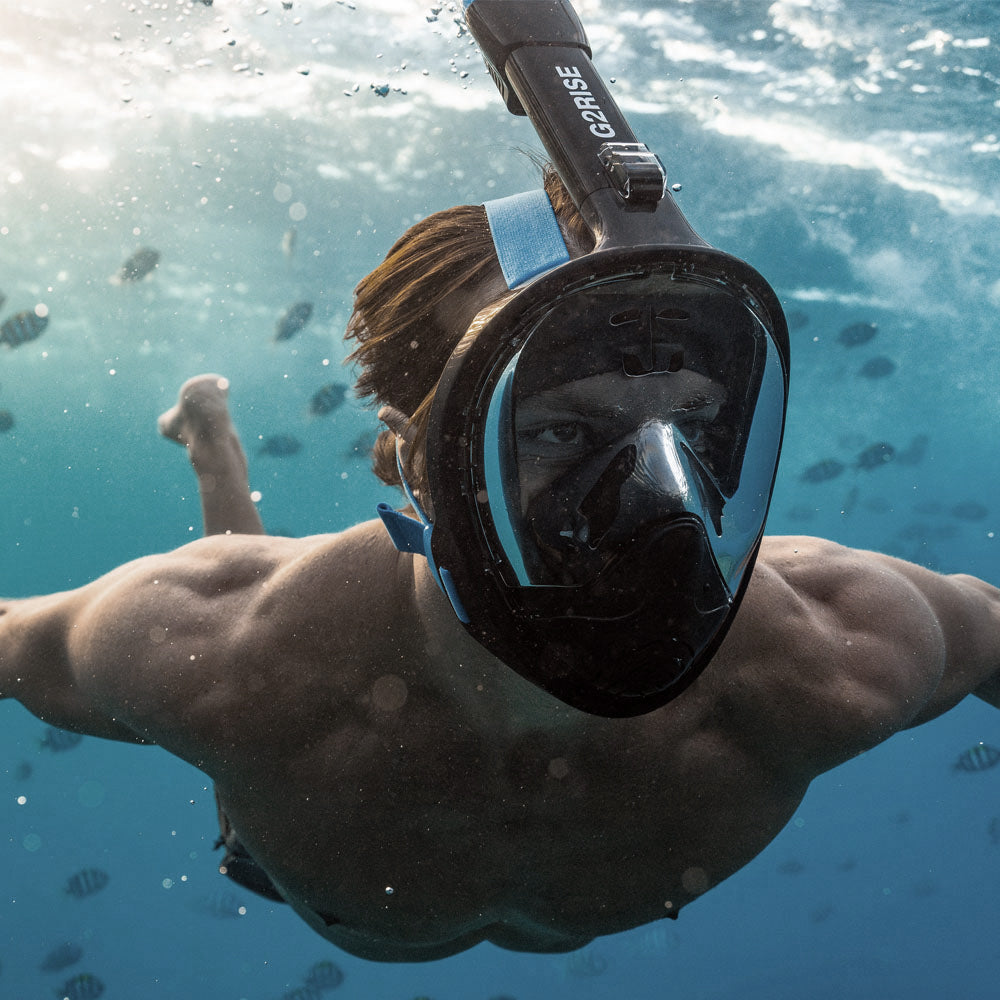
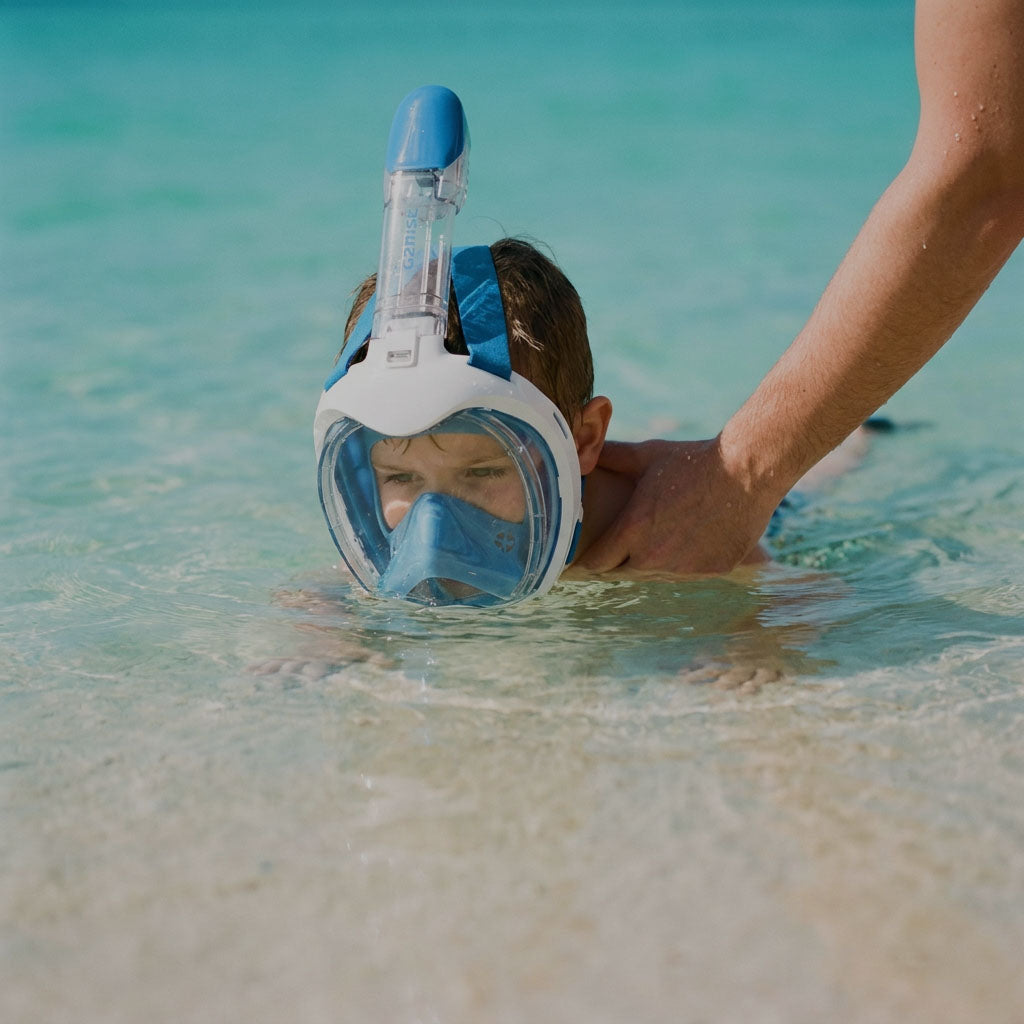
Fit is critical for children's fins and masks specifically. A mask that leaks because it's sized for an adult creates a miserable experience and teaches children to dislike snorkeling. Children's-specific masks have smaller nose pockets and a softer skirt that creates a seal against a smaller face profile. G2RISE's SN01 set includes sizing appropriate for teenage and adult faces; for younger children, fit should be verified with the no-strap suction test (mask holds on the face with just an inhale through the nose) before committing to that mask for the trip.

Leave a comment
This site is protected by hCaptcha and the hCaptcha Privacy Policy and Terms of Service apply.