
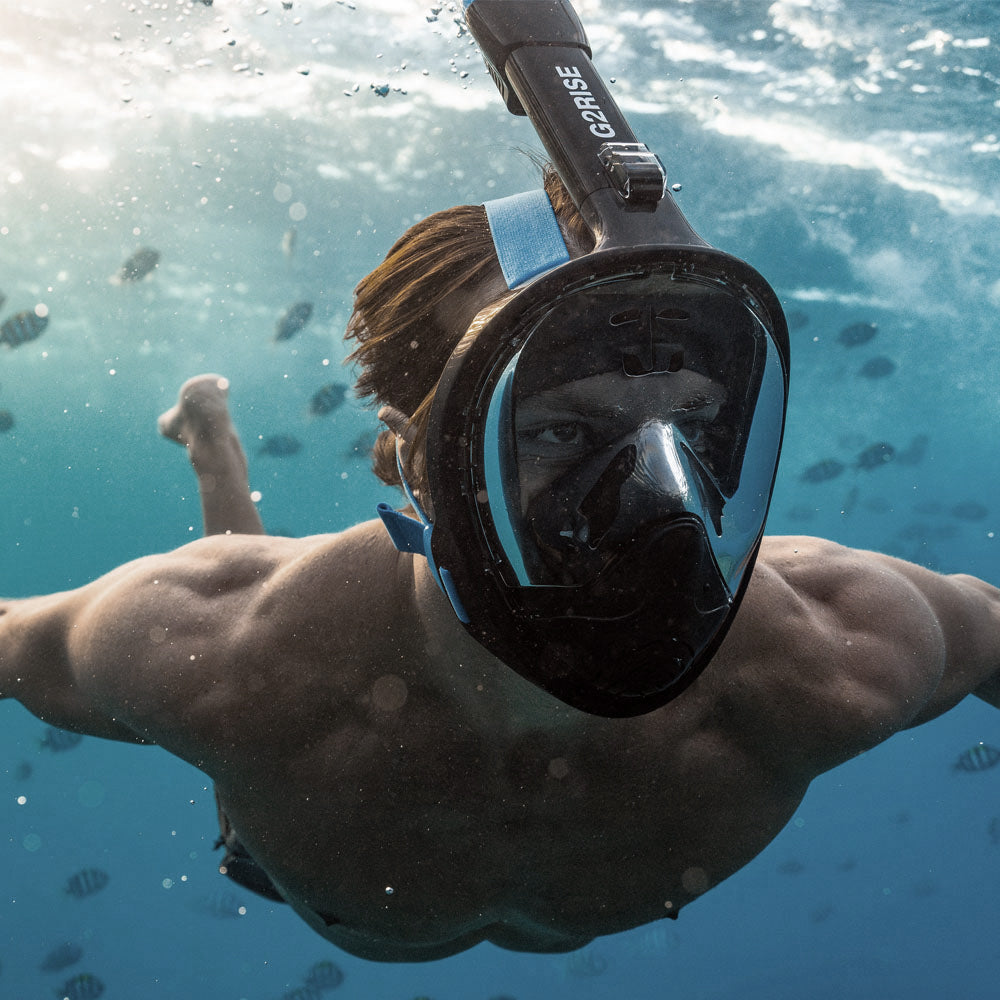
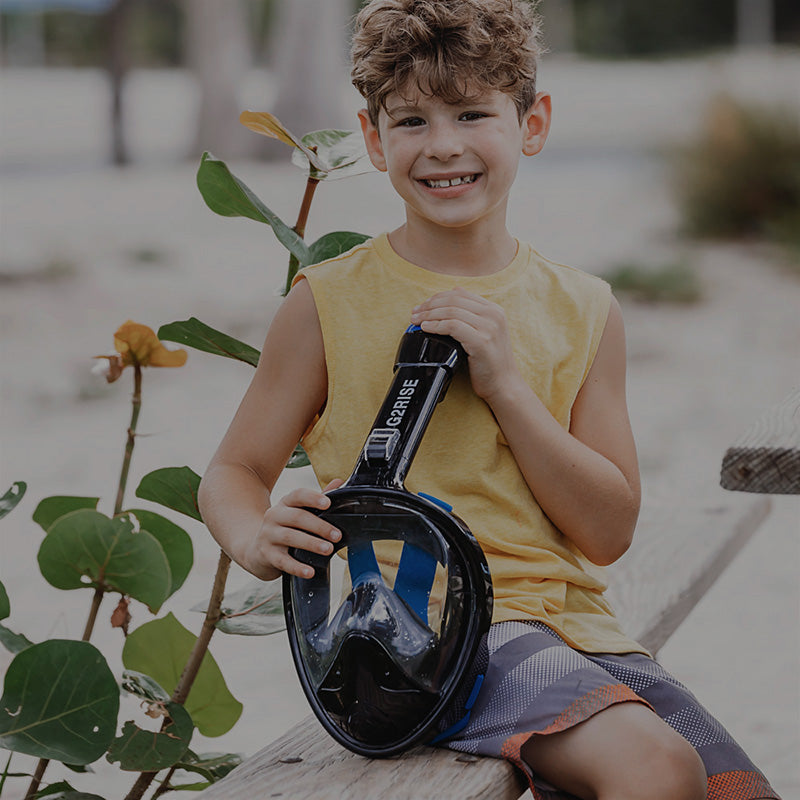
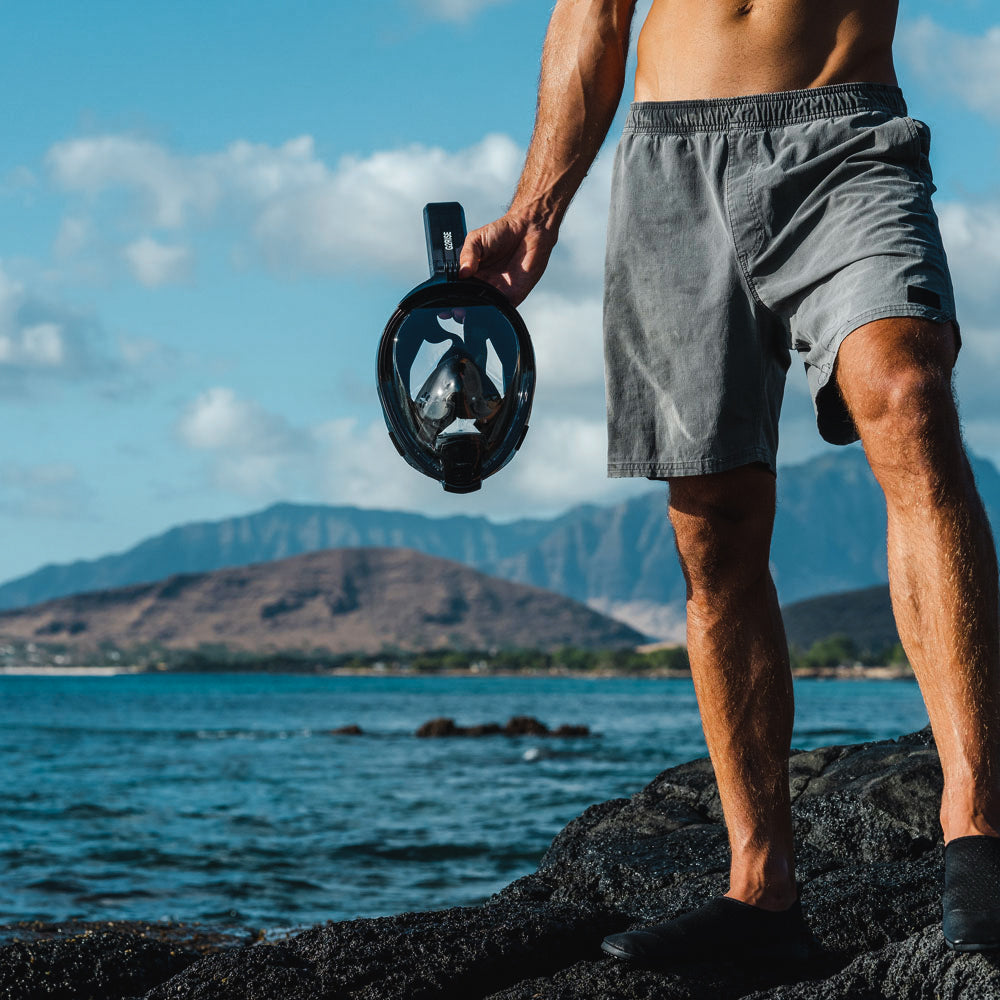
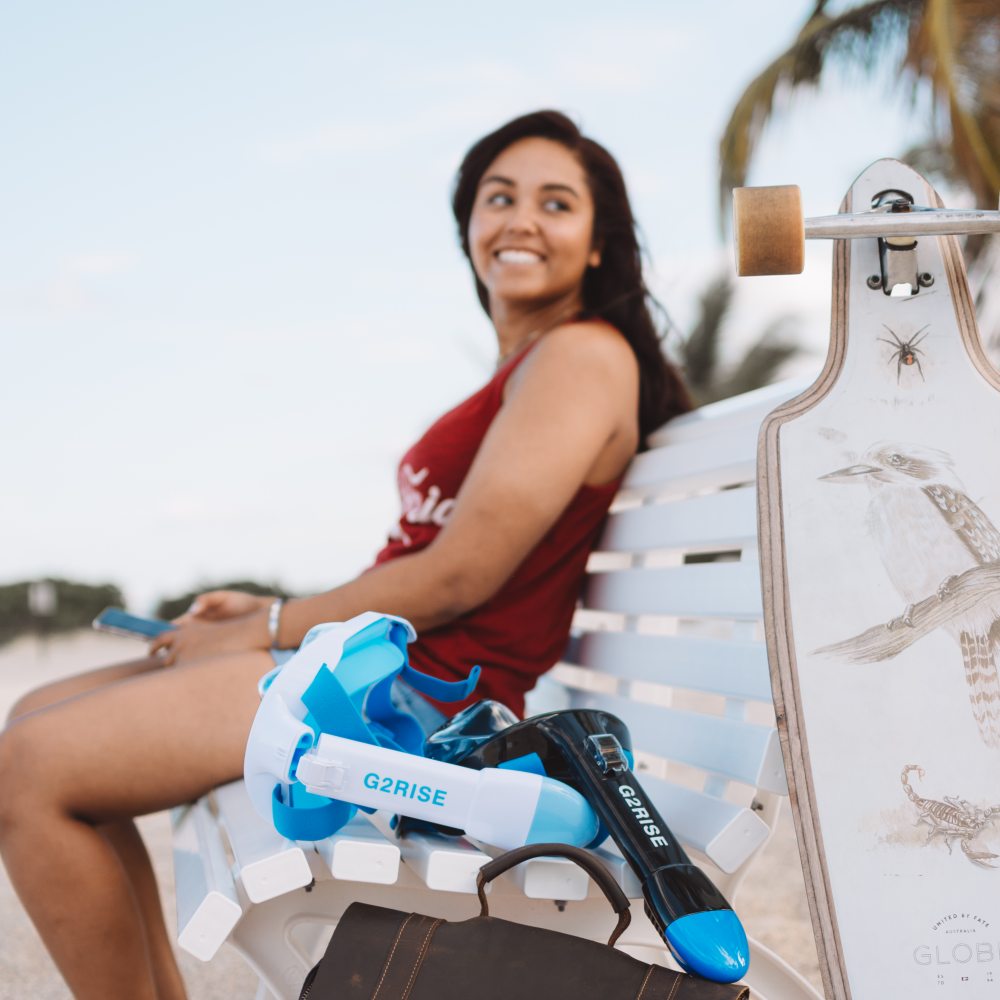
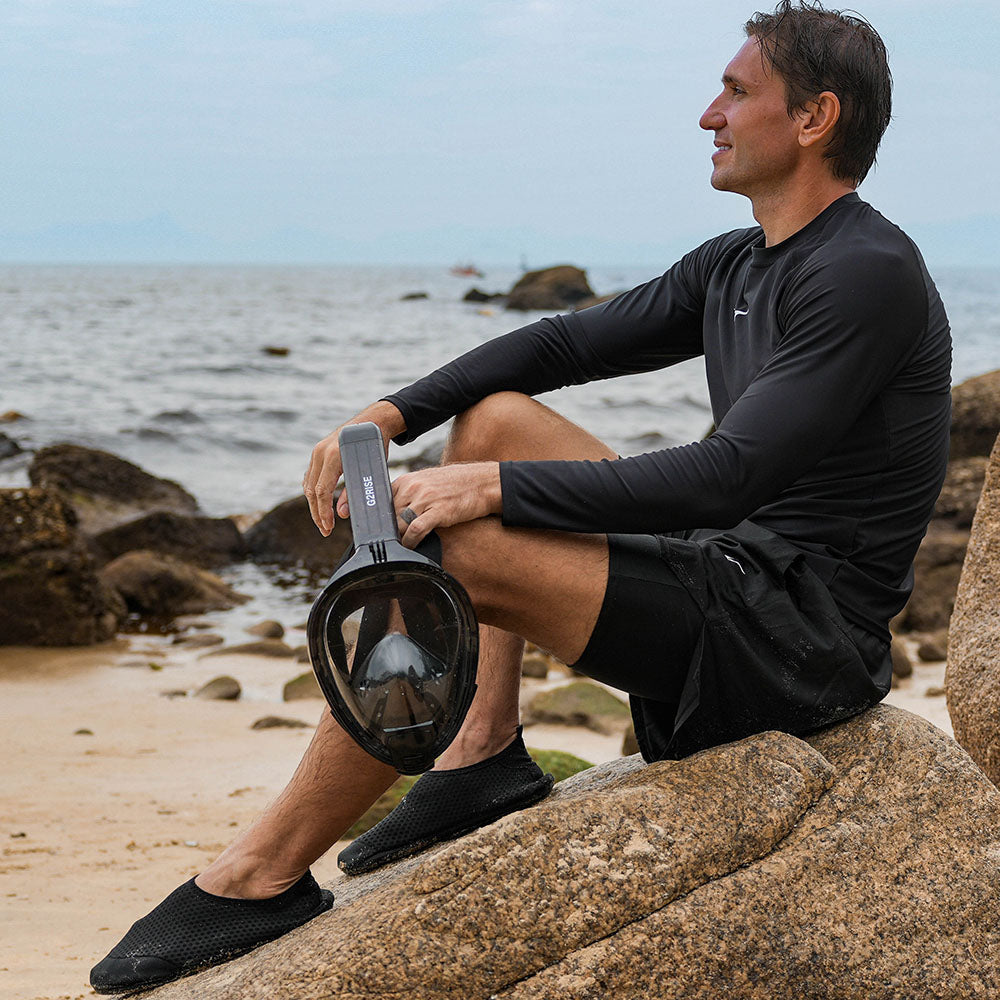

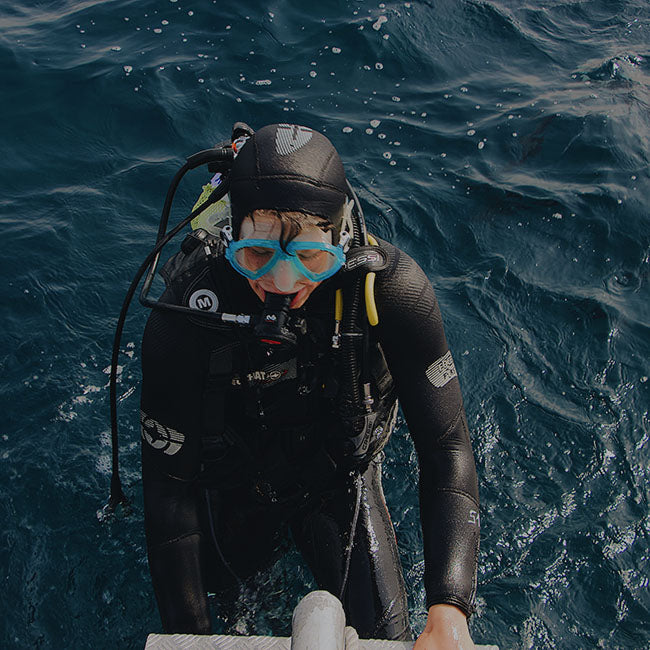
Searching for “snorkeling with pump mask” can bring up equipment that looks similar in a short video but works in completely different ways. One listing shows a hose running to the surface. Another shows a small cylinder filled before use. A third is an ordinary snorkel mask with no powered air supply at all.
Before comparing accessories, identify where the breathing air comes from. A standard snorkel uses air from above the water. A surface-supplied system uses equipment and a hose to deliver air. A compressed-air cylinder stores a finite supply. Buying one does not teach you to use the other.
This guide helps you sort those categories and ask useful questions before buying. It is not a filling manual, a diving lesson, or permission to connect a pump to a recreational mask.

What is a pump mask for snorkeling?
A “pump mask” is an informal shopping term, not a precise equipment category. It may describe a mask connected to a surface air supply or equipment sold with a pump for filling a small cylinder. An ordinary full face snorkel mask is different: its snorkel must remain above the surface to access air.
That distinction matters because the word “pump” tells you very little about what happens while you are in the water. Does the pump operate throughout the activity? Does it only fill a cylinder beforehand? Does the mask itself connect to the air supply, or does the user breathe through a separate regulator?
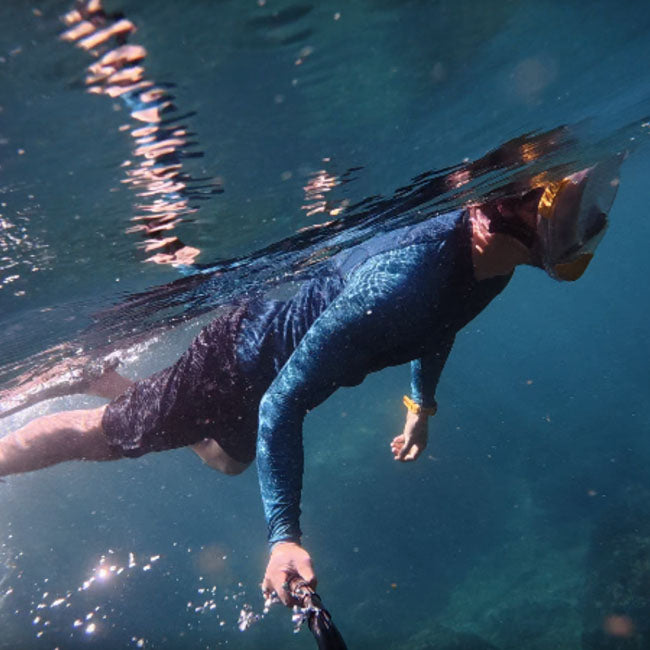
Look for a diagram and the complete manual for the exact model. A photograph of someone underwater cannot answer those questions. Neither can a marketplace title that combines “snorkel,” “scuba,” and “full face” in one line.
For a concrete example, the SCORKL Starter Pack product page, checked on October 16, 2026, lists a cylinder, regulator, and high-pressure hand pump. It specifies a working pressure of 200 bar. Those are details of a compressed-air product; they do not describe an ordinary snorkel tube. This is a manufacturer specification, not our test or an endorsement.
Your first buying question should therefore be simple: “Which air-supply system am I actually looking at?” If the seller cannot answer clearly, stop the comparison there.
How does a pump-assisted mask work?
A surface-supplied breathing system delivers air through a hose from equipment above the water, while a cylinder-based system provides previously stored air. A standard snorkel does neither. The components, operating limits, maintenance requirements, and training must match the particular system; there is no universal pump-mask setup that can be assembled from interchangeable parts.
With a surface supply, the hose and the equipment supplying it form part of the breathing system. The manufacturer must explain the approved configuration, supervision, air supply, and response to a loss of supply. A longer hose is not an automatic upgrade, and a pump used for inflatables is not breathing-air equipment.
With a small cylinder, the pump may be used on land before the activity. The air available afterward is finite. A small package does not change the fact that breathing compressed gas underwater introduces diving considerations.
SCORKL's page also advertises up to 10 minutes of use. Read that as a conditional manufacturer claim, not a countdown you can rely on. We have not verified that duration, and it is not a time allowance for any individual user.
Do not experiment by connecting a hose, cylinder, or powered pump to a mask that was designed only for surface snorkeling. Compatibility needs written confirmation for the complete assembly, not a connector that happens to fit.

Who benefits from snorkeling with pump mask gear?
Equipment with an external or stored air supply only belongs in a setting with the appropriate instruction, approved equipment, and operating support. For a family planning to watch fish from the surface, the useful starting point is usually a correctly fitted snorkeling setup and instruction, rather than adding an unfamiliar breathing system.
Begin with the activity, not the product video. Are you booking a guided surface snorkel? Taking a diving course? Joining an organized surface-supplied experience? Those plans can involve different equipment and participation requirements.
Ask the operator what is permitted before ordering anything. Some activities provide their own equipment and do not accept customer-supplied breathing apparatus. Others expect specific qualifications or a health assessment. A product's online availability does not settle the operator's requirements.
For a family trip, also consider who will manage the equipment. If one adult is already helping children with masks, watching conditions, and keeping track of the exit, an additional system adds responsibilities. Convenience on a sales page may not mean convenience at the beach.
There is no need to purchase underwater air equipment simply because you dislike a mouthpiece. A full face snorkel mask may offer mouthpiece-free surface use, but it still needs correct fit, familiarization, and an unobstructed snorkel above the water. It is not a substitute for diving equipment.
What safety checks matter before you enter the water?
Before using any breathing equipment, confirm its intended activity, the complete approved configuration, the required instruction, and the condition of every component. Check the operator's rules and your ability to participate. If air delivery feels difficult, equipment is damaged, or instructions are unclear, do not enter the water to troubleshoot it.
For a product under consideration, obtain the manual before purchasing. Read the sections covering air supply, inspection, maintenance, and emergency procedures. If the manual is missing or only describes a different model, request the correct document.
Ask how the equipment is serviced and who can perform that service. Find out whether consumable parts and authorized support are available where you live. A low purchase price is less useful if the equipment cannot be maintained or inspected as required.
Keep personal readiness separate from equipment condition. Being a confident swimmer does not establish that someone is trained to use compressed-air equipment. Divers Alert Network's travel medical guide explains that compressed-gas diving introduces pressure-related injuries and other hazards. An online buying guide cannot replace instruction or an individual medical assessment.
Discuss relevant health concerns with a qualified clinician and the activity provider. During any water activity, breathing difficulty, chest discomfort, confusion, or unusual weakness means stopping, signaling for help, and obtaining appropriate assistance. Persistent or severe symptoms require urgent medical attention, not another equipment experiment.
How does a pump mask compare with a standard snorkel set?
A standard snorkel set is intended to let you see underwater while accessing air above the surface through a snorkel. Pump-fed or cylinder-based equipment changes the air supply and the responsibilities involved. Choose by the activity and training required, rather than assuming that more components provide a better family snorkeling experience.
For surface snorkeling, compare fit, clear instructions, ease of handling, and the ability to stop comfortably with appropriate support. A conventional mask and separate snorkel and an integrated full face snorkel mask are different designs. Learn the handling procedures for the one you actually use.
For externally supplied or stored air, the buying decision also needs to address the supply equipment, servicing, approved connections, and instruction. A compact cylinder should not be treated as a simple accessory to a casual beach kit.
Neither category removes the need to understand conditions. Waves, currents, boat traffic, and the distance to an exit still matter. A mask is not a flotation device, and a breathing system does not make an unsuitable site appropriate.
When comparing snorkeling kits, ignore the urge to maximize the item count. A comfortable mask and appropriate snorkel that you have practiced using can be more useful for the planned surface activity than equipment bought for a different purpose. If you want to descend while breathing supplied air, begin with a qualified provider and the relevant training.
How should you fit, inspect, and maintain the system?
Use the manufacturer's instructions for the exact equipment, and keep fitting, maintenance, and breathing-system servicing within the tasks those instructions permit. Check fit before the trip, inspect visible damage, and seek authorized assistance for faults. Never alter valves, hoses, regulators, or air-supply connections to make an unfamiliar system feel easier to use.
For a surface snorkel mask, follow the model's size chart and fitting method. Clear hair from the sealing edge. Facial hair can interfere with the seal, and tightening the straps is not a reliable solution to a shape or size mismatch.
Practice putting on and removing the equipment in a controlled setting with suitable supervision. The goal is familiarity with the correct procedure, not testing how much discomfort you can tolerate. If something feels wrong, stop and ask for help.
For equipment involving compressed or supplied air, arrange the checks and servicing specified by the manufacturer and training provider. This article deliberately does not provide filling, pressure-setting, or modification instructions.
After use, follow the relevant cleaning and drying instructions. Keep grit away from sealing and connection surfaces, store equipment without crushing it, and inspect it again before the next outing. If a component is missing or damaged, do not substitute a visually similar household part. Bring the exact model information to the manufacturer or an authorized service provider.

Which setup should you choose for your trip?
Choose a setup that matches the activity you have booked and the instruction you can obtain. For relaxed surface snorkeling, prioritize individual fit, usable instructions, practice, and suitable conditions. If your plan involves breathing supplied air below the surface, arrange proper instruction and equipment through a qualified provider before making a purchase.
Write down the actual plan: who is participating, what the operator allows, where you will practice, and who can help if equipment does not fit. That short list is more useful than comparing impressive-looking accessories without a defined use.
If you are shopping for a family surface trip, you can explore G2RISE snorkeling equipment and check each product's instructions and size chart. Do not assume every item is suitable for every family member, and do not assume the brand supplies a pump system because a search result led you here.
Ordinary full face snorkel masks are for surface snorkeling, not for deep diving or breathing continuously below the surface. Keep that boundary clear when planning the trip. The aim is a comfortable, well-prepared look at the fish together, with equipment each person understands.

Leave a comment
This site is protected by hCaptcha and the hCaptcha Privacy Policy and Terms of Service apply.